 Intellect Plus
Cards starting with W
29,907 cards. Page 398 of 499.
 Why the most vital tool for any artist is simply learning to lookCurators Paris and Becky examine paintings from the Second World War era, arguing that the fundamental skill of an artist is the ability to truly observe. This video invites you t…
 Why the most vulnerable part of a fortress became its most heavily armed feature.A gatehouse is the ultimate architectural paradox. Because it serves as the primary entry point to a castle or town, it is structurally the weakest link. To compensate, engineers …
 Why the most walkable cities are designed to be more than just transit corridors.Walkability is more than just having sidewalks. It is a complex synergy of density, mixed-use zoning, and accessible networks that prioritize human movement over vehicle throughpu…
 Why the most watched Syrniki recipe might not be the bestThis video investigates the popular ASMR-style Syrniki recipe to see if it holds up. We examine the process of making these traditional cottage cheese pancakes and explore how to …
 Why the Mosul Dam in Iraq is considered the world's most dangerousFor four decades, the Mosul Dam has faced persistent structural challenges. This video explores the complex intersection of engineering, bureaucracy, and conflict that has defined…
 Why the Mother of the MP3 never learned to read musical notationSuzanne Vega is a folk-inspired icon whose career spans four decades, yet she composes by visualizing melodies as shapes and chords as colors. Beyond her songwriting, her a cappel…
 Why the mother-in-law stereotype persists despite evidence of marital resilienceThe mother-in-law is a fixture of comedy, often portrayed as an overbearing, hostile, and intrusive figure. Yet, while these relationships are frequently cited as sources of tensi…
 Why the motive behind an action matters more than its resultMost of us judge a good deed by its outcome. But what if the consequences are irrelevant? Deontological ethics suggests that the morality of an action lies in its inherent rightne…
 Why the motive behind your actions matters more than the resultsMost of us judge morality by outcomes: did the action cause harm or help? But in 1785, Immanuel Kant proposed a radical alternative. He argued that the true moral worth of an act …
 Why the movement of heat, mass, and momentum share a hidden mathematical languageWhether it is heat flowing through a solid, an odor dissipating in air, or a raindrop falling through the atmosphere, the universe follows a consistent set of rules. These transpo…
 Why the movement of water through a closed pipe defies simple atmospheric rulesFluid mechanics distinguishes between open-channel flow and pipe flow based on the presence of a free surface. While open channels interact directly with atmospheric pressure, pip…
 Why the Mozart of Table Tennis remains a sporting legend in China todayJan-Ove Waldner, the Swedish table tennis icon, achieved a level of fame in China that once eclipsed Bill Clinton. Known as the Evergreen Tree, his career spanned over three decad…
 Why the mud tower-houses of Koutammakou are a vital national symbol for TogoStraddling the border of Togo and Benin, Koutammakou is a unique cultural landscape defined by its distinctive mud tower-houses. Known as Siken, these structures are more than jus…
 Why the Mughal Emperor Muhammad Shah is remembered as both a patron and failureMuhammad Shah ascended the throne at eighteen, inheriting a crumbling empire. While his reign saw the irreversible decline of Mughal power and the devastating 1739 sacking of Delh…
 Why the Mughal Empire failed to reclaim the strategic gateway city of KandaharBetween 1649 and 1653, the Mughal Empire launched repeated, costly military campaigns to recapture Kandahar from the Safavids. Despite deploying massive armies and heavy artillery…
 Why the mule deer's unique escape strategy is both its greatest strength and weaknessNamed for ears that resemble a mule's, these western North American deer have evolved a peculiar way to outrun predators. Instead of sprinting, they leap with all four legs, a hig…
 Why the mullet is more than just a 1980s fashion failureThe mullet's return to the mainstream has sparked debate over our tendency to repeat aesthetic mistakes. This video explores the historical context of the haircut to understand ho…
 Why the Multilayer Perceptron is the foundational engine of modern deep learningDespite its name, the multilayer perceptron is not actually a perceptron. It is a sophisticated, dense neural network capable of solving complex, non-linear problems. As the bedro…
 Why the Muppets are not just puppets but a revolution in television framingCreated by Jim Henson in 1955, the Muppets redefined puppetry by ditching the traditional stage. By using the television screen itself as a natural frame, Henson allowed these cha…
- Why the Muppets needed a human lead to anchor their 1996 pirate adventureWhen adapting Robert Louis Stevenson’s classic, the studio feared Gonzo and Rizzo could not carry the emotional weight of the story. The solution was casting Kevin Bishop as Jim H…
 Why the Muppets' most insecure comedian is named after a puppet workshop designerFozzie Bear is the quintessential struggling stand-up, defined by his desperate need for approval and his iconic catchphrase. While fans long speculated his name was a pun on perf…
- Why the murder of an Irish journalist fundamentally changed the nation's legal systemWhen investigative reporter Veronica Guerin was gunned down in 1996, the shockwaves forced the Irish government to rewrite its approach to organized crime. By targeting the financ…
 Why the music you hear in a movie might not actually be in the film.The term soundtrack is famously imprecise. While we assume it represents the audio from a motion picture, it often includes songs never heard on screen, re-recorded studio version…
 Why the musical genius of Fanny Hensel is finally being restored to historyThis video features an interview with Tim Parker-Langston, who is working to raise the profile of Fanny Hensel’s music. By creating and sharing new performance editions of her son…
- Why the musk deer is not actually a deer in the traditional senseMusk deer are small, shy creatures that defy standard deer classification. Lacking antlers, they sport saber-like tusks and possess a unique musk-producing organ. While they were …
 Why the Myna is not a single species but a diverse avian categoryThe term myna is a linguistic umbrella, not a biological classification. These medium-sized passerines, native to the Indian subcontinent, belong to the starling family but encomp…
 Why the myth of a peaceful Thanksgiving ignores a history of warThe relationship between early English colonists and Native Americans was defined by conflict rather than cooperation. This video explores the rapid escalation from fragile trade …
 Why the myth of alien architects is more than just a silly theoryPopular media often replaces historical facts with absurd claims, such as the idea that extraterrestrials constructed the pyramids. This video explores why these pseudo-archaeolog…
 Why the myth of ancient barter economies is failing to hold up to scrutinyWe are taught that ancient societies traded goods through barter, but historians now believe they relied on gift economies and debt. From Babylonian interest rates to the rise of …
 Why the myth of salting the earth persists despite lacking historical evidenceThe image of a conqueror sowing salt over a razed city to ensure eternal desolation is a powerful historical trope. Yet, while the practice appears in ancient texts and medieval f…
 Why the myth of the 'tough' superhero is failing usGabby Rivera explores how her identity as a queer Puerto Rican from the Bronx shaped Marvel’s first queer Latina superhero. This talk examines why embracing humanity—rather than j…
 Why the myth of the 'young prodigy' fails the math testWe often assume that success is reserved for the young. Network scientist Albert-László Barabási uses mathematical analysis to challenge this assumption, revealing how persistence…
 Why the myth of the Great Artist shapes how we see art historyArt history is often framed through the biographies of celebrity figures like Michelangelo, Van Gogh, and Picasso. This video examines the origins of the Great Artist myth and que…
 Why the myth of the lone hero is failing our doctors and our storiesWe are obsessed with the lone protagonist—the surgeon who saves the day or the hero who triumphs alone. This narrative is a dangerous fiction. In medicine, it leads to burnout and…
 Why the mythical Fenghuang is far more than just a Chinese phoenixOften mislabeled as a Chinese phoenix, the Fenghuang is a distinct mythological entity that reigns over all other birds. Far from a simple fire-bird, this creature embodies celest…
 Why the mythical King Tantalus is trapped in a cycle of eternal, unreachable desireTantalus is the original figure of frustration, his name giving us the word tantalize. While modern audiences know him for serving his son to the gods, ancient sources offer a shi…
 Why the mythical Planet X remains a persistent, disproven ghost in our solar systemThe Nibiru cataclysm is a persistent doomsday theory claiming a massive, hidden planet is on a collision course with Earth. Despite decades of viral warnings, scientific evidence …
 Why the name 'tetra' is a misnomer for these popular freshwater aquarium fishThe term tetra is not a scientific classification but a linguistic relic. Derived from the Greek word for four, it refers to the four unpaired fins found on many of these small fr…
 Why the name Alcyone is a linguistic ghost story rooted in ancient misinterpretationAlcyone, one of the seven Pleiades, carries a name shrouded in mystery. While she is a daughter of Atlas, her name links to a sea-bird with a mournful song. Through centuries of l…
 Why the name Azerbaijan refers to two different places separated by a riverThe name Azerbaijan originally belonged to a region in northwestern Iran, rooted in ancient Persian history. However, in 1918, a new republic north of the Aras River adopted the s…
 Why the name Clymene appears across so many distinct Greek mythological figuresIn Greek mythology, the name Clymene, meaning fame, belongs to one of three thousand Oceanid nymphs. Yet, she is frequently confused with her own sisters. From the mother of the T…
 Why the name Macedonia describes a region, a kingdom, and a modern international conflict.The name Macedonia carries layers of history, from an ancient kingdom to a contested Balkan crossroads. Today, the region is split between three nations, but its identity remains …
 Why the name of a Germanic tribe became synonymous with destroying art and property.Vandalism is often dismissed as senseless destruction, yet its history reveals a complex tension between creativity, political protest, and criminal law. From the Enlightenment's …
 Why the name of a man who died before poker existed defines its rulesEdmond Hoyle became the ultimate authority on card games in the 18th century, turning his whist tutorials into a publishing empire. Today, his name is synonymous with strict adher…
 Why the name of a vast Chinese region is a battleground for sovereigntyThe movement for an independent East Turkestan represents a complex clash of historical narratives and modern geopolitics. While Beijing views the region as an integral part of Ch…
 Why the name of an entire nation was once banned by a Russian TsarFor centuries, the people now known as Belarusians have navigated a shifting landscape of labels, from Ruthenians to White Russians. Their identity was forged through ancient Balt…
 Why the name of Muammar Gaddafi has over one hundred different English spellingsRendering Arabic in the Latin script is a linguistic minefield. Because Arabic is an abjad—a system that typically omits short vowels—transcription often relies on inconsistent, a…
 Why the name of this Channel Island capital is older than you thinkSt. Peter Port is more than just the capital of Guernsey. Its name hides a linguistic history stretching back to medieval Normandy, revealing a structure rooted in Germanic and An…
 Why the name of this critical leg artery is causing dangerous medical confusionThe femoral artery is the primary blood supply to your leg and a vital gateway for surgeons to access the heart. Yet, its anatomical naming convention is so misleading that it has…
 Why the name of this Turkish region is a deliberate act of historical erasureThe territory officially known as Eastern Anatolia was historically referred to as the Armenian highlands or Western Armenia. Following the Armenian genocide, the Turkish state sy…
 Why the name of your favorite summer punch actually means bloodlettingSangria is synonymous with Spanish festivities, yet the drink’s name carries a dark, literal translation. While tourists flock to it in Mediterranean chiringuitos, the beverage ha…
 Why the name protostome is a biological misnomer for most of the animal kingdomProtostomes represent roughly 95% of all living animal species, yet their defining namesake—the mouth forming from the first embryonic opening—is surprisingly inconsistent. While …
 Why the name rockfish is a misnomer for this diverse group of marine predatorsRockfishes are not cod, despite their common moniker. These marine fish, belonging to the Scorpaenidae family, are defined by their spiny, compressed bodies and venomous fins. Fou…
 Why the name Rodney is a recurring motif in contemporary art and comedyThe name Rodney connects two vastly different worlds: the self-deprecating stand-up icon who defined the art of the one-liner, and the experimental artists whose work challenges o…
- Why the name Sporades describes a scattered collection of islands across the Aegean SeaThe term Sporades, derived from the Greek word for scattered, has historically acted as a catch-all for Aegean islands outside the central Cyclades. While modern usage often narro…
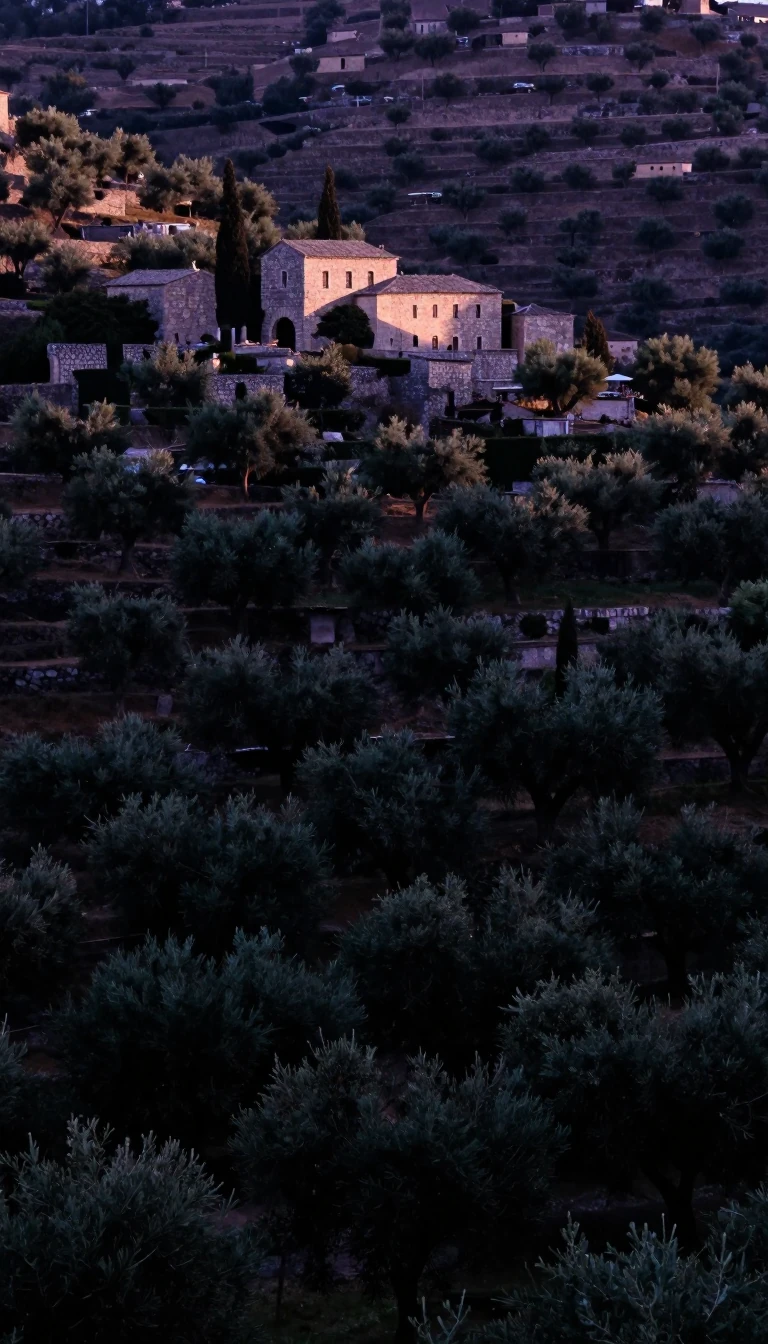 Why the names Judea and Samaria carry thousands of years of political weightThe terms Judea and Samaria are not merely modern administrative labels. They are ancient geographic designations rooted in the history of Israelite kingdoms. Today, their usage r…
 Why the names we give to places reveal more than just geography.Human geography examines the reciprocal relationship between human activity and the Earth. This video introduces the field by exploring the history, political power, and evolving …
 Why the nanometer labels on your computer chips are mostly just marketing fictionModern semiconductor manufacturing is a marvel of automation, turning silicon wafers into complex circuits through weeks of precise chemical and light-based processing. Yet, the i…
 Why the Napoleon of Crime was created to kill the world's greatest detectiveProfessor Moriarty was never intended to be a recurring villain. Arthur Conan Doyle created the brilliant mathematician solely as a narrative device to dispose of Sherlock Holmes,…
- Why the Napoleonic Code became the blueprint for modern civil law across the globeBefore 1804, traveling through France meant navigating a chaotic patchwork of feudal customs and religious laws. Napoleon Bonaparte changed this by championing a rational, unified…