From a medieval gallows to a modernist icon, Berlin’s Alexanderplatz has reinvented itself repeatedly.
In short: Once a grim site for executions known as the Devil's Pleasure Garden, Alexanderplatz evolved into a royal suburb, a bustling transport hub, and a symbol of East German modernism. Its history reflects the turbulent shifts of Berlin, surviving wars, political revolutions, and radical architectural redesigns to remain a central landmark.
In the 13th century, the area now known as Alexanderplatz was a rural site outside Berlin's walls, home to a hospital and a gallows that earned it the nickname 'Devil's Pleasure Garden.' By the late 17th century, it had transformed into a thriving suburb, the Georgenvorstadt, populated by butchers and farmers. It was officially renamed in 1805 to honor a visit from the Russian Tsar Alexander I, marking a transition from a cattle market to a sophisticated urban space.
The 20th century brought both peak cosmopolitanism and total destruction. During the 'Golden Twenties,' the square was a neon-lit hub of nightlife and commerce, immortalized in Alfred Döblin’s novel Berlin Alexanderplatz. However, the Second World War devastated the area. In April 1945, the Battle of Berlin left the district in ruins, and the SS flooded the underground tunnels with over one million cubic meters of water to hinder the Red Army's advance, causing significant loss of life.
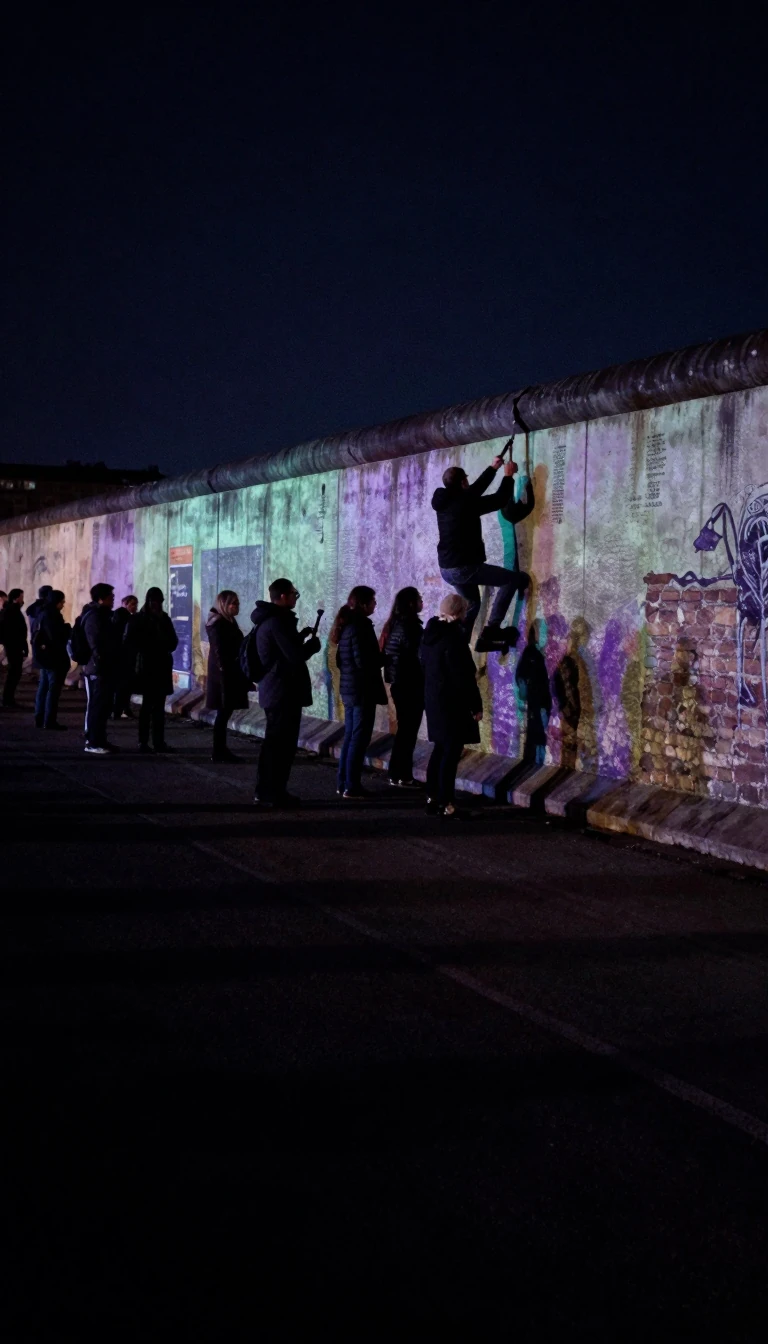
Post-war reconstruction prioritized a traffic-oriented design, influenced by modernist planners like Ludwig Hilberseimer and Le Corbusier. By the 1960s, the square was reshaped into the civic heart of East Berlin, featuring the iconic Fernsehturm and the World Clock. This space became the site of a historic 1989 protest where hundreds of thousands gathered to demand democratic reforms, a pivotal moment that preceded the fall of the Berlin Wall by just five days.
Opens the Intellect+ feed with this card first. Swipe up for the next one.
Sources
- Summary by Intellect · source: Alexanderplatz
- Also: Art Institute of Chicago — Berlin Development Project, Alexanderplatz Development, Berlin, Germany, Aerial Isometric View · CC0 (data); description CC BY 4.0
- Also: Art Institute of Chicago — Berlin Development Project: Alexanderplatz and Museumsinsel · CC0 (data); description CC BY 4.0
To cite this card, link to https://intellectplus.co.uk/app/design-alexanderplatz.
How we source, check and correct cards: Editorial standards.
General information, not professional advice. Spotted an error? Flag the card or see corrections and complaints.
Intellect Plus is a visual educational discovery platform for exploring fascinating facts and ideas. Brain Food, Not Brain Rot. What is Intellect Plus?
Related
More in Architecture · More in Design · Latest · A–Z · All topics
