The last pagan philosopher of Alexandria survived while his peers faced religious persecution.
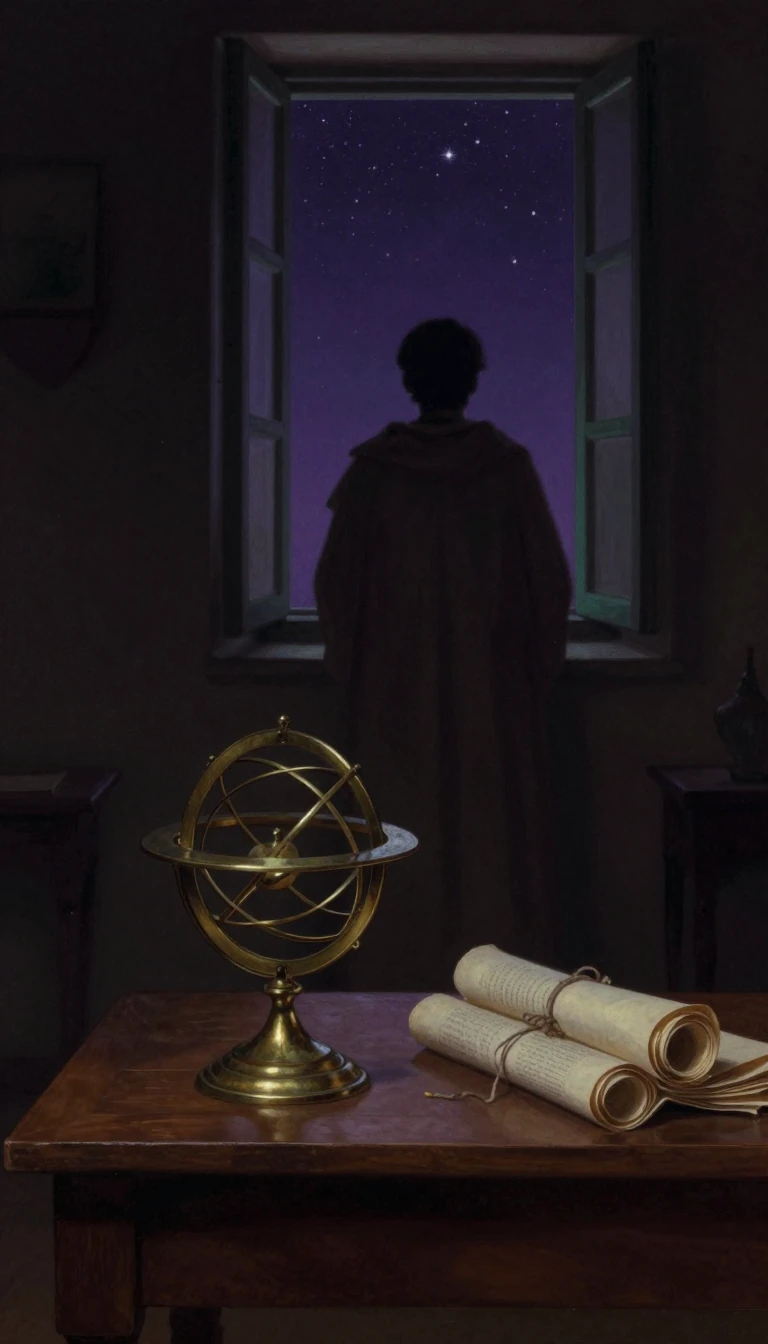
In short: Olympiodorus the Younger was a Neoplatonic teacher who maintained the Platonist tradition in Alexandria long after Justinian closed the Athenian Academy in 529 AD. While many of his contemporaries suffered for their beliefs, Olympiodorus continued his work until at least 565 AD, leaving behind a legacy of vital philosophical commentaries.
Born around 495–505 AD, Olympiodorus the Younger succeeded his teacher, Ammonius Hermiae, as the head of the Alexandrian philosophy school in approximately 520 AD. He earned his moniker to distinguish himself from an earlier 5th-century philosopher of the same name. Unlike the Athenian Academy, which was deeply entangled in religious and political conflicts, the Alexandrian School under Olympiodorus remained relatively scholastic and detached from overt political activism. This strategic distance likely contributed to his ability to avoid the intense persecution that claimed other pagan intellectuals of the era.
His surviving body of work is extensive, covering both Platonic dialogues and Aristotelian logic. He authored commentaries on Plato's Alcibiades, Gorgias, and Phaedo, as well as a biography of Plato. His contributions to Aristotelian studies include introductions to logic and commentaries on the Categories, On Interpretation, and Meteorology. Notably, his commentary on the latter work mentions a comet observed in 565 AD, providing a definitive marker for his continued activity late in life. He also preserved unique insights into the work of the earlier Neoplatonist Iamblichus.
Beyond pure philosophy, Olympiodorus engaged with the technical sciences of his day. Scholars like L. G. Westerink have identified his hand in a commentary on Paulus Alexandrinus' 378 AD text on astrology, which likely represents a series of lectures delivered in Alexandria between May and July 564 AD. This work is significant for documenting the evolution of astrological theory over two centuries. While some alchemical and philosophical texts were historically misattributed to him, his authentic output remains a cornerstone for understanding the final centuries of the ancient Neoplatonic tradition before the school transitioned to Christian Aristotelian leadership.
Opens the Intellect+ feed with this card first. Swipe up for the next one.
Sources
- Summary by Intellect · source: Olympiodorus the Younger
To cite this card, link to https://intellectplus.co.uk/app/ideas-olympiodorus-the-younger.
How we source, check and correct cards: Editorial standards.
General information, not professional advice. Spotted an error? Flag the card or see corrections and complaints.
Intellect Plus is a visual educational discovery platform for exploring fascinating facts and ideas. Brain Food, Not Brain Rot. What is Intellect Plus?
Related
More in Philosophers · More in Ideas & Philosophy · Latest · A–Z · All topics
