When rivers abandon their paths, they reshape the landscape in a single, violent event.
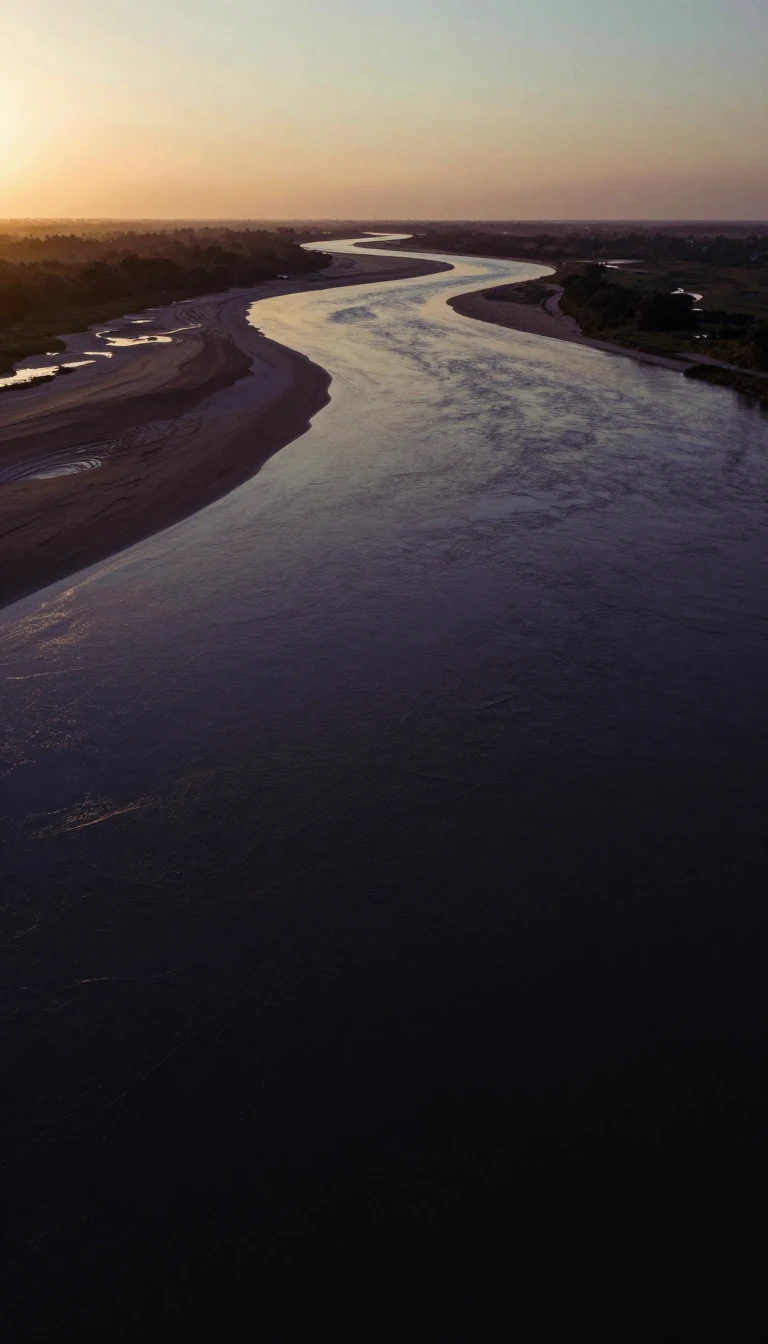
In short: A river avulsion is not a slow migration but a sudden, dramatic jump to a new course. Driven by sediment buildup and gravity, these events can transform deltas and floodplains overnight, posing significant risks to human settlements that rely on the stability of the water's original path.
An avulsion occurs when a river breaks out of its established channel to forge a new, more efficient route across the landscape. This process is often triggered when a riverbed becomes 'superelevated'—meaning it has deposited so much sediment that the channel floor sits higher than the surrounding floodplain. When a flood breaches the natural levees, the river exploits the steep hydraulic gradient, abandoning its old path for a shorter, faster descent to the sea or a lower basin.
These events are particularly frequent in deltaic environments, where the river's loss of velocity causes it to drop its sediment load, continuously raising its own bed. This creates a cycle of instability: as the delta lobe advances, the river's slope decreases, leading to further deposition and eventual channel failure. While once attributed primarily to simple slope advantages, modern research highlights a complex interplay of factors, including upstream channel geometry, sea-level rise, and even human-made obstructions like dams or log-jams.
The consequences of an avulsion are profound, both geologically and socially. In the Global South, where populations are often concentrated on fertile delta lands, the unpredictability of these jumps presents a severe natural hazard. Understanding the mechanics of avulsion—from the initial breach to the formation of new distributary networks—is essential for flood prediction and managing the long-term evolution of river systems. By studying these shifts, scientists are developing theoretical frameworks to better anticipate where and when a river might next decide to jump.
While some avulsions are full, diverting the entire flow, others are partial, splitting the water between old and new channels. These events leave distinct stratigraphic signatures in the earth, providing a geologic record of how landscapes have been sculpted over millennia. Whether through natural sediment accumulation or human interference, the river's drive to find the most direct path remains one of the most powerful forces in shaping the surface of our planet.
Opens the Intellect+ feed with this card first. Swipe up for the next one.
Sources
- Summary by Intellect · source: Rules of river avulsion change downstream - Nature
- Also: Avulsion (river)
To cite this card, link to https://intellectplus.co.uk/app/nature-avulsion-river.
How we source, check and correct cards: Editorial standards.
General information, not professional advice. Spotted an error? Flag the card or see corrections and complaints.
Intellect Plus is a visual educational discovery platform for exploring fascinating facts and ideas. Brain Food, Not Brain Rot. What is Intellect Plus?
Related
More in Water · More in Nature · Latest · A–Z · All topics
