Alluvial rivers are self-forming architects that build their own channels through constant sediment movement.
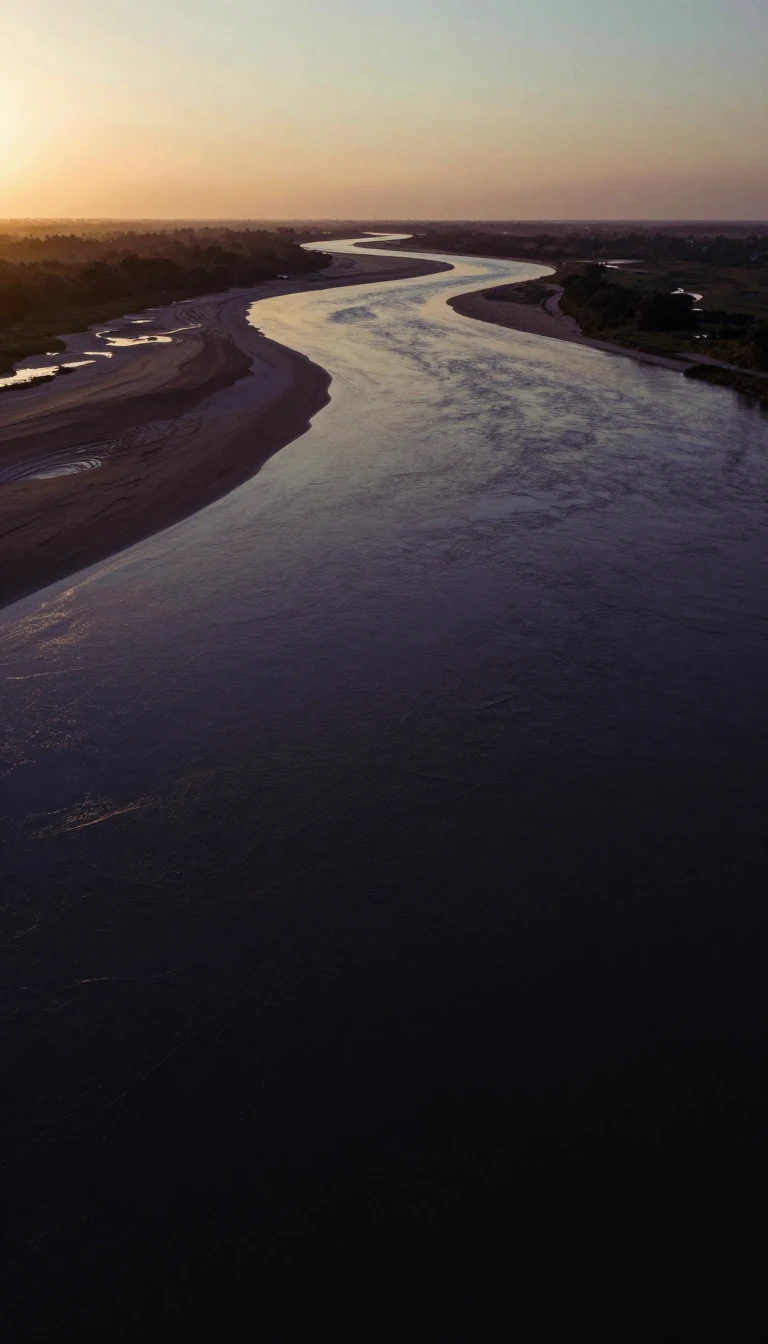
In short: An alluvial river is not just a path for water; it is a dynamic, self-forming system. By eroding, transporting, and depositing sediment, these rivers continuously reshape their own beds and banks. This constant motion creates complex, life-sustaining habitats that define the landscape, from meandering bends to expansive, nutrient-rich floodplains.
At the heart of an alluvial river's identity is its ability to self-organize. Unlike static channels, these rivers are shaped by the magnitude and frequency of floods. As water flows, it scours sediment from cutbanks and deposits it elsewhere, creating a dynamic steady state where erosion and deposition balance out. This process is essential for ecological health, as it creates a mosaic of habitats—pools for shelter, riffles for oxygenation, and floodplains for nutrient cycling.
The morphology of these rivers is categorized by their sinuosity, which is the ratio of channel length to the straight-line distance down the valley. Straight channels are rare, as sediment distribution is seldom uniform. Instead, rivers naturally evolve into meandering, braided, or anastomosing patterns. Meandering channels, characterized by high sinuosity, rely heavily on vegetation to stabilize banks; notably, there is no geomorphic evidence that meandering rivers existed before land plants evolved.
Human intervention often disrupts these delicate systems. Dams, logging, and agriculture alter the natural hydrologic regime, changing the timing, duration, and magnitude of flows. When a river loses its ability to mobilize sediment due to reduced flow, it can become choked or, conversely, suffer from incision downstream. Restoration efforts now focus on reconnecting channels to their floodplains, recognizing that preserving the river's natural variability is the only way to sustain the complex ecosystems that depend on them.
The physical structure of a river is remarkably predictable in its ideal form. In a typical meandering river, the meander wavelength—the distance between two consecutive bends—is roughly 10 to 11 times the channel width. Within this unit, pools and riffles are spaced at intervals of 5 to 6 channel widths. These features are not merely aesthetic; they are the functional units that support diverse aquatic life and riparian vegetation.
Opens the Intellect+ feed with this card first. Swipe up for the next one.
Sources
- Summary by Intellect · source: Alluvial river
To cite this card, link to https://intellectplus.co.uk/app/nature-alluvial-river.
How we source, check and correct cards: Editorial standards.
General information, not professional advice. Spotted an error? Flag the card or see corrections and complaints.
Intellect Plus is a visual educational discovery platform for exploring fascinating facts and ideas. Brain Food, Not Brain Rot. What is Intellect Plus?
Related
More in Water · More in Nature · Latest · A–Z · All topics
