How do we predict the future of a planet that is too complex to simulate?
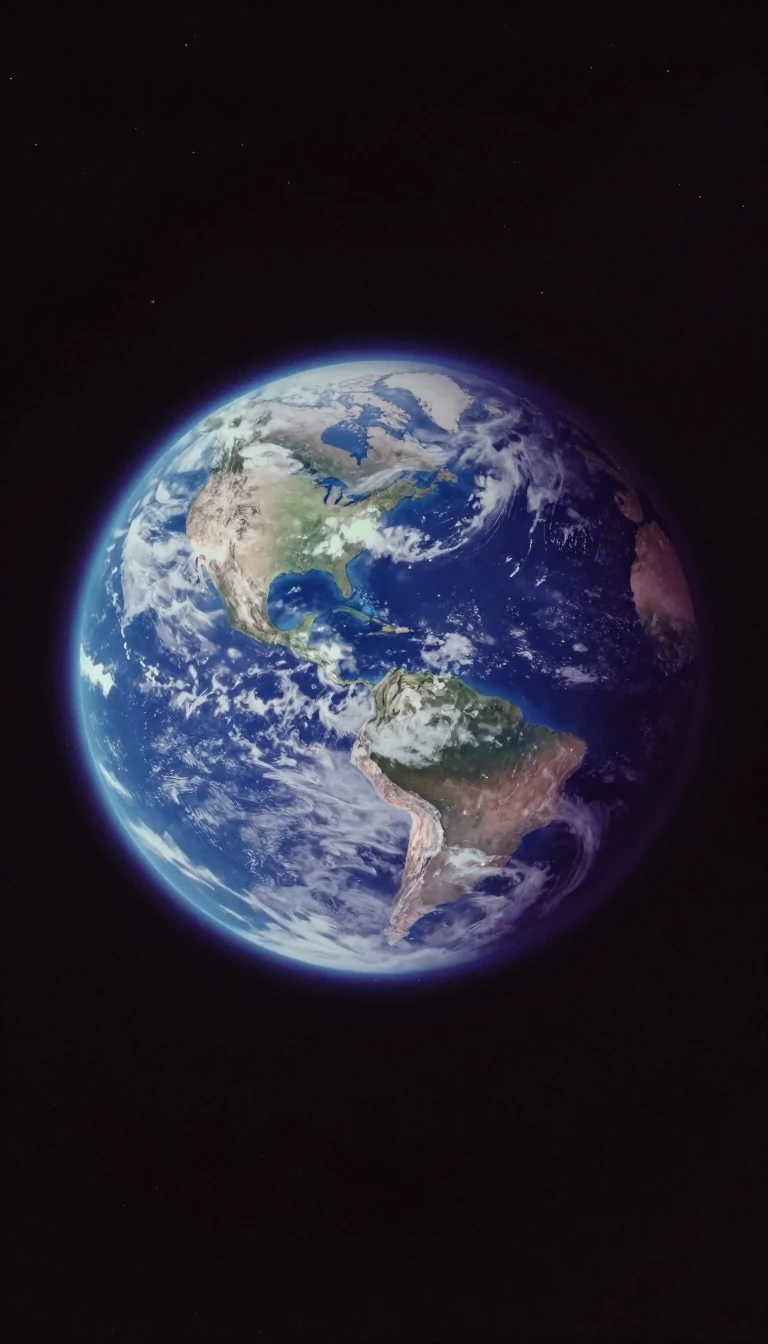
In short: Climate models are our most sophisticated tools for understanding the Earth, yet even the world's fastest supercomputers cannot fully replicate our planet's complexity. Instead, scientists use mathematical approximations to map the atmosphere, oceans, and ice, turning the chaotic reality of our climate into a solvable, three-dimensional grid of data.
At their core, climate models are systems of equations rooted in fundamental physical laws, such as the conservation of energy, mass, and momentum. By partitioning the globe into a massive, three-dimensional mesh of individual cells, researchers can calculate how variables like temperature, pressure, and wind evolve over time. These models treat the Earth as a coupled system where the atmosphere, land surface, ocean, and sea ice constantly exchange heat, water, and momentum.
Because some natural phenomena are too small to fit within these grid cells—such as individual clouds or specific aerosol interactions—scientists employ a technique called parameterization. This method uses simplified equations to approximate the behavior of these sub-grid processes, guided by both physical principles and observational data. While these approximations are necessary, they remain a primary source of uncertainty, alongside differences in how models account for natural variability and external forcings.
The power of these models lies in their ability to perform experiments impossible on the actual Earth. By adjusting specific variables, researchers can isolate the influence of human-driven factors, such as greenhouse gas emissions, from natural climate cycles. This diagnostic capability is essential for attribution science, which quantifies the human role in extreme weather events. While no model is perfect, the global scientific community continuously cross-checks results against historical data, building confidence in their ability to project future trends like rising sea levels and shifting hydrologic cycles.
Opens the Intellect+ feed with this card first. Swipe up for the next one.
Sources
- Summary by Intellect · source: Climate Modeling – Geophysical Fluid Dynamics Laboratory
- Also: Climate Models
- Also: Climate model
To cite this card, link to https://intellectplus.co.uk/app/nature-climate-model.
How we source, check and correct cards: Editorial standards.
General information, not professional advice. Spotted an error? Flag the card or see corrections and complaints.
Intellect Plus is a visual educational discovery platform for exploring fascinating facts and ideas. Brain Food, Not Brain Rot. What is Intellect Plus?
Related
More in Air · More in Nature · Latest · A–Z · All topics
