Why do beaches sort themselves by grain size? The mystery of the null point.
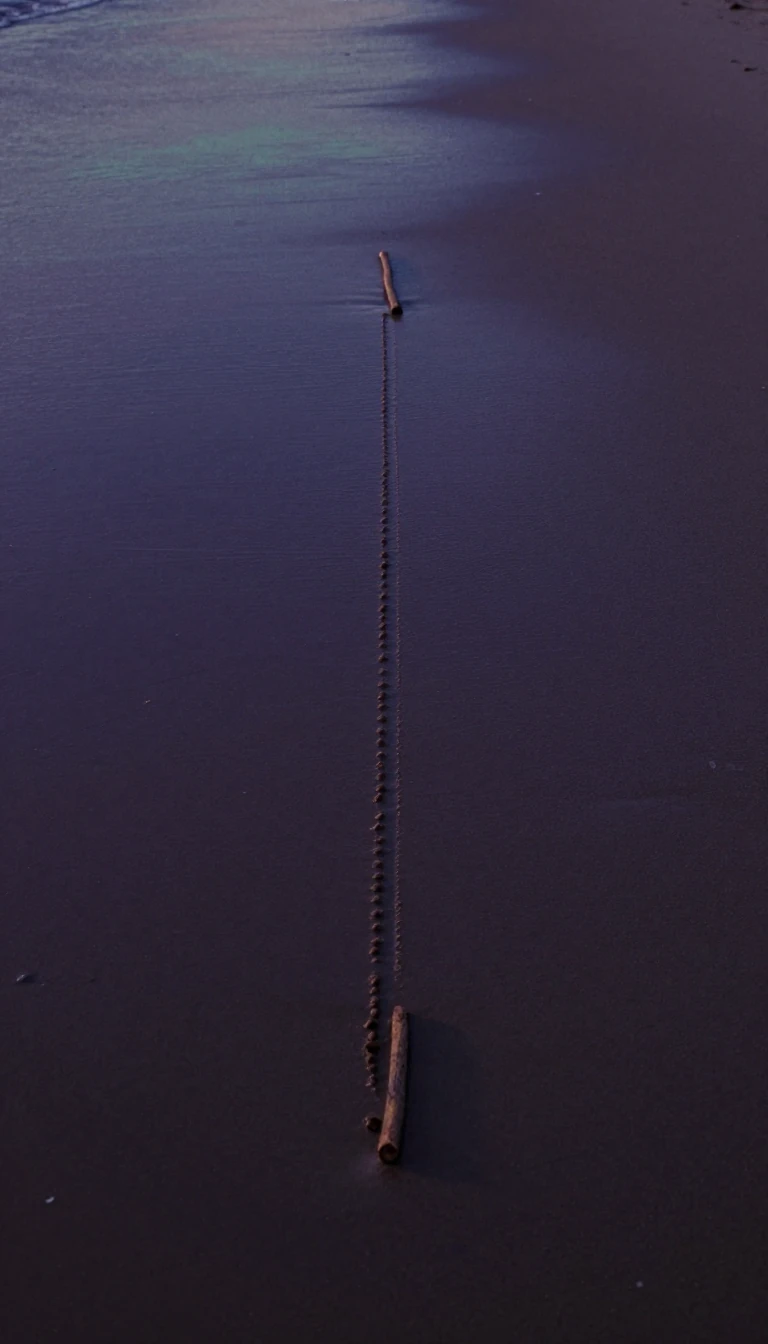
In short: Have you ever wondered why sand gets finer as you move from the shore into deeper water? It is not random. The null point hypothesis suggests that sediment particles naturally migrate until they reach a state of equilibrium with the waves and currents acting upon them, creating a predictable, sorted landscape.
The null point hypothesis, first proposed by Cornaglia in 1889, describes how sediment grains find their resting place on a shore profile. When the kinetic energy of water, wind, or ice is no longer strong enough to overcome gravity and friction, the material settles. This process results in a seaward-fining of sediment, where larger grains remain near the shore while finer particles are carried into deeper, calmer waters.
This sorting mechanism relies on complex fluid dynamics. For larger grains, deposition is determined by their internal angle of friction. For finer sediments, the location is dictated by settling velocity. Additionally, wave action creates asymmetric ripples on the seabed. These ripples form eddies that trap sediment, which is then ejected and moved seaward by the offshore stroke of the wave. In some cases, tiny particles like silt and clay undergo flocculation—an electrical bonding process that creates larger 'flocs'—causing them to settle faster and closer to shore than they would individually.
While the theory has been quantitatively supported in locations like Akaroa Harbour in New Zealand and The Wash in the U.K., it remains controversial. Critics argue that the coastal environment is too dynamic and complex to consistently replicate a null point for every grain size. Because of these variables, geomorphologists and planners are cautioned against relying solely on theoretical models. Instead, they are encouraged to combine numerical data with qualitative observations when managing beach nourishment or coastal defense projects, ensuring that the inherent instability of these environments is fully considered.
Opens the Intellect+ feed with this card first. Swipe up for the next one.
Sources
- Summary by Intellect · source: Deposition (geology)
To cite this card, link to https://intellectplus.co.uk/app/nature-deposition-geology.
How we source, check and correct cards: Editorial standards.
General information, not professional advice. Spotted an error? Flag the card or see corrections and complaints.
Intellect Plus is a visual educational discovery platform for exploring fascinating facts and ideas. Brain Food, Not Brain Rot. What is Intellect Plus?
Related
More in Geology · More in Nature · Latest · A–Z · All topics
