How do earthquakes happen hundreds of miles deep where rock should simply flow?
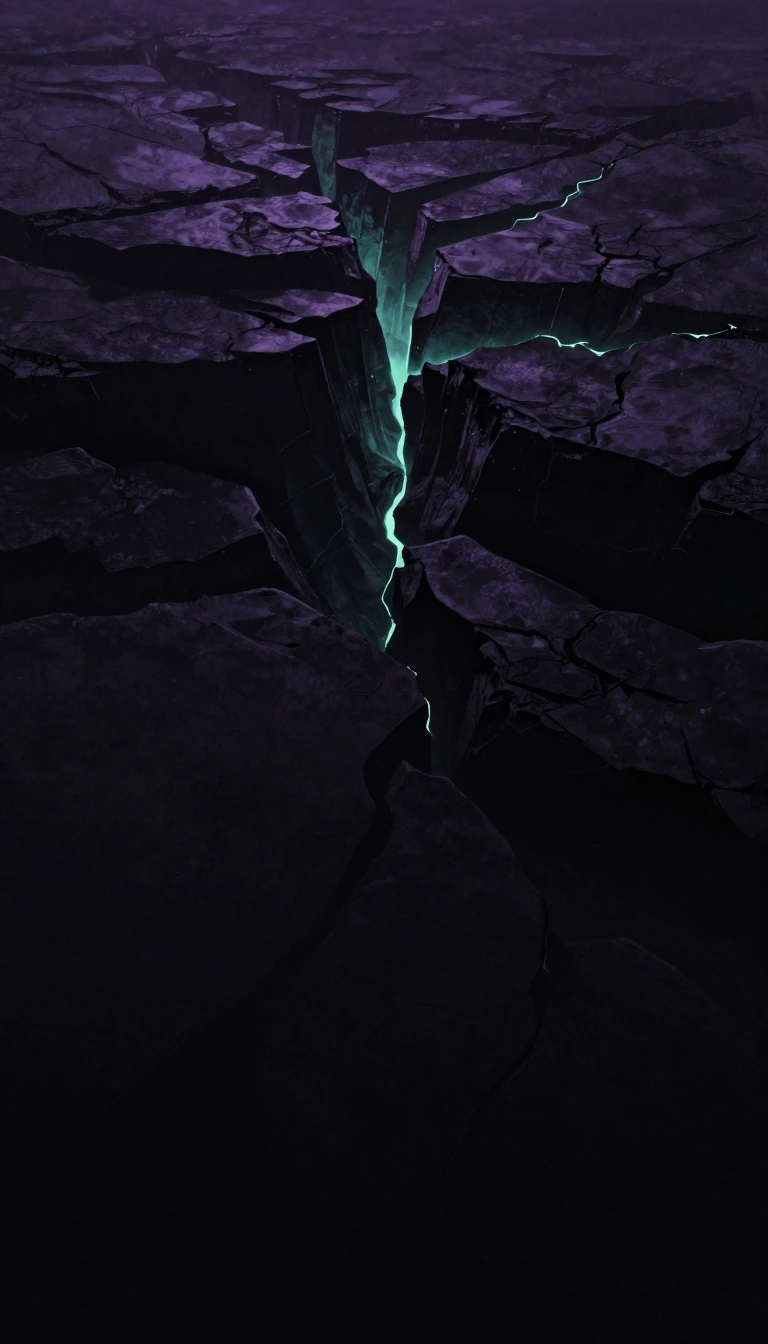
In short: Deep-focus earthquakes occur at depths exceeding 300 kilometers, where extreme pressure and heat should force rock to deform plastically rather than fracture. Yet, these events still trigger massive seismic activity. Scientists are still debating the exact physical mechanism that allows brittle failure to occur in the Earth's deep mantle.
Deep-focus earthquakes occur at depths between 300 and 700 kilometers, primarily within subducting tectonic plates along dipping zones known as Wadati–Benioff zones. Unlike shallow earthquakes, which result from brittle fracture and frictional slip, deep-focus events occur under conditions where rock is expected to flow. Because these quakes happen so far beneath the surface, their seismic waves travel through the heterogeneous mantle only once, resulting in sharp body wave peaks with minimal surface wave energy.
The physical mechanism behind these events remains an outstanding problem in seismology. Several theories have been proposed, though none are universally accepted. One hypothesis, transformational faulting, suggests that minerals like olivine undergo a phase transition to a higher-density structure under shear stress, creating planes of weakness that allow for rapid shearing. Another theory involves thermal runaway, where heat generated by plastic deformation creates a positive feedback loop of weakening and strain localization. Other researchers point to dehydration reactions, where water released from minerals reduces effective stress, potentially facilitating slip.
The record for the deepest earthquake is contested, with a 2004 event in Vanuatu recorded at 735.8 kilometers, and an unconfirmed aftershock of the 2015 Ogasawara earthquake reaching 751 kilometers. The most active region globally is the zone where the Pacific plate subducts beneath the Australian, Tonga, and Kermadec plates. While these events are often associated with subducting slabs, some regions, such as southern Spain, show enigmatic deep activity that researchers now associate with the flipping of the Alboran Slab, which may trap water-saturated rocks at extreme depths.
Understanding these quakes is vital for mapping the interior of the Earth. The strongest deep-focus earthquake ever recorded was the magnitude 8.3 Okhotsk Sea earthquake in 2013, which occurred at a depth of 609 kilometers. As seismologists continue to refine moment tensor solutions and analyze focal mechanisms, they hope to resolve why these deep-seated ruptures defy the standard rules of rock mechanics.
Opens the Intellect+ feed with this card first. Swipe up for the next one.
Sources
- Summary by Intellect · source: Deep-focus earthquake
- Also: Deep-focus earthquake | seismology | Britannica
To cite this card, link to https://intellectplus.co.uk/app/nature-deep-focus-earthquake.
How we source, check and correct cards: Editorial standards.
General information, not professional advice. Spotted an error? Flag the card or see corrections and complaints.
Intellect Plus is a visual educational discovery platform for exploring fascinating facts and ideas. Brain Food, Not Brain Rot. What is Intellect Plus?
Related
More in Geology · More in Nature · Latest · A–Z · All topics
