How massive detachment faults reshape the Earth's crust across oceans and continents
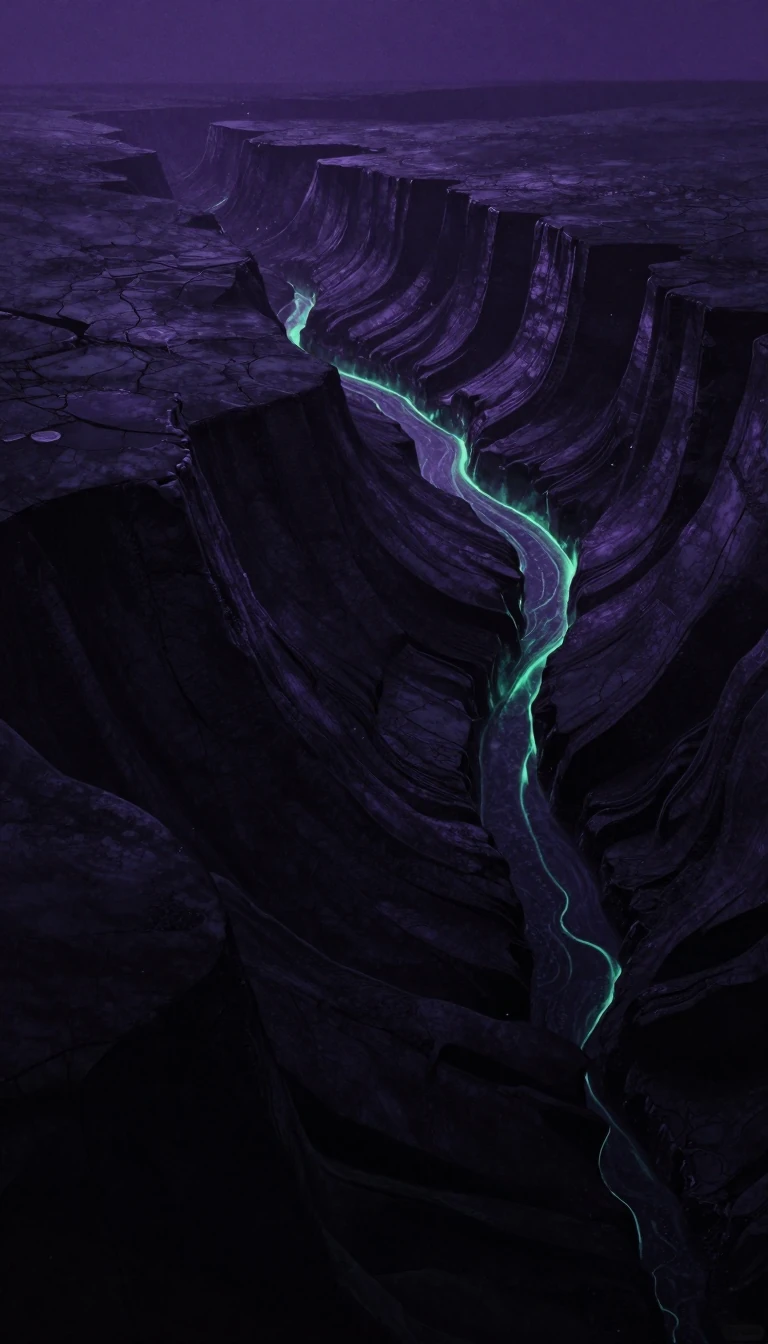
In short: Detachment faults are colossal, gently sloping structures that tear through the Earth's crust. Whether they are pulling apart continents or creating oceanic core complexes on the sea floor, these faults move massive blocks of rock over tens of kilometers, challenging our fundamental understanding of how tectonic plates actually behave.
A detachment fault is a low-angle normal fault that facilitates large-scale crustal extension. These features are defined by their regional scale and massive translational movement, which can span tens of kilometers. In continental settings, such as the Whipple Mountains in California or the Mormon Mountains in Nevada, these faults often bring deep, ductile metamorphic rocks to the surface. As the footwall rises, it undergoes isostatic uplift, creating domed structures where once-buried material is now exposed at shallow depths.
The mechanics of these faults remain a subject of intense scientific debate, particularly regarding their initial geometry. Traditional Andersonian fault mechanics struggle to explain how low-angle faults can slip, leading researchers to investigate factors like high fluid pressure, mineral weakness, or the reactivation of older thrust surfaces. Some experts argue that many detachment faults begin at steep angles and rotate over time, a process evidenced by tilted volcanic dikes in places like Nevada’s Yerington district. Others maintain that certain faults originate as low-angle structures within zones of intracrustal flow.
Oceanic detachment faults operate under different pressures, occurring at spreading ridges where magma supply is insufficient to keep pace with plate separation. Unlike their continental counterparts, these oceanic systems often function as rolling hinges, rotating from steep to shallow angles as they evolve. They produce oceanic core complexes—long, domed features composed of mantle-derived rocks like peridotite and gabbro. Because slip on these faults can exceed the total thickness of the oceanic crust, they represent a unique tectonic phenomenon where the footwall is continuously generated through a process akin to continuous casting, heavily altered by hydrothermal activity along the way.
Opens the Intellect+ feed with this card first. Swipe up for the next one.
Sources
- Summary by Intellect · source: Detachment fault
To cite this card, link to https://intellectplus.co.uk/app/nature-detachment-fault.
How we source, check and correct cards: Editorial standards.
General information, not professional advice. Spotted an error? Flag the card or see corrections and complaints.
Intellect Plus is a visual educational discovery platform for exploring fascinating facts and ideas. Brain Food, Not Brain Rot. What is Intellect Plus?
Related
More in Geology · More in Nature · Latest · A–Z · All topics
