This ancient aquatic reptile was once used as a humble household pot lid.
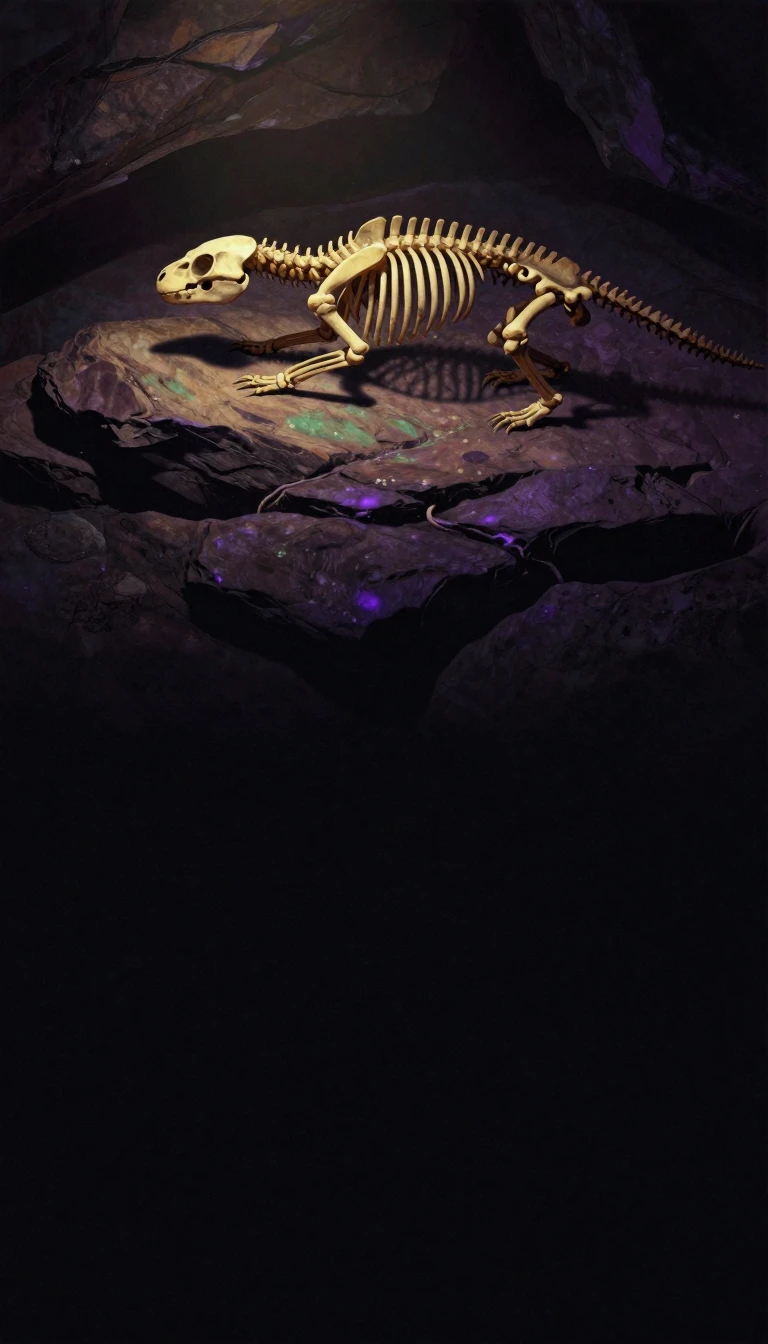
In short: Mesosaurus, a reptile that lived 275 million years ago, is a cornerstone of evolutionary biology. Beyond its role in proving continental drift, this creature has a bizarre history: its first recognized holotype was discovered in a South African hut, serving as a simple lid for a cooking pot.
Living during the late Early Permian, Mesosaurus was a slender, aquatic reptile that inhabited the shorelines of the Irati–Whitehill sea. Spanning parts of southern Africa and South America, this epicontinental sea provided a unique environment where these creatures thrived for up to 4 million years. Their presence in both regions, now separated by vast oceans, provided critical evidence for the theory of continental drift.
Physically, Mesosaurus was highly specialized for an aquatic life. It possessed pachyosteosclerosis—thick, dense bones—which likely helped it maintain neutral buoyancy or provided stability at the water's surface. While it had webbed feet and a streamlined body, its heavily thickened ribs restricted its ability to twist, making it a relatively slow swimmer. Its skull featured nostrils positioned at the top, allowing it to breathe like a modern crocodile, and it fed on small crustaceans.
The classification of Mesosaurus has been a subject of intense scientific debate. Historically labeled an anapsid, the discovery of lower temporal fenestrae in its skull challenged this view. Modern phylogenetic studies continue to shift its position, with some researchers questioning the validity of traditional groupings like Parareptilia. Furthermore, fossil evidence suggests Mesosaurus may have been among the earliest amniotes to exhibit viviparity or ovoviviparity, as embryos have been found preserved within adult remains.
Today, Mesosaurus is recognized as a single valid species, M. tenuidens. Other historically described genera, such as Stereosternum and Brazilosaurus, are now considered synonyms, representing juvenile or fragmentary specimens rather than distinct lineages. This refinement highlights how our understanding of ancient life evolves as researchers re-examine fossil remains and apply new biomechanical and phylogenetic analyses to these enigmatic creatures.
Opens the Intellect+ feed with this card first. Swipe up for the next one.
Sources
- Summary by Intellect · source: Mesosaurus
To cite this card, link to https://intellectplus.co.uk/app/nature-mesosaurus.
How we source, check and correct cards: Editorial standards.
General information, not professional advice. Spotted an error? Flag the card or see corrections and complaints.
Intellect Plus is a visual educational discovery platform for exploring fascinating facts and ideas. Brain Food, Not Brain Rot. What is Intellect Plus?
Related
More in Vertebrates · More in Nature · Latest · A–Z · All topics
