Meet the Eocene beast that looked like a manatee but was actually an elephant.
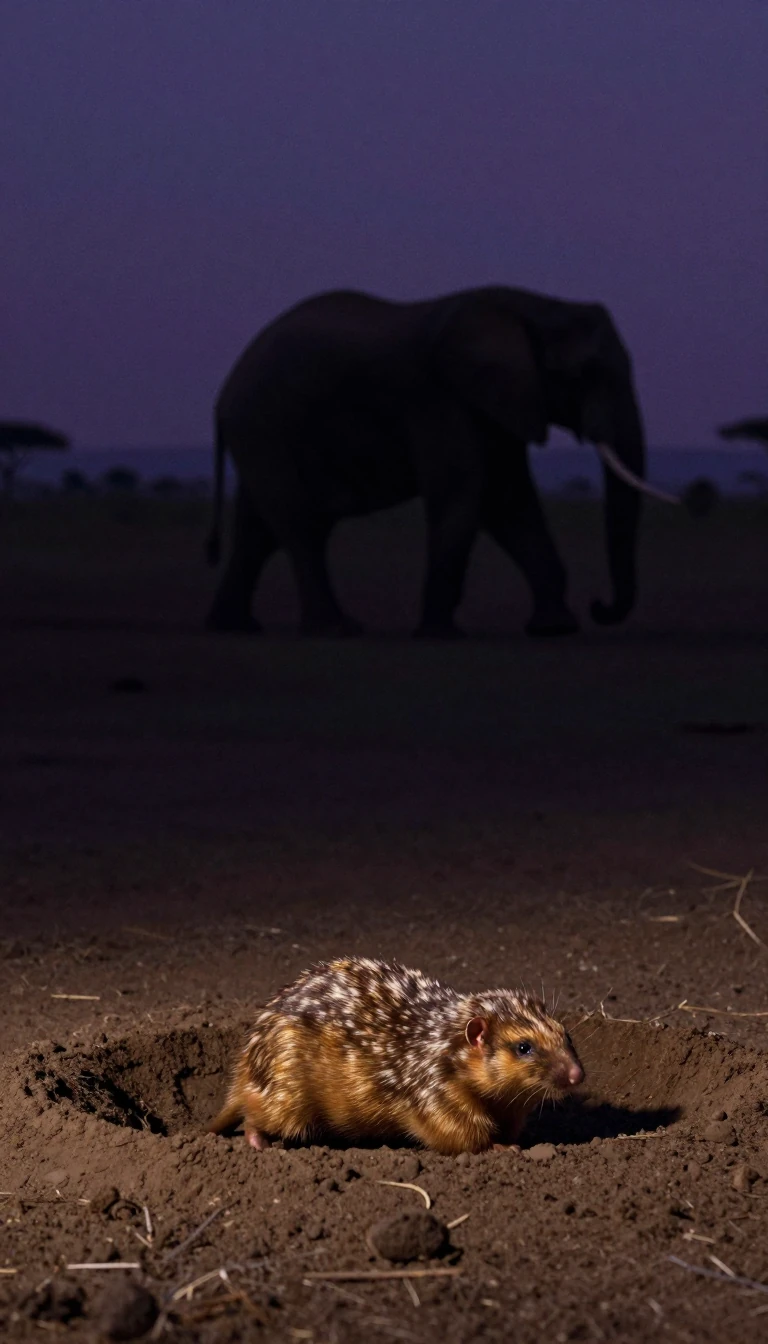
In short: Long before the majestic trunked giants of today, the Moeritherium roamed the swamps of ancient Egypt. This small, long-bodied mammal lacked a trunk and likely spent its days wading through freshwater, grazing on aquatic plants. It remains one of the most intriguing, debated puzzles in the history of proboscidean evolution.
Discovered in the Fayum fossil deposits of Egypt and named in 1901 by Charles William Andrews, Moeritherium has long confounded paleontologists. Early researchers struggled to place it within the tree of life, suggesting everything from manatee relatives to early mastodon ancestors. Today, it is recognized as a basal proboscidean—a distant cousin that diverged before the split between elephantiforms and deinotheres.
Physically, Moeritherium was a far cry from modern elephants. The largest species, M. andrewsi, stood only about 75 cm at the shoulder and weighed roughly 290 kg. Its skull was long and low, lacking the retracted nasal cavity required for a true trunk. Instead, it likely possessed a mobile, tapir-like proboscis. Its teeth were equally specialized, featuring downward-pointing upper tusks and a spade-shaped lower jaw, an arrangement well-suited for feeding on water-based vegetation.
The question of whether Moeritherium was semi-aquatic has been a subject of intense debate since 1909. While some early scholars argued its dentition suggested a terrestrial forager, modern evidence points toward a life in the water. Isotope analysis of its remains shows oxygen ratios consistent with aquatic animals, and dental microwear studies indicate a diet of freshwater plants. Its elongated body and the high positioning of its eyes and ears further support the theory that it thrived in the tropical swamps and river channels of the Eocene, much like a modern hippopotamus or manatee.
The genus includes five currently recognized species, ranging from the small M. gracile to the more robust M. andrewsi. Despite its unusual anatomy, it shares key characteristics with modern proboscideans, such as having twenty-three presacral vertebrae. By studying this "beast of Lake Moeris," scientists gain a clearer picture of the diverse, experimental forms that early elephant ancestors took before evolving into the iconic giants we know today.
Opens the Intellect+ feed with this card first. Swipe up for the next one.
Sources
- Summary by Intellect · source: Moeritherium
To cite this card, link to https://intellectplus.co.uk/app/nature-moeritherium.
How we source, check and correct cards: Editorial standards.
General information, not professional advice. Spotted an error? Flag the card or see corrections and complaints.
Intellect Plus is a visual educational discovery platform for exploring fascinating facts and ideas. Brain Food, Not Brain Rot. What is Intellect Plus?
Related
More in Vertebrates · More in Nature · Latest · A–Z · All topics
