The prehistoric giant with backward-curving tusks that once roamed across three continents
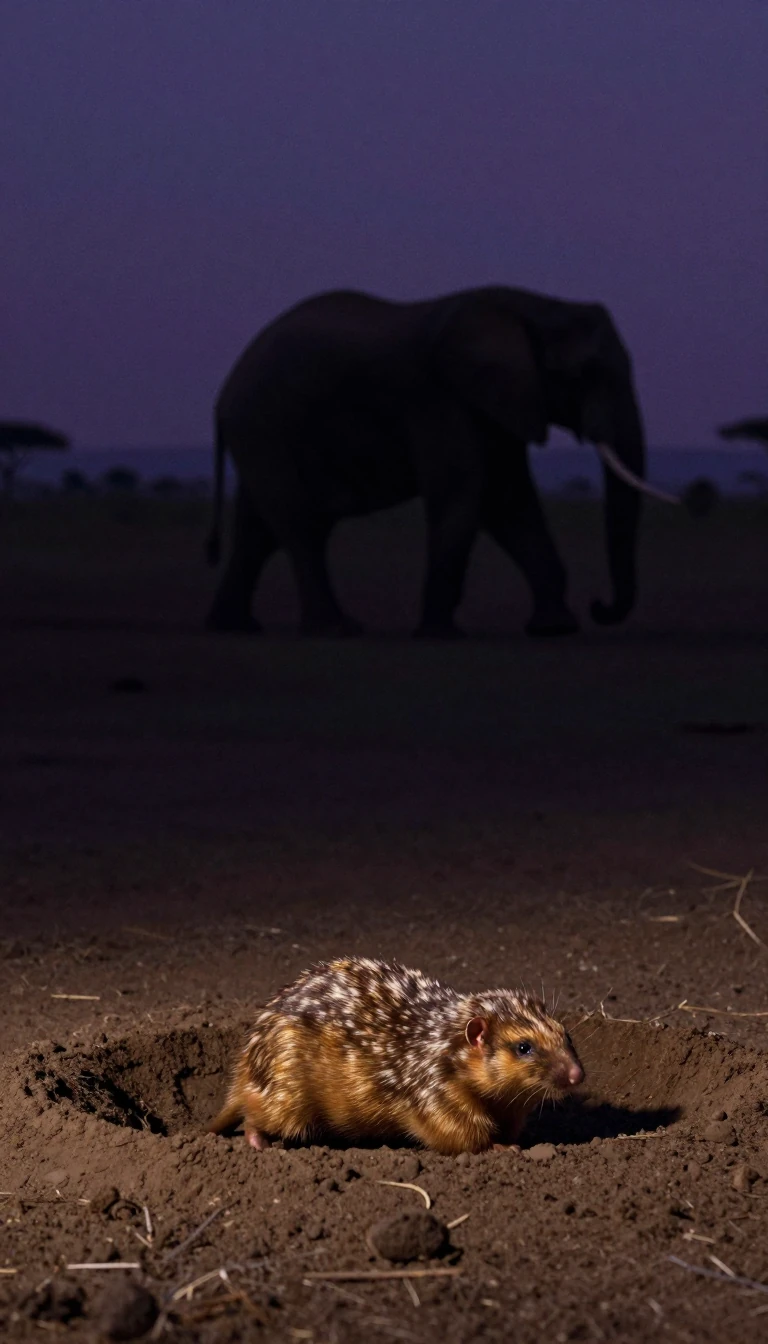
In short: Deinotherium was a massive, elephant-like creature that dominated landscapes from Africa to Eurasia for millions of years. Unlike modern elephants, this beast sported downward-curving tusks anchored in its lower jaw. Long mistaken for mythical giants, these animals represent a unique evolutionary branch that diverged from other proboscideans deep in history.
Deinotherium emerged as a widespread genus during the Miocene, thriving across East Africa, Europe, and parts of Asia. These mammals were among the largest to ever walk the earth, with some species reaching shoulder heights of four meters and weighing up to 12 tonnes. While they shared a general body plan with modern elephants, including pillar-like limbs and a trunk, their anatomy was distinct. They possessed a more flexible neck, slenderer limbs, and specialized teeth suited for browsing on leaves rather than grazing on grass.
The most striking feature of Deinotherium was its mandible. Unlike modern elephants, which grow tusks from their upper jaw, Deinotherium featured tusks that erupted from the lower jaw and curved backward, sometimes forming a near-semicircular shape. This unique dental structure, paired with vertical shearing teeth, suggests that they split from the lineage leading to modern elephants over 44 million years ago. Their reliance on forested environments eventually proved fatal; as the climate shifted during the latter half of the Neogene, forests gave way to open grasslands, leading to their extinction around 1 million years ago.
The scientific discovery of these animals was fraught with confusion. In the 17th century, fossilized remains found in France were frequently misidentified as the bones of ancient giants or legendary kings. It was not until the work of researchers like Georges Cuvier and Johann Jakob von Kaup in the 19th century that these fragments were correctly classified. Early paleontologists struggled to reconstruct the animal, initially misinterpreting the jaw's orientation and even speculating that the creature was an aquatic mammal or a giant relative of the tapir.
Today, the classification of Deinotherium remains a subject of academic debate. Researchers continue to argue over how many species truly existed, with some suggesting that many named varieties are merely variations of a single, long-lived lineage. Whether they represent a single, evolving group or a collection of distinct species, Deinotherium stands as a testament to the immense diversity of ancient proboscideans that once successfully navigated the changing ecosystems of the prehistoric world.
Opens the Intellect+ feed with this card first. Swipe up for the next one.
Sources
- Summary by Intellect · source: Deinotherium
To cite this card, link to https://intellectplus.co.uk/app/nature-deinotherium.
How we source, check and correct cards: Editorial standards.
General information, not professional advice. Spotted an error? Flag the card or see corrections and complaints.
Intellect Plus is a visual educational discovery platform for exploring fascinating facts and ideas. Brain Food, Not Brain Rot. What is Intellect Plus?
Related
More in Vertebrates · More in Nature · Latest · A–Z · All topics
