Why mountain slopes act like a time machine for the planet's diverse ecosystems
In short: Mountains are vertical laboratories where climate shifts rapidly with every step. Climbing just 100 meters can mimic traveling 80 kilometers toward the poles. This stratification creates distinct life zones, from dense forests to windswept alpine tundra, each hosting unique, endemic species that have adapted to survive in extreme, isolated environments.
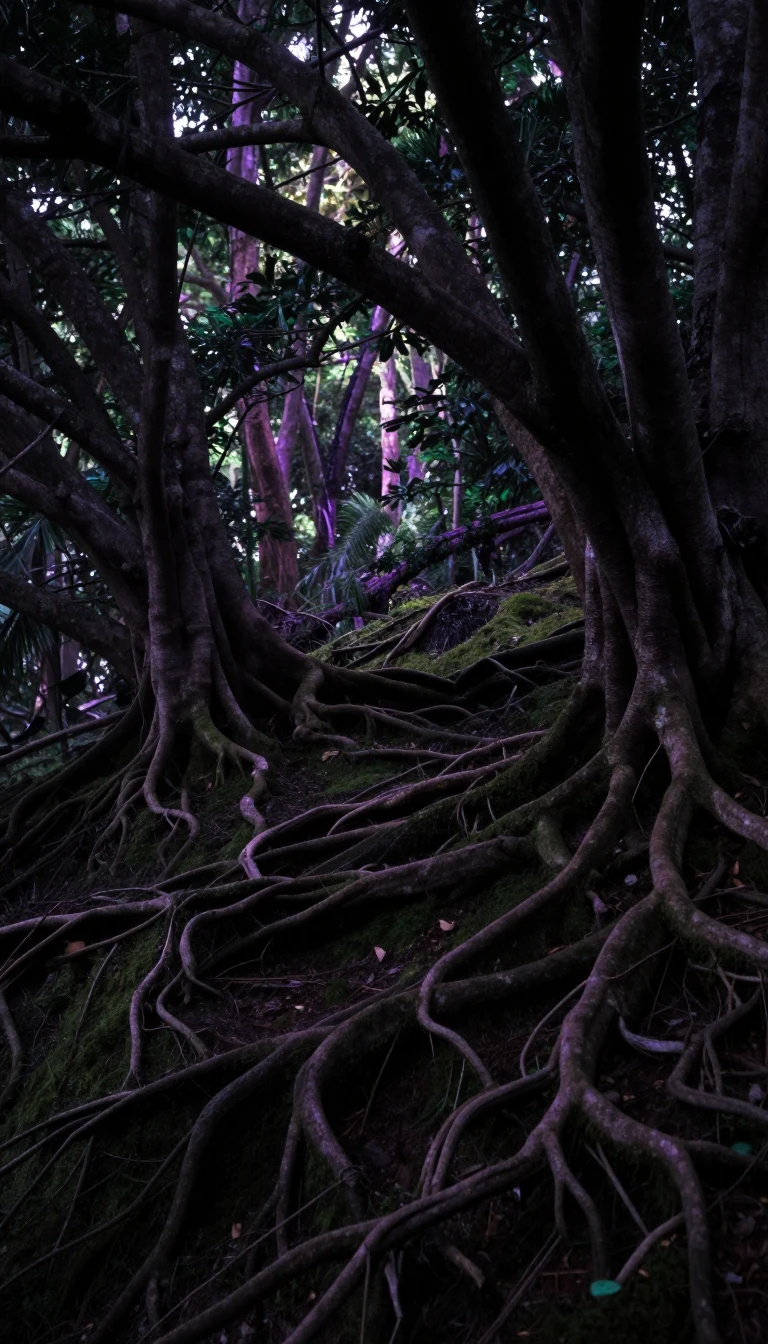
Montane ecosystems are defined by their verticality. As elevation increases, atmospheric pressure drops and airmasses cool, creating a predictable sequence of life zones. At moderate elevations, temperate climates and sufficient rainfall support dense montane forests. These forests are distinct from lowland counterparts, often featuring species more typical of higher-latitude regions. In the tropics, this zone can include cloud forests, where mossy vegetation thrives on moisture captured directly from passing fog.
As you ascend further, you reach the subalpine zone, where the environment grows harsher. Here, trees struggle against increasing wind, often becoming stunted, twisted forms known as krummholz. These resilient trees can live for centuries, sometimes growing horizontally behind the protection of rocks to survive. Eventually, the tree line marks the boundary where conditions become too severe for tree growth, giving way to the alpine tundra. This high-altitude world is dominated by low-growing grasses, sedges, and cushion plants that have evolved specialized survival strategies, such as heat-absorbing pigments and dense, protective hairs.
These ecosystems are remarkably fragile. In the alpine tundra, a single footprint can damage vegetation that may take hundreds of years to recover. Furthermore, these regions act as 'sky islands,' isolated by warmer lowlands, which drives the evolution of endemic species. The Hengduan Mountains near the Tibetan Plateau host a community of 3,000 plant species, some of which have co-existed for 30 million years. However, climate change poses a significant threat, with models predicting reduced snowpack, increased summer drought, and shifting species ranges that could lead to widespread biodiversity loss.
The sensitivity of these zones is particularly evident in tropical cloud forests, where reduced cloudiness—already observed in Costa Rica’s Monteverde—could disrupt the delicate moisture balance required for survival. Whether through the giant rosette plants of the Andes or the ancient, wind-battered trees of the subalpine, montane ecosystems remain some of the most specialized and vulnerable habitats on Earth.
Opens the Intellect+ feed with this card first. Swipe up for the next one.
Sources
- Summary by Intellect · source: Montane ecosystem
To cite this card, link to https://intellectplus.co.uk/app/nature-montane-ecosystem.
How we source, check and correct cards: Editorial standards.
General information, not professional advice. Spotted an error? Flag the card or see corrections and complaints.
Intellect Plus is a visual educational discovery platform for exploring fascinating facts and ideas. Brain Food, Not Brain Rot. What is Intellect Plus?
Related
More in Earth science basics · More in Nature · Latest · A–Z · All topics
