Was this ancient primate the missing link between humans and the great apes?
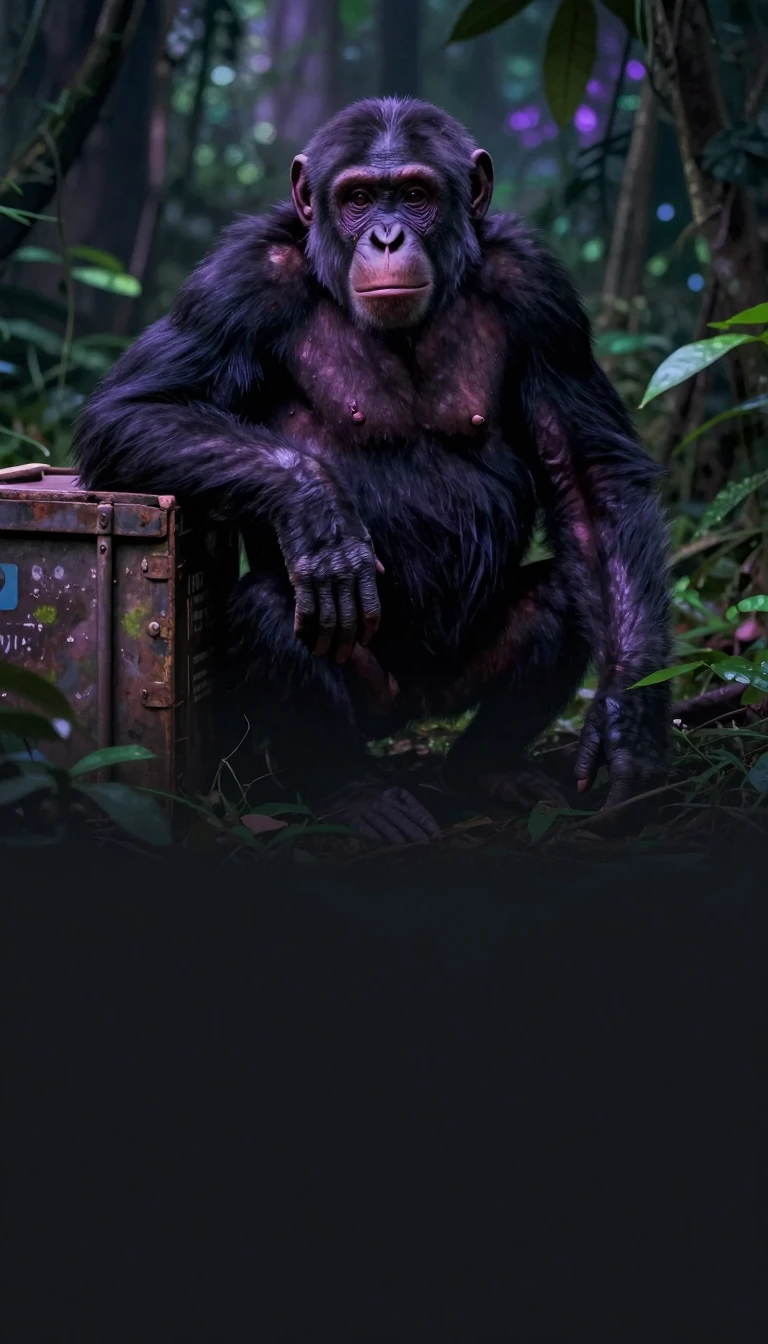
In short: Proconsul, a primate that roamed Eastern Africa millions of years ago, remains a central puzzle in evolutionary biology. With a unique blend of monkey-like posture and ape-like anatomy, this genus challenges our understanding of how the lineage leading to modern chimpanzees and humans first began to take shape.
Existing between 21 and 17 million years ago during the Miocene epoch, Proconsul represents a critical, if debated, chapter in primate evolution. Its name, coined by Arthur Hopwood in 1933, translates to 'before Consul,' referencing a famous performing chimpanzee in London. This nomenclature reflects the early scientific hope that the genus served as a direct ancestor to modern chimpanzees and, by extension, the broader ape family.
The physical reality of Proconsul is a mosaic of traits. While it lacked a tail—a defining characteristic of modern apes—and possessed enhanced grasping abilities, it moved with a pronograde, monkey-like posture. Unlike modern apes, it could not swing effortlessly through branches. Instead, it navigated the tropical, semi-deciduous forests of Kenya and Uganda as an arboreal quadruped. These environments were warm, with temperatures often exceeding 25°C and significant annual rainfall.
Classification of the genus has been notoriously fluid. Since the first partial jaw was unearthed by a gold prospector in 1909, palaeoanthropologists have frequently shifted their interpretations as new fossils emerged. While Louis Leakey proposed the family Proconsulidae in 1963, some researchers, such as Peter Andrews and Lawrence Martin in 1987, have argued that Proconsul sits outside the Hominoidea superfamily entirely. Today, the genus is split into four recognized species, though the taxonomy remains subject to revision as fossils are re-examined and reclassified into new groups like Ekembo.
The ongoing reclassification of these fossils highlights the complexity of reconstructing deep evolutionary history. As researchers continue to analyze palaeosols and skeletal remains, the consensus on where Proconsul fits in the primate tree remains tentative. It stands as a reminder that our understanding of human origins is not a static record, but a dynamic field that evolves alongside every new discovery in the African landscape.
Opens the Intellect+ feed with this card first. Swipe up for the next one.
Sources
- Summary by Intellect · source: Proconsul (mammal)
To cite this card, link to https://intellectplus.co.uk/app/nature-proconsul-mammal.
How we source, check and correct cards: Editorial standards.
General information, not professional advice. Spotted an error? Flag the card or see corrections and complaints.
Intellect Plus is a visual educational discovery platform for exploring fascinating facts and ideas. Brain Food, Not Brain Rot. What is Intellect Plus?
Related
More in Vertebrates · More in Nature · Latest · A–Z · All topics
