Why the Earth's crust behaves like both a brittle fracture and flowing hot metal.
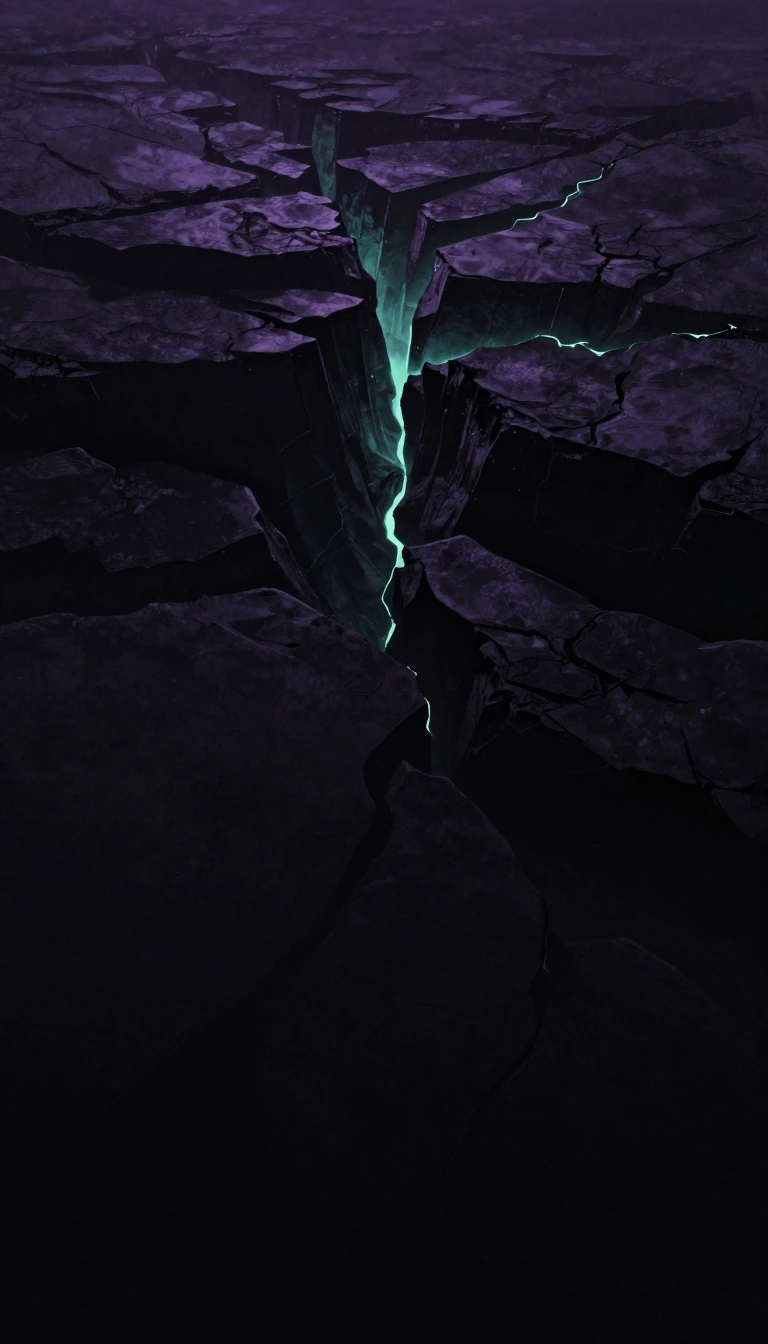
In short: Deep beneath our feet, the Earth's crust undergoes a dramatic transformation. While surface rocks shatter under pressure, deeper layers flow like heated metal. These shear zones act as the planet's internal plumbing, dictating where earthquakes strike, how mountains shift, and where precious gold deposits are forged in the dark.
A shear zone is a localized region of intense deformation where rock walls slip past one another. These structures exist on a continuum defined by depth, temperature, and pressure. Near the surface, the crust is brittle, causing rocks to fracture into faults. As depth increases, the environment shifts toward ductile behavior, where rock flows plastically without breaking. This transition is not a sharp line but an alternating zone where both mechanisms coexist, influenced by factors like mineral composition, grain size, and the geothermal gradient.
According to models of quartzo-feldspathic crust, the transition from brittle to semibrittle behavior begins at approximately 11 km depth, where temperatures reach 300 °C. The alternating zone persists until about 16 km, where temperatures hit 360 °C; beyond this, deformation is entirely ductile. This depth range is critical because it houses the seismogenic zone, where earthquakes nucleate. While most seismic activity is confined to the upper 11 km, major ruptures can occasionally penetrate deep into the alternating zone or even the plastosphere.
These zones are far more than mere geological scars; they are essential for understanding the history of a terrane. By analyzing microscopic indicators like crystallographic preferred orientation or macroscopic features such as slickenfibers, geologists can reconstruct the movement and stress history of the crust. Because shear zones act as major conduits for circulating water and dissolved ions, they facilitate metasomatism and the concentration of minerals, often creating economically significant gold deposits. These networks are long-lived, frequently showing evidence of multiple stages of activity that span geological ages.
The scale of these features is vast, ranging from microscopic grain-level shifts to megashears that span 10 km in width and hundreds of kilometers in displacement. Whether they manifest as the strike-slip motion of the San Andreas Fault or the thrusting of the Moine Thrust, shear zones represent the primary mechanism by which the Earth accommodates relative motion, effectively acting as the structural joints of the planet's crust.
Opens the Intellect+ feed with this card first. Swipe up for the next one.
Sources
- Summary by Intellect · source: Shear zone
To cite this card, link to https://intellectplus.co.uk/app/nature-shear-zone.
How we source, check and correct cards: Editorial standards.
General information, not professional advice. Spotted an error? Flag the card or see corrections and complaints.
Intellect Plus is a visual educational discovery platform for exploring fascinating facts and ideas. Brain Food, Not Brain Rot. What is Intellect Plus?
Related
More in Geology · More in Nature · Latest · A–Z · All topics
