Why do mountains melt like mist and carve out massive U-shaped valleys?
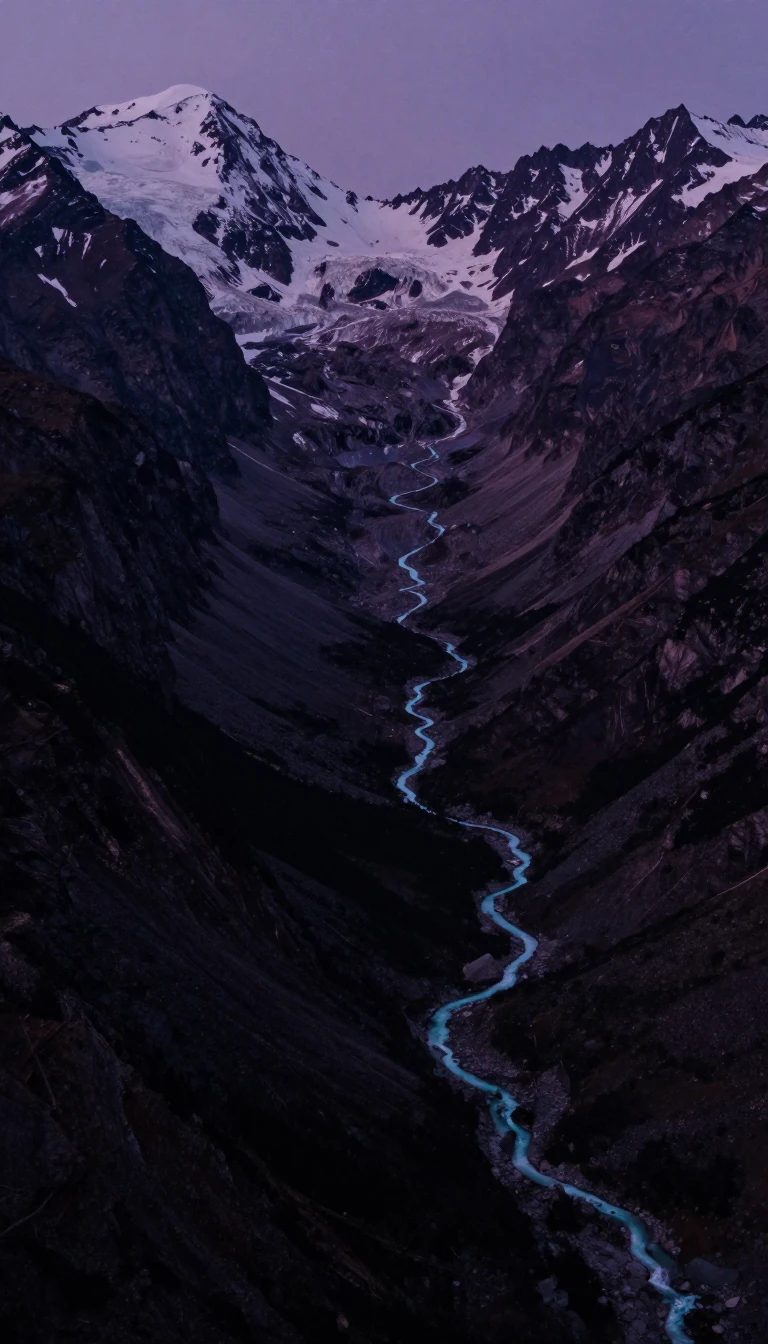
In short: Glaciers are not merely frozen water; they are powerful geological architects. Over tens of thousands of years, these massive ice sheets scour mountain slopes, transforming narrow V-shaped river valleys into wide, steep-walled troughs. This slow, relentless process reshapes the Earth's surface, leaving behind dramatic landscapes that define our planet's topography.
The formation of a U-shaped valley is a testament to the immense power of glacial erosion. Unlike rivers, which typically carve sharp, V-shaped gorges, glaciers act as heavy, abrasive tools that scour the bedrock. As ice moves downhill, it removes the surfaces that offer the most resistance to flow, creating a parabolic cross-section that minimizes friction. This transformation is a slow, geologic-scale process, often requiring between 10,000 and 100,000 years to complete.
These valleys are not static features but are products of complex denudational systems. According to Britannica, landscape evolution is an expression of progressive changes in topography driven by available energy. When glaciers retreat, they leave behind distinct markers of their passage, such as glacial till and erratic boulders. The resulting troughs can reach depths of several thousand feet and stretch for tens of miles, often featuring stepwise longitudinal profiles with flat basins interrupted by rocky thresholds.
The history of understanding these features is relatively modern. Geologists once struggled to believe that soft ice could carve through solid bedrock, but figures like Penck and Davis eventually championed the theory of glacial erosion. Today, we recognize that these valleys are part of a larger cycle of landform evolution. As the poet Alfred, Lord Tennyson observed, the solid lands are constantly shaping themselves, melting like mist over vast timescales until internal tectonic processes regenerate the relief once more.
Beyond their aesthetic grandeur, these valleys play a functional role in the environment. When they extend into the sea, they become fjords, and their floors often host deep 'fjord-lakes' created by over-deepening. Even after the ice has vanished, the landscape remains altered, with hanging valleys and misfit streams serving as lingering evidence of the colossal forces that once dominated the terrain.
Opens the Intellect+ feed with this card first. Swipe up for the next one.
Sources
- Summary by Intellect · source: U-shaped valley | geology | Britannica
- Also: U-shaped valley
To cite this card, link to https://intellectplus.co.uk/app/nature-u-shaped-valley.
How we source, check and correct cards: Editorial standards.
General information, not professional advice. Spotted an error? Flag the card or see corrections and complaints.
Intellect Plus is a visual educational discovery platform for exploring fascinating facts and ideas. Brain Food, Not Brain Rot. What is Intellect Plus?
Related
More in Geomorphology · More in Nature · Latest · A–Z · All topics
