How shaking a bottle creates a repeating cycle of color
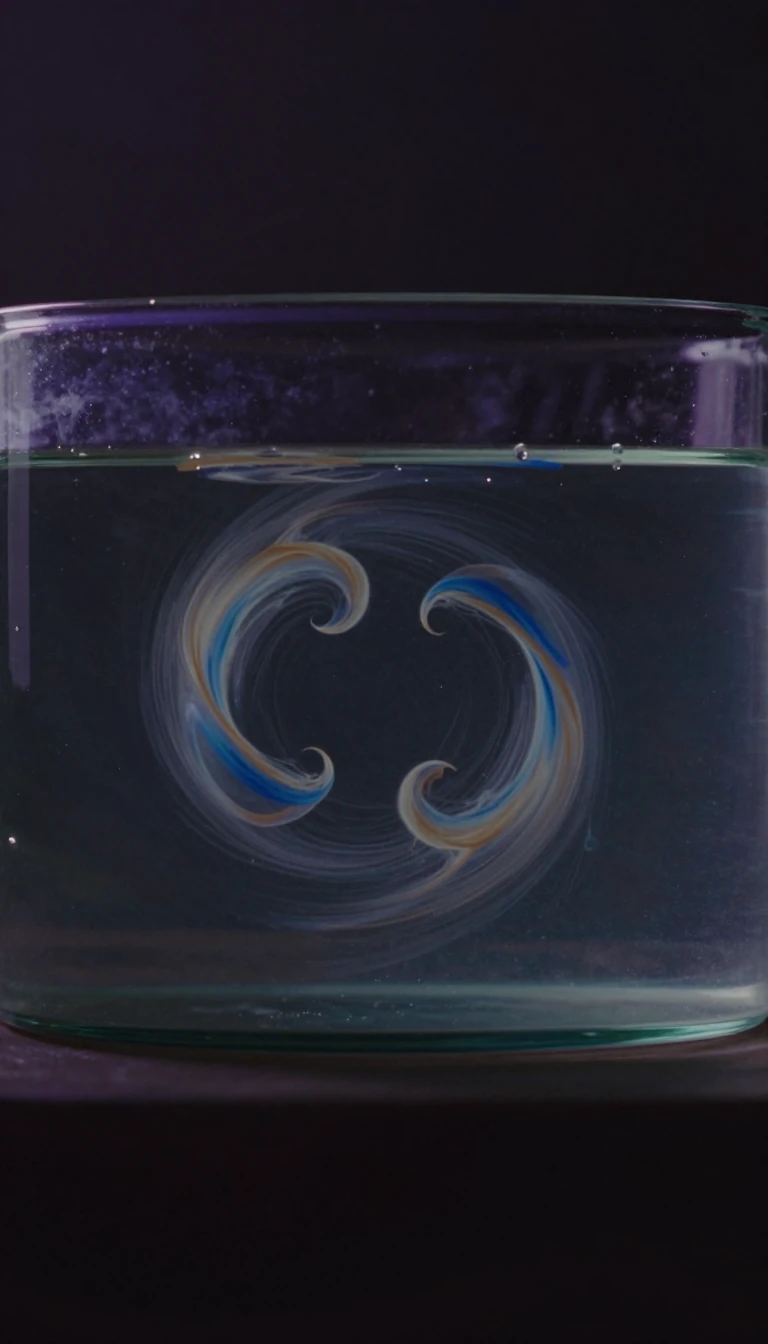
In short: A simple mixture of glucose, sodium hydroxide, and methylene blue can flip between blue and colorless just by moving the container. This isn't magic; it is a visual map of competing chemical reactions where oxygen acts as a gatekeeper for the solution's appearance.
The blue bottle experiment is a classic demonstration of redox chemistry, specifically illustrating how complex reactions with different rates interact. In this system, an alkaline glucose solution acts as a reducing agent. When left still, it spontaneously reduces methylene blue into a colorless form called leucomethylene blue. However, shaking the bottle introduces oxygen from the headspace air into the liquid. This oxygen immediately oxidizes the colorless dye back into its vibrant blue state.
The underlying mechanism reveals how reaction rates determine chemical outcomes. In many complex systems, individual sub-reactions occur simultaneously at different speeds. While the fastest component often dictates the overall rate, reactions involving intermediate molecules are governed by the slowest step. In the blue bottle, the color change serves as a visual clock: as dissolved oxygen is gradually and irreversibly consumed by the glucose, the reduction of the dye proceeds unopposed, causing the solution to fade.
Modern variations have refined this experiment for safety and sustainability. Researchers have developed 'green' versions using vitamin C as a reducing agent or enzymatic approaches involving glucose oxidase and horseradish peroxidase to create a green-colored version. These iterations allow scientists to study chemical kinetics, pattern formation—where diffusion and reaction speeds create mosaic or spiral structures—and the principles of steady-state intermediates in a controlled, observable environment.
Interestingly, the chemistry is robust enough to work with various dyes like indigo carmine or resazurin, and even common food products. Because many drinks contain both reducing sugars and redox dyes, adding sodium hydroxide can transform everyday items into active chemical laboratories.
Opens the Intellect+ feed with this card first. Swipe up for the next one.
Sources
- Summary by Intellect · source: Blue bottle experiment
To cite this card, link to https://intellectplus.co.uk/app/science-blue-bottle-experiment.
How we source, check and correct cards: Editorial standards.
General information, not professional advice. Spotted an error? Flag the card or see corrections and complaints.
Intellect Plus is a visual educational discovery platform for exploring fascinating facts and ideas. Brain Food, Not Brain Rot. What is Intellect Plus?
Related
More in Famous experiments · More in Science · Latest · A–Z · All topics
