Why water boils at a lower temperature on a mountain
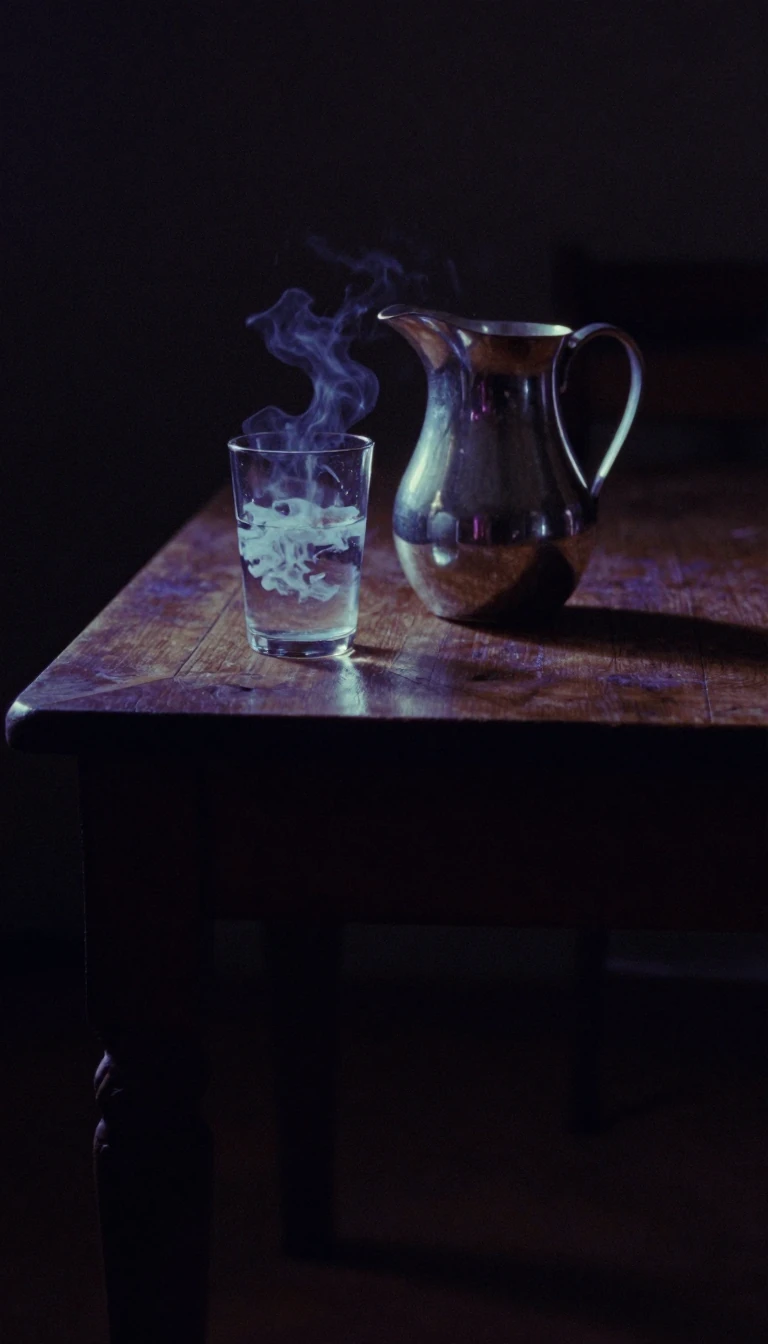
In short: Water boils at 100 °C at sea level, but at 93.4 °C on a peak about 1,905 metres up. Boiling happens when a liquid's vapour pressure matches the air pressure around it. Lower the air pressure and the liquid reaches that balance sooner, at a lower temperature. The same rule explains why salt water boils hotter than pure water.
Boiling is not simply a matter of heat reaching a fixed number. A boiling point is the temperature at which the vapour pressure of a liquid equals the pressure of the surroundings, and the liquid turns into vapour. Because that surrounding pressure changes with altitude, the boiling point changes too. Water boils at about 100 °C at standard sea-level pressure, but on a mountain at 1,905 metres it boils at 93.4 °C. Engineers publish boiling points against a stated standard pressure for exactly this reason.
The same principle works in the other direction. Raising the pressure raises the boiling point, up to a limit called the critical point, beyond which the liquid and gas can no longer be told apart. At the top of Mount Everest, where the pressure is roughly a third of sea-level pressure, water boils at about 71 °C, which is why cooking there takes longer.
Dissolved substances matter as well. A non-volatile solute such as salt lowers the solvent's vapour pressure, so the mixture must get hotter before it boils. This is called boiling-point elevation, and it depends on how many dissolved particles are present rather than on what they are. Chemists have used it to estimate the molar mass of a solute. Boiling points also reflect molecular structure. Substances with ionic bonds often boil at high temperatures, larger molecules tend to boil higher, and hydrogen bonding makes molecules harder to release into vapour. Mixtures can behave in surprising ways too: an ethanol and water mixture boils at 78.2 °C, below either pure component, which is why it cannot be concentrated past that point by simple distillation.
Opens the Intellect+ feed with this card first. Swipe up for the next one.
Sources
- Summary by Intellect · source: Boiling point - Wikipedia
- Also: Azeotrope - Wikipedia
To cite this card, link to https://intellectplus.co.uk/app/science-how-does-boiling-work.
How we source, check and correct cards: Editorial standards.
General information, not professional advice. Spotted an error? Flag the card or see corrections and complaints.
Intellect Plus is a visual educational discovery platform for exploring fascinating facts and ideas. Brain Food, Not Brain Rot. What is Intellect Plus?
Related
More in Researched · More in Science · Latest · A–Z · All topics
