The proteasome is a sophisticated molecular machine that recycles your cells' proteins
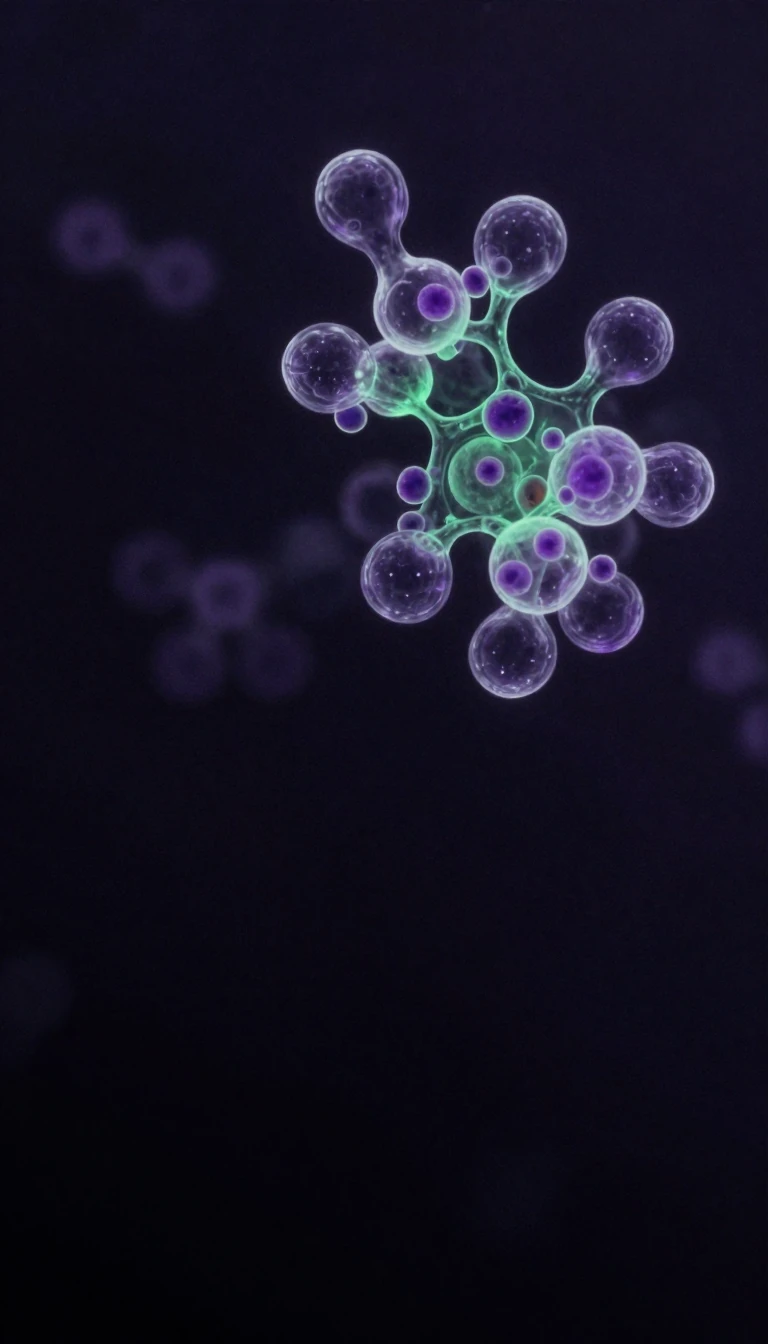
In short: Inside your cells, a massive protein complex called the proteasome acts as a high-precision waste disposal unit. By selectively breaking down damaged or unneeded proteins, this 2.5-megadalton machine regulates everything from your immune response to your cell cycle, ensuring your biological systems remain balanced and functional.
The proteasome is a complex, barrel-shaped structure found in eukaryotic cells. Its primary role is the ATP-dependent degradation of intracellular proteins. The standard functional unit, often called the 26S proteasome, consists of a catalytic core particle—the 20S proteasome—capped by one or two 19S regulatory particles. These regulatory particles act as gatekeepers, recognizing proteins tagged for destruction and preparing them for entry into the core.
The degradation process relies on a molecular tag called ubiquitin. A cascade of enzymes, specifically E1, E2, and E3 ligases, attaches a chain of at least four ubiquitin molecules to a target protein. This polyubiquitin chain serves as a signal, shuttling the substrate to the proteasome. Once there, the 19S particle unfolds the protein and translocates it into the 20S core, where threonine residues within the chamber break the protein down into smaller peptides.
This system is remarkably dynamic. Ubiquitylation is reversible, thanks to approximately 95 deubiquitylating enzymes (DUBs) in the human genome that can remove ubiquitin tags, allowing for recycling. Furthermore, the proteasome is not a single static entity; it exists in various subtypes, such as the immunoproteasome and the thymoproteasome, which are specialized to support specific cellular functions like immune responses. The discovery of this system, which fundamentally changed our understanding of protein turnover, earned Aaron Ciechanover, Avram Hershko, and Irwin Rose the 2004 Nobel Prize in Chemistry.
While the 26S proteasome is the most commonly cited form, physicochemical analysis suggests the functional unit in the cell may be an elongated 30S molecule, featuring a pair of symmetrically disposed 19S regulatory particles. Research continues to elucidate how these structures adapt to different cellular needs, with recent advancements in cryo-electron microscopy providing atomic-level insights into how the proteasome recognizes, unfolds, and destroys its targets.
Opens the Intellect+ feed with this card first. Swipe up for the next one.
Sources
- Summary by Intellect · source: The proteasome: Overview of structure and functions
- Also: Proteasome
To cite this card, link to https://intellectplus.co.uk/app/science-proteasome.
How we source, check and correct cards: Editorial standards.
General information, not professional advice. Spotted an error? Flag the card or see corrections and complaints.
Intellect Plus is a visual educational discovery platform for exploring fascinating facts and ideas. Brain Food, Not Brain Rot. What is Intellect Plus?
Related
More in Cell biology · More in Science · Latest · A–Z · All topics
