Space is filled with natural masers that amplify light across the cosmos
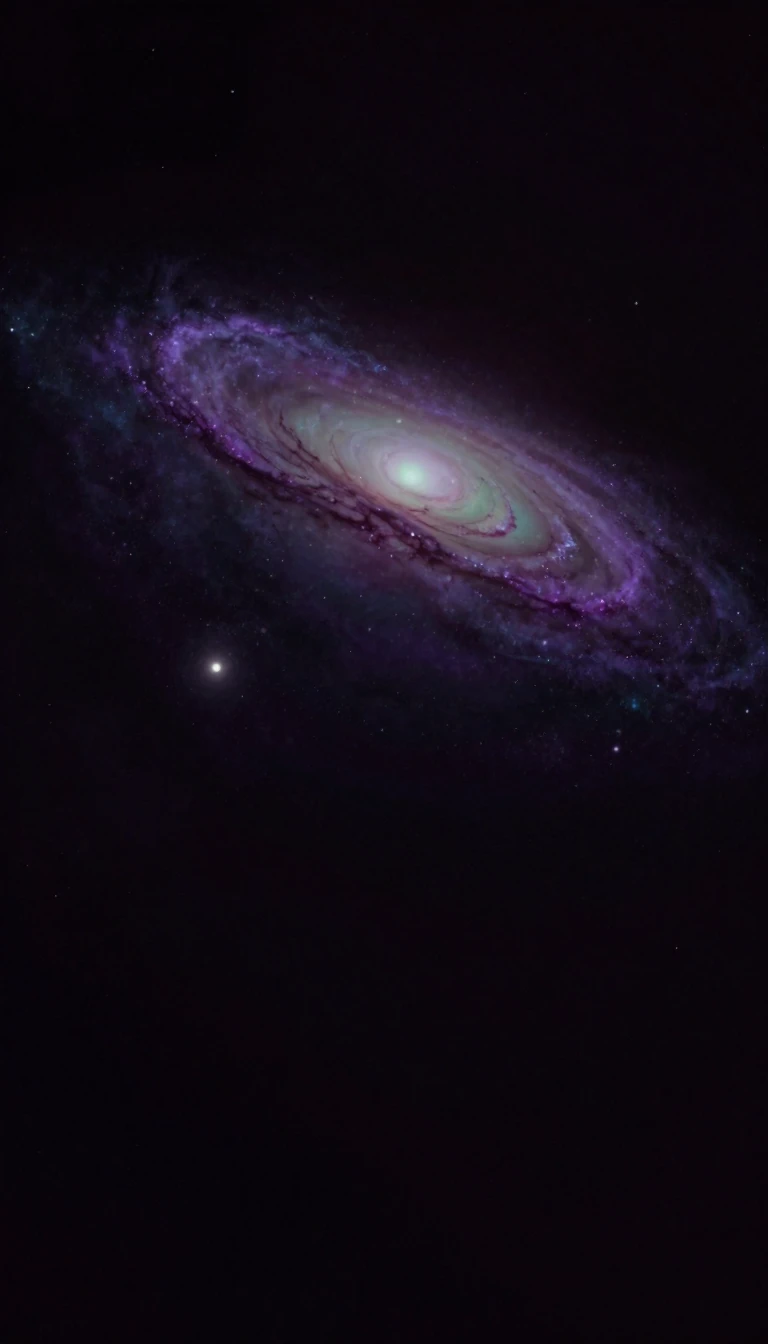
In short: Astrophysical masers are naturally occurring sources of stimulated microwave emission found in molecular clouds, comets, and near black holes. Unlike laboratory lasers, these cosmic beams lack resonant cavities, relying instead on exponential gain through interstellar gas to produce intense, monochromatic radiation that reveals the hidden physics of the universe.
Astrophysical masers occur when molecules in space are pumped into a non-thermal population distribution, creating a medium that amplifies radiation. While laboratory masers use engineered resonant cavities to achieve coherence, astrophysical masers function through a single pass of radiation through a gain medium. This process is technically a form of amplified spontaneous emission, though it is often referred to as superradiant emission. Because the gain is exponential, even small variations in path length or population inversion lead to massive changes in output, often resulting in narrow, intense beams of light.
The discovery of these phenomena began in 1965 with the detection of 1665 MHz emission lines, initially misidentified as a hypothetical substance called mysterium before being linked to hydroxide molecules. Since then, researchers have identified masers in diverse environments, including the halos of comets, the atmospheres of gas giant planets, and the dense regions surrounding young stars. In 1982, the discovery of megamasers—sources with luminosities up to 10^6 times greater than previous findings—revealed that these processes occur on galactic scales, often fueled by molecular disks falling into central black holes.
Studying these masers provides a unique diagnostic tool for environments that are otherwise difficult to measure, such as the centers of galaxies or the chaotic regions of stellar birth and death. By analyzing the Doppler shift of narrow spectral lines, astronomers can map three-dimensional dynamics, such as the motion of material around forming stars or the rotation of disks around black holes. This has enabled precise distance measurements to galaxies like NGC 4258 and the Triangulum Galaxy, proving that these natural amplifiers are essential for calibrating our understanding of the galactic distance scale.
Despite their utility, many aspects of maser physics remain contested or poorly understood. Unlike terrestrial devices where the excitation mechanism is engineered, astrophysical masers are discovered empirically, leaving scientists to develop theories for their pumping schemes after the fact. Challenges like competitive gain, saturation, and the complex interplay of magnetic fields and polarization ensure that maser research remains a vital, evolving field within radio astronomy.
Opens the Intellect+ feed with this card first. Swipe up for the next one.
Sources
- Summary by Intellect · source: Astrophysical maser
To cite this card, link to https://intellectplus.co.uk/app/space-astrophysical-maser.
How we source, check and correct cards: Editorial standards.
General information, not professional advice. Spotted an error? Flag the card or see corrections and complaints.
Intellect Plus is a visual educational discovery platform for exploring fascinating facts and ideas. Brain Food, Not Brain Rot. What is Intellect Plus?
Related
More in Observational astronomy · More in Space · Latest · A–Z · All topics
