Did a violent collision with a rogue planet 4.5 billion years ago create our Moon?
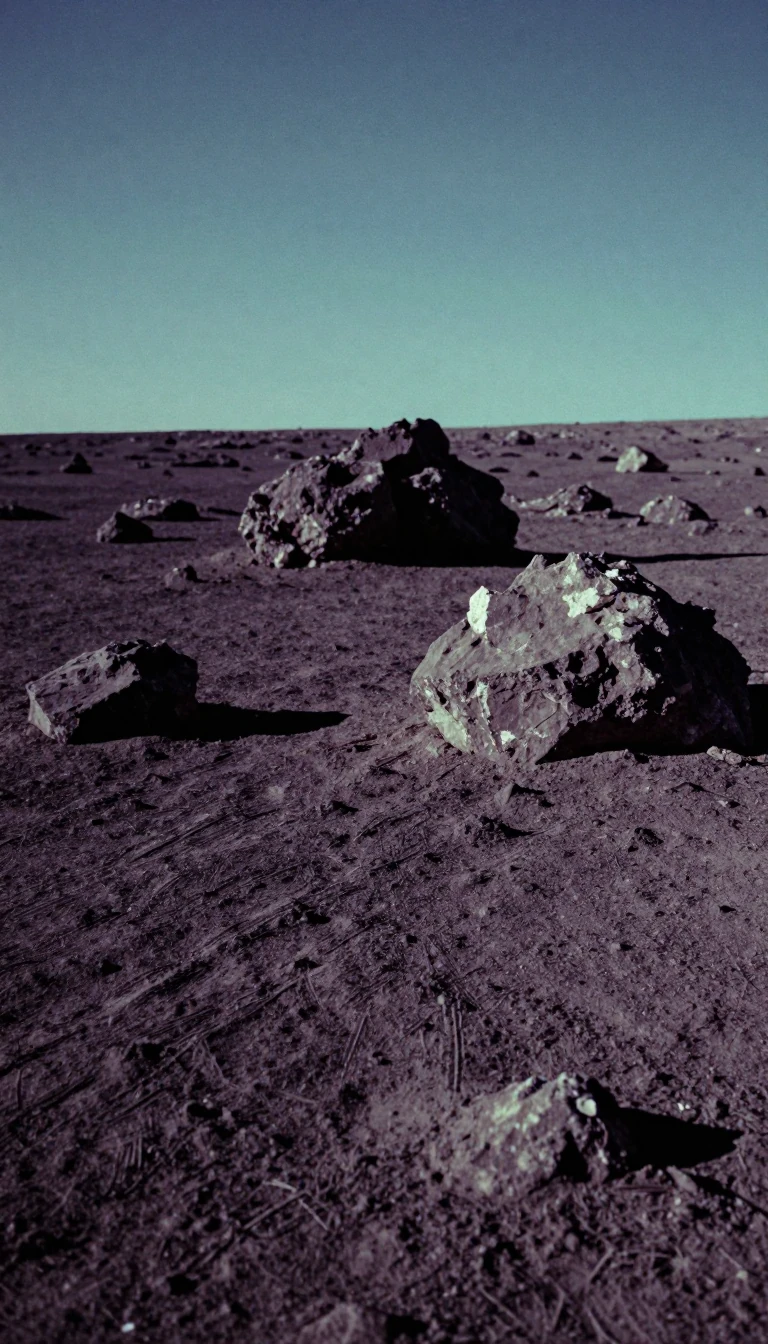
In short: The Moon may be the debris of a cosmic catastrophe. About 4.5 billion years ago, a Mars-sized protoplanet named Theia collided with Earth, shattering both bodies. This violent impact ejected molten rock and vapor into orbit, which eventually clumped together to form the Moon we see in our night sky today.
The giant-impact hypothesis is the leading scientific model for the Moon's origin, addressing anomalies that earlier theories could not explain. Before this framework gained traction, the dominant view—proposed by George Darwin in 1898—suggested the Moon had simply spun off from a molten Earth due to centrifugal forces. However, this could not account for the Earth-Moon system's unusually high angular momentum. The giant-impact model, first proposed by Reginald Daly in 1946 and later refined by researchers like William K. Hartmann and Donald R. Davis in the 1970s, posits that a massive collision provided the necessary energy to explain both this momentum and the Moon's distinct composition.
The physical evidence supporting this model is compelling. Lunar samples returned by the Apollo program show that the Moon is significantly depleted in iron compared to Earth, suggesting it formed primarily from the outer silicate layers of the colliding bodies rather than their metallic cores. Furthermore, the Moon is remarkably dry, lacking the volatile substances found on Earth. Scientists believe the searing heat of the impact vaporized these materials, which were then lost to space, leaving behind a relatively barren world. Analysis of lunar rocks also reveals that the Moon was once molten to a substantial depth, a state consistent with the immense energy released during such a cataclysmic event.
Despite its status as the favored framework, the hypothesis remains an unfolding tale. While computer models successfully simulate the impact and the subsequent formation of a debris disk, researchers have yet to produce a self-consistent model that tracks the entire evolution of that debris into a single, stable moon. Current efforts, including those by the Southwest Research Institute, continue to analyze the chemistry of early Earth and lunar samples to resolve these mysteries. As new missions like the Artemis program prepare to explore the lunar surface, scientists hope to further refine our understanding of this violent birth and the processes that shaped the terrestrial planets.
Opens the Intellect+ feed with this card first. Swipe up for the next one.
Sources
- Summary by Intellect · source: The Moons Formation and Evolution
- Also: Giant-impact hypothesis
To cite this card, link to https://intellectplus.co.uk/app/space-giant-impact-hypothesis.
How we source, check and correct cards: Editorial standards.
General information, not professional advice. Spotted an error? Flag the card or see corrections and complaints.
Intellect Plus is a visual educational discovery platform for exploring fascinating facts and ideas. Brain Food, Not Brain Rot. What is Intellect Plus?
Related
More in Astronomical objects · More in Space · Latest · A–Z · All topics
