Are interstellar clouds actually flat pancakes rather than the needle-like filaments we once imagined?
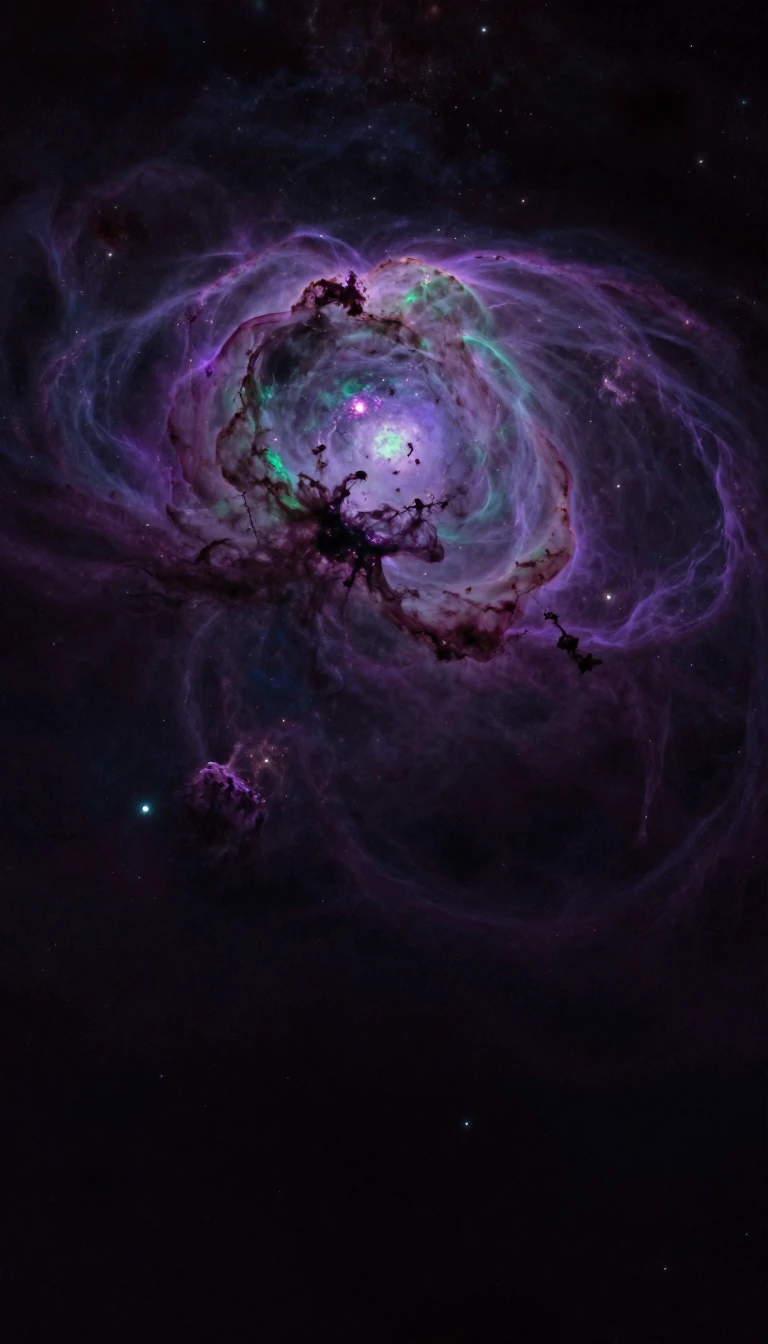
In short: Interstellar clouds are the nurseries of stars, yet their true shapes have long eluded us. While we once viewed these gas-and-dust structures as serpentine filaments, new 3D analysis suggests they may be flat, pancake-like sheets. This shift in perspective is fundamentally changing how we understand the origins of stellar systems.
Molecular clouds are dense, irregular regions of the interstellar medium, primarily composed of hydrogen gas and dust. These clouds are so opaque that their central regions remain hidden from visible light, detectable only through far-infrared thermal emissions or microwave radiation from their internal molecules. Within these cold, dark environments—where temperatures hover between 7 and 15 K—gravity triggers the collapse of dense clumps, eventually birthing protostars. These protostars often form rotating disks that may evolve into planetary systems, a process exemplified by the young T Tauri variables found in the constellation Taurus.
The chemistry within these clouds is surprisingly complex and exotic. Despite low temperatures and densities that would typically stall reactions, scientists have detected organic molecules like formaldehyde, methanol, and vinyl alcohol. These findings suggest that gas-phase reactions occur much faster than previously assumed, potentially through mechanisms unfamiliar to terrestrial chemistry. In the deepest, darkest regions, carbon monoxide becomes the dominant form of carbon, while cosmic rays provide the primary source of internal heating, allowing unstable chemical species to persist that would otherwise transform into more stable forms under Earth-like conditions.
Recent breakthroughs in 3D modeling have challenged our traditional 2D projections of these structures. For instance, the Musca cloud, once thought to be a skinny filament, appears to be a flat, pancake-like sheet extending about 20 light-years. By recovering normal mode spatial frequencies, researchers can now better map these clouds, providing insights into how they evolve and why stars form in such vast varieties. This research is vital to astrobiology, as understanding the birth of stars and the chemical makeup of these clouds offers essential clues about the origins of life on Earth and the potential for life on exoplanets across the galaxy.
Opens the Intellect+ feed with this card first. Swipe up for the next one.
Sources
- Summary by Intellect · source: Molecular cloud | Astronomy, Star Formation & Interstellar Medium | Britannica
- Also: NASA Astrobiology
- Also: Interstellar cloud
To cite this card, link to https://intellectplus.co.uk/app/space-interstellar-cloud.
How we source, check and correct cards: Editorial standards.
General information, not professional advice. Spotted an error? Flag the card or see corrections and complaints.
Intellect Plus is a visual educational discovery platform for exploring fascinating facts and ideas. Brain Food, Not Brain Rot. What is Intellect Plus?
Related
More in Galactic and extragalactic astronomy · More in Space · Latest · A–Z · All topics
