The hottest, thinnest gas in the universe holds the secret to dark matter
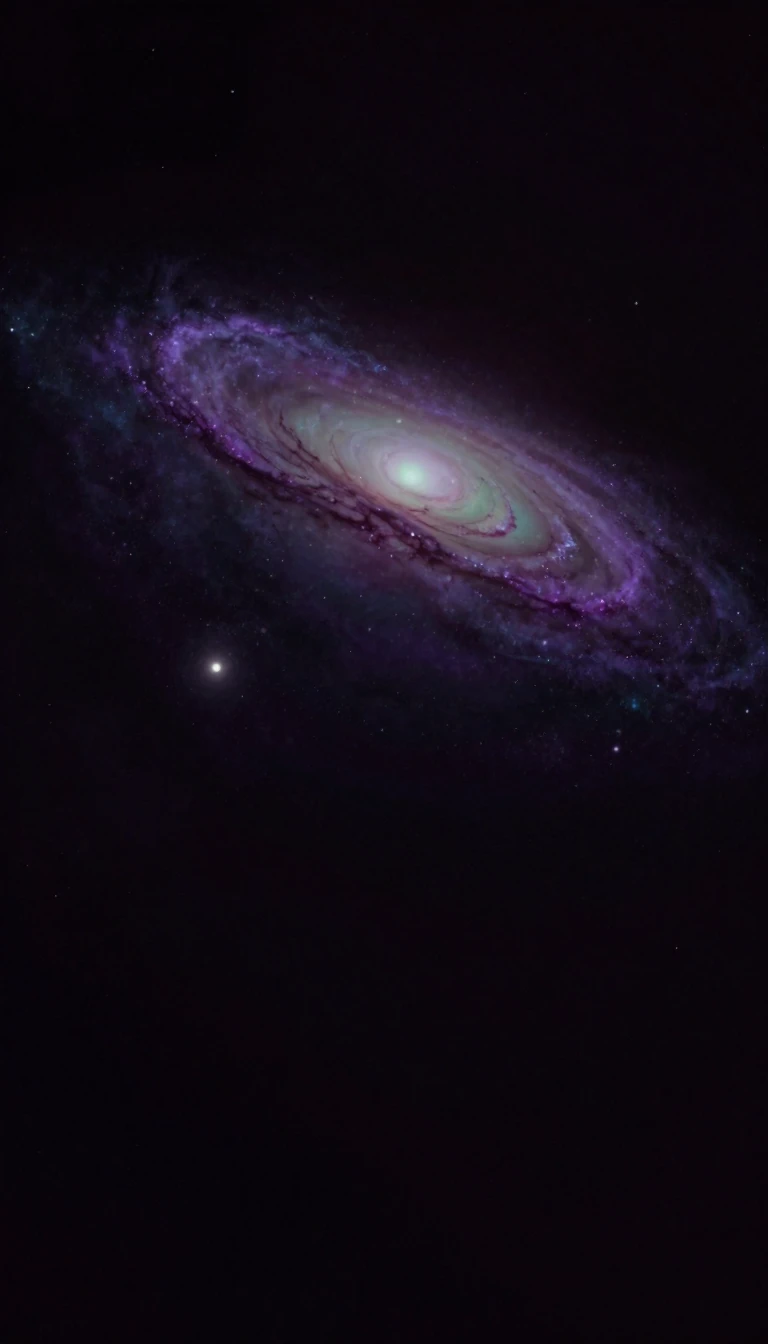
In short: Galaxy clusters are not just collections of stars; they are filled with a superheated, invisible plasma called the intracluster medium. This medium accounts for most of the visible matter in a cluster, yet it is so sparse that particles travel a light-year before colliding with one another.
The intracluster medium (ICM) is a superheated plasma reaching temperatures between 10 and 100 megakelvins. Composed primarily of ionized hydrogen and helium, it acts as a historical record of element production, enriched with heavy elements like iron ejected from supernovae. Despite containing the bulk of a cluster's baryonic matter—roughly 15% of the total mass—the ICM is incredibly diffuse, with a density of about 10−3 particles per cubic centimeter. This plasma emits intense X-ray radiation, which astronomers analyze to map the physical conditions of these massive structures.
The existence of the ICM provides compelling evidence for dark matter. By modeling the plasma's temperature and density in hydrostatic equilibrium, researchers have calculated mass distributions that far exceed the visible light observed. While the ICM is the most massive baryonic component, it is dwarfed by dark matter, which is theorized to constitute the majority of a cluster's total mass. For instance, in the Virgo Cluster, the ICM contains approximately 3 × 10¹⁴ Solar masses, while the total cluster mass is estimated at 1.2 × 10¹⁵ Solar masses.
A central mystery involves why the ICM does not cool as rapidly as theoretical models predict. Historically, scientists expected cooling flows to trigger massive star formation in cluster cores, but high-resolution imaging from the Chandra X-ray Observatory shows this is not occurring. Current research suggests that feedback from active galactic nuclei, which inject relativistic jets of plasma, or the sloshing of gas during subcluster mergers, prevents this cooling. A 2024 simulation by Eric Rohr et al. using TNG-Cluster software further suggests that supermassive black holes play a critical role in regulating this cool gas mass, highlighting the complex interplay between galactic evolution and the surrounding medium.
Opens the Intellect+ feed with this card first. Swipe up for the next one.
Sources
- Summary by Intellect · source: Intracluster medium
To cite this card, link to https://intellectplus.co.uk/app/space-intracluster-medium.
How we source, check and correct cards: Editorial standards.
General information, not professional advice. Spotted an error? Flag the card or see corrections and complaints.
Intellect Plus is a visual educational discovery platform for exploring fascinating facts and ideas. Brain Food, Not Brain Rot. What is Intellect Plus?
Related
More in Galactic and extragalactic astronomy · More in Space · Latest · A–Z · All topics
