Interstellar ice may be the secret delivery system for supernova material to Earth
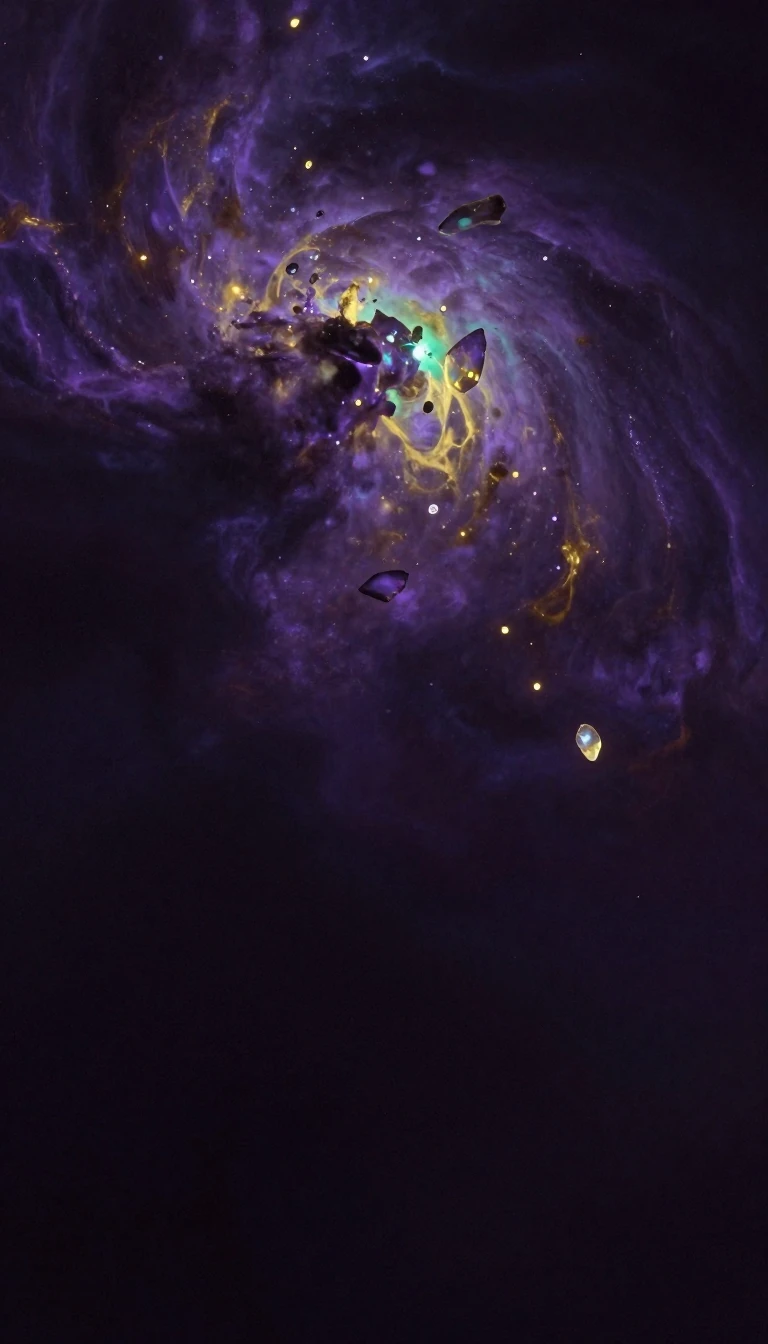
In short: Scientists have long puzzled over why inner planets like Earth contain different isotopic signatures than outer solar system bodies. New research suggests the answer lies in interstellar ice. Rather than being trapped in solid dust, supernova material may have been carried into our early solar system via volatile icy mantles.
The early solar system was a complex chemical mixing bowl. While rocky bodies like Earth are relatively depleted in supernova-derived nuclides, outer solar system objects show significant enrichment. Historically, researchers debated two primary explanations: either the protoplanetary disk underwent a compositional shift during accretion, or high temperatures in the inner disk selectively destroyed supernova-carrying material. However, neither model fully accounted for the observed isotopic variability.
A compelling new hypothesis posits that interstellar ices act as the primary carrier for these supernova signatures. In the interstellar medium, supernova blast waves atomize dust grains, creating a hot, diffuse cloud phase. As this material expands into cooler, denser regions, these atoms are incorporated into icy mantles surrounding pre-existing grains. This mechanism suggests that supernova nuclides reside as atomic species within volatile ice rather than in refractory silicate dust.
To test this, researchers analyzed various chondrite meteorites, which experienced significant aqueous alteration on their parent bodies. By using mild acid leaching to isolate the minerals formed by this water-ice interaction, they targeted the isotopic signature of the ice component itself. Their focus on zirconium—specifically the neutron-rich 96Zr isotope, a hallmark of core-collapse supernovae—reveals that these ices are not just water, but vital chemical archives. This discovery aligns with observations of atomic iron and nickel in cometary atmospheres, which appear to result from the low-temperature sublimation of these volatile components.
This finding is significant because it links the chemistry of the interstellar medium directly to the composition of planets. If interstellar ices are indeed the carriers of supernova material, it confirms that even inner planets like Earth accreted water-rich material from the outer solar system. This shifts our understanding of planetary formation from a purely local process to one deeply connected to the violent, star-forming history of the galaxy.
Opens the Intellect+ feed with this card first. Swipe up for the next one.
Sources
- Summary by Intellect · source: Interstellar ices as carriers of supernova material to the early solar system - Nature Communications
- Also: Interstellar ice
To cite this card, link to https://intellectplus.co.uk/app/space-interstellar-ice.
How we source, check and correct cards: Editorial standards.
General information, not professional advice. Spotted an error? Flag the card or see corrections and complaints.
Intellect Plus is a visual educational discovery platform for exploring fascinating facts and ideas. Brain Food, Not Brain Rot. What is Intellect Plus?
Related
More in Galactic and extragalactic astronomy · More in Space · Latest · A–Z · All topics
