Why these massive, ghostly galaxies remain the universe's most elusive dark matter laboratories
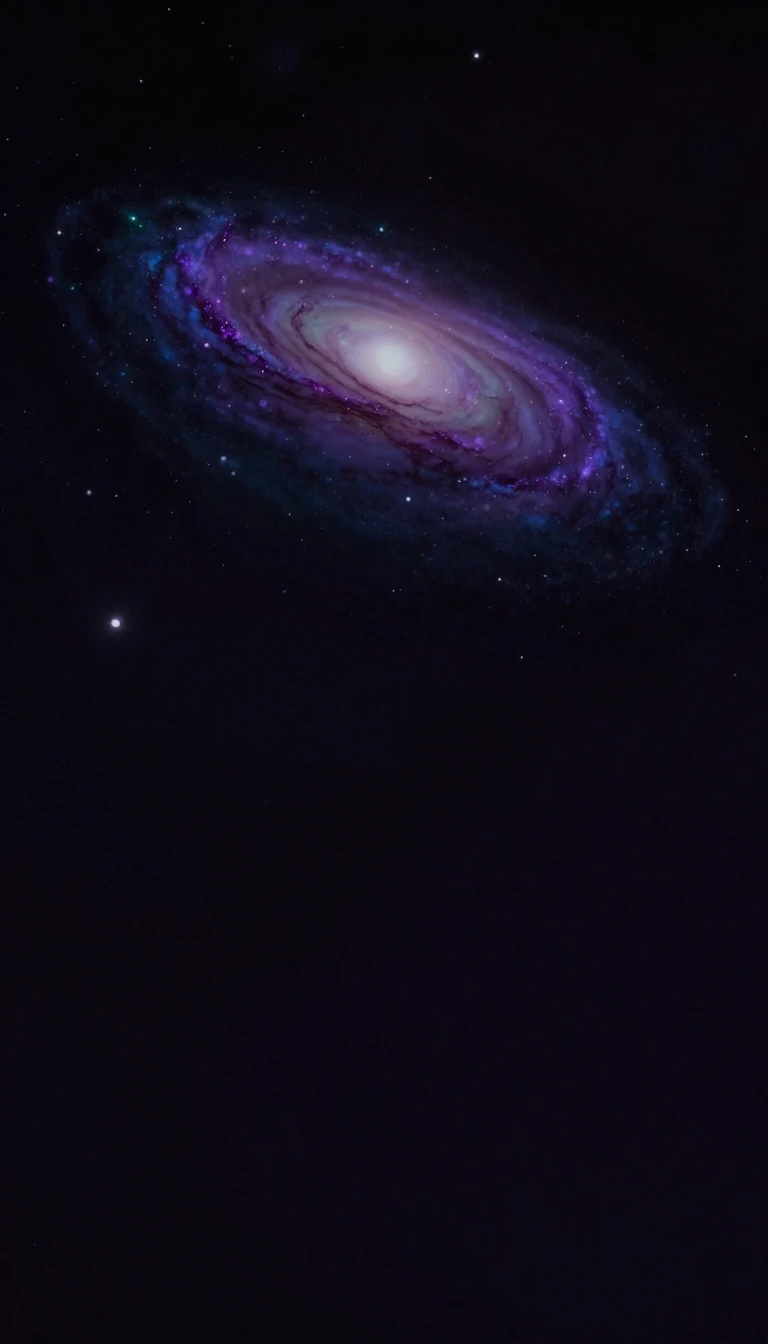
In short: Low surface brightness galaxies are diffuse, faint systems that defy standard galactic evolution. While they can be as massive as the Milky Way, their stars are spread so thin they are nearly invisible against the night sky. These quiet giants offer astronomers a unique window into the mysterious dark matter halo.
Low surface brightness galaxies (LSBGs) are defined by stellar discs that shine fainter than the typical background of the night sky. Because they lack dense stellar concentrations, they are notoriously difficult to detect. Unlike the bright, compact spirals we are familiar with, LSBGs are often isolated, gas-rich systems with irregular or flocculent structures. Their star formation rates are remarkably low—roughly one order of magnitude less efficient than their high-surface-brightness counterparts—largely because they lack the dense regions necessary to trigger rapid gravitational collapse.
The most intriguing subset of these systems are the giant low surface brightness galaxies (gLSBGs). These galaxies can reach radii up to four hundred thousand light-years, making them ten times larger than the Milky Way while maintaining similar total masses. Despite their immense scale, they remain kinematically inactive. Dynamical studies show that LSBGs exhibit slowly rising rotation curves, which suggests that dark matter dominates their mass even in their central regions. This characteristic makes them ideal laboratories for researchers studying the interplay between baryonic matter and dark matter in low-density environments.
The study of these galaxies has evolved significantly since they were first theorized in 1976. The discovery of Malin 1 in 1986 provided the first concrete evidence of a giant LSB galaxy, revealing a massive spiral that had previously escaped notice. Today, modern detection techniques—including integral-field spectroscopy and AI-driven image analysis—are helping astronomers map their chemical composition and kinematics. By analyzing their flat metallicity gradients and inefficient chemical enrichment, scientists are using LSBGs to refine galaxy formation models and better understand why some galaxies remain so diffuse while others grow into dense, luminous structures.
Opens the Intellect+ feed with this card first. Swipe up for the next one.
Sources
- Summary by Intellect · source: Low Surface Brightness Galaxy Characteristics | Cosmology and Extragalactic Astronomy | Astronomical Sciences | Physical sciences | Topics | Nature Index
- Also: Low surface brightness galaxy
- Also: Giant Low Surface Brightness Galaxies | Center for Astrophysics | Harvard & Smithsonian
To cite this card, link to https://intellectplus.co.uk/app/space-low-surface-brightness-galaxy.
How we source, check and correct cards: Editorial standards.
General information, not professional advice. Spotted an error? Flag the card or see corrections and complaints.
Intellect Plus is a visual educational discovery platform for exploring fascinating facts and ideas. Brain Food, Not Brain Rot. What is Intellect Plus?
Related
More in Galactic and extragalactic astronomy · More in Space · Latest · A–Z · All topics
