Is Kepler-22b a watery sanctuary or a gaseous, uninhabitable super-Earth?
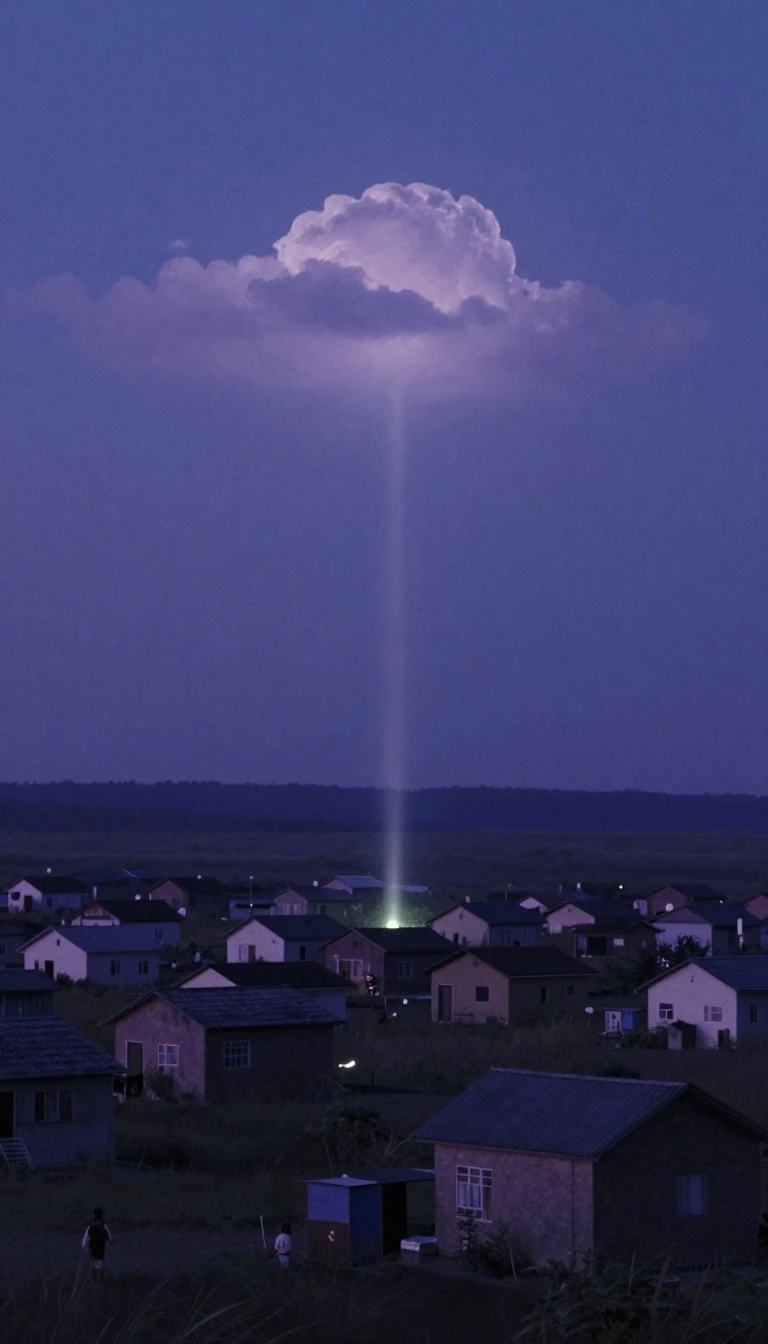
In short: Discovered in 2011, Kepler-22b was the first transiting planet found within the habitable zone of a Sun-like star. Located 640 light-years away, this super-Earth remains an enigma. Scientists debate whether it is a rocky world, a volatile-rich gas planet, or a vast ocean world capable of supporting extraterrestrial life.
Kepler-22b orbits a G-type star, Kepler-22, which is slightly smaller and cooler than our Sun. The planet completes an orbit every 289.9 days at a distance of 0.812 AU. While its radius is 2.1 times that of Earth, its exact composition remains unknown. Radial velocity measurements have ruled out an Earth-like rocky structure, suggesting instead a composition rich in volatiles, perhaps featuring a liquid or gaseous outer layer. This has led researchers to classify it as a potential 'water world' or a super-Earth similar to Kepler-11f.
The planet's habitability depends heavily on its atmosphere. Without one, its equilibrium temperature would be 279 K (6 °C), which is warmer than Earth's 255 K (-18 °C). If it possesses an Earth-like greenhouse effect, surface temperatures could reach a moderate 295 K (22 °C). However, if the atmosphere mimics Venus, temperatures could soar to 733 K (460 °C). Current models suggest a 95% probability that the planet sits within an empirical habitable zone, though the chance of it being in a conservative habitable zone is less than 5%.
Astronomers have yet to determine the planet's mass precisely, with recent constraints setting an upper limit of 9.1 Earth masses. Efforts to detect moons orbiting the planet have also come up empty, ruling out any satellites larger than 0.54 Earth masses. Despite these uncertainties, the prospect of an ocean-covered surface has made Kepler-22b a significant target for SETI researchers. Beyond science, the planet has captured the public imagination, appearing as a setting in various novels, video games, and television series like Raised by Wolves.
Opens the Intellect+ feed with this card first. Swipe up for the next one.
Sources
- Summary by Intellect · source: Kepler-22b
- Also: Kepler-22 b - NASA Science
To cite this card, link to https://intellectplus.co.uk/app/space-kepler-22b.
How we source, check and correct cards: Editorial standards.
General information, not professional advice. Spotted an error? Flag the card or see corrections and complaints.
Intellect Plus is a visual educational discovery platform for exploring fascinating facts and ideas. Brain Food, Not Brain Rot. What is Intellect Plus?
Related
More in Astronomical objects · More in Space · Latest · A–Z · All topics
