Why spacecraft dance in complex, non-repeating loops around empty points in space
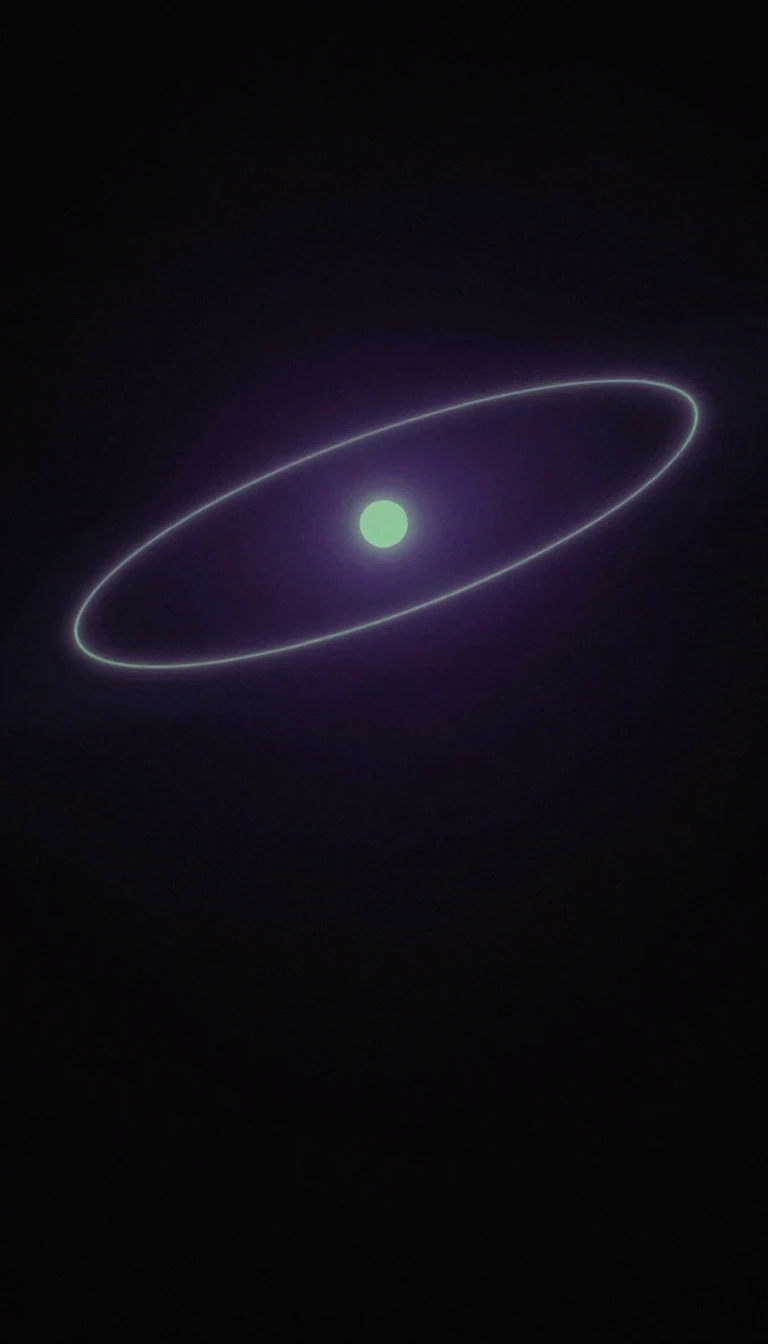
In short: Lissajous orbits allow spacecraft to hover near Lagrangian points, the gravitational sweet spots between celestial bodies. Unlike simple circles, these trajectories trace complex, non-repeating paths in three dimensions. While these points are inherently unstable, they offer a strategic vantage point for missions requiring minimal fuel to maintain a steady position.
A Lissajous orbit is a quasi-periodic trajectory named after Jules Antoine Lissajous. In a three-body system, these orbits exist around Lagrangian points, where the gravitational pull of two large bodies balances the centrifugal force experienced by a smaller object. Unlike Lyapunov orbits, which remain flat within the plane of the two primary bodies, Lissajous orbits are space curves that extend both within and perpendicular to that plane. While halo orbits also feature three-dimensional movement, they are strictly periodic, whereas Lissajous orbits typically do not repeat their path exactly.
The stability of these orbits depends heavily on which Lagrangian point is chosen. Points L1, L2, and L3 are dynamically unstable, meaning any minor deviation from the equilibrium point will grow over time. Consequently, spacecraft stationed at these locations must utilize propulsion systems for station-keeping to remain on course. Despite this instability, a modest amount of fuel allows a craft to remain in a desired Lissajous orbit for an extended duration. Conversely, points L4 and L5 can be naturally stable if the mass ratio of the two primary bodies is greater than approximately 24.96, allowing objects to persist without active propulsion.
However, even L4 and L5 are not immune to external interference. Nearby massive objects can destabilize these regions, as seen in the Earth–Moon system, where planetary perturbations can limit the lifespan of such orbits to a few million years rather than billions. Despite these challenges, Lissajous orbits have become a staple of modern space exploration. Missions such as ACE, SOHO, DSCOVR, and WMAP have utilized them at the Sun–Earth L1 and L2 points. More recently, the Queqiao relay satellite entered an Earth–Moon L2 orbit in June 2018, and NASA used similar trajectories to transfer THEMIS spacecraft in 2011. These orbits have also captured the imagination of science fiction authors like Arthur C. Clarke and Andy Weir, who envision them as critical hubs for future space infrastructure.
Opens the Intellect+ feed with this card first. Swipe up for the next one.
Sources
- Summary by Intellect · source: Lissajous orbit
To cite this card, link to https://intellectplus.co.uk/app/space-lissajous-orbit.
How we source, check and correct cards: Editorial standards.
General information, not professional advice. Spotted an error? Flag the card or see corrections and complaints.
Intellect Plus is a visual educational discovery platform for exploring fascinating facts and ideas. Brain Food, Not Brain Rot. What is Intellect Plus?
Related
More in Celestial mechanics · More in Space · Latest · A–Z · All topics
