When satellites die, they are sent to a remote graveyard in the sky
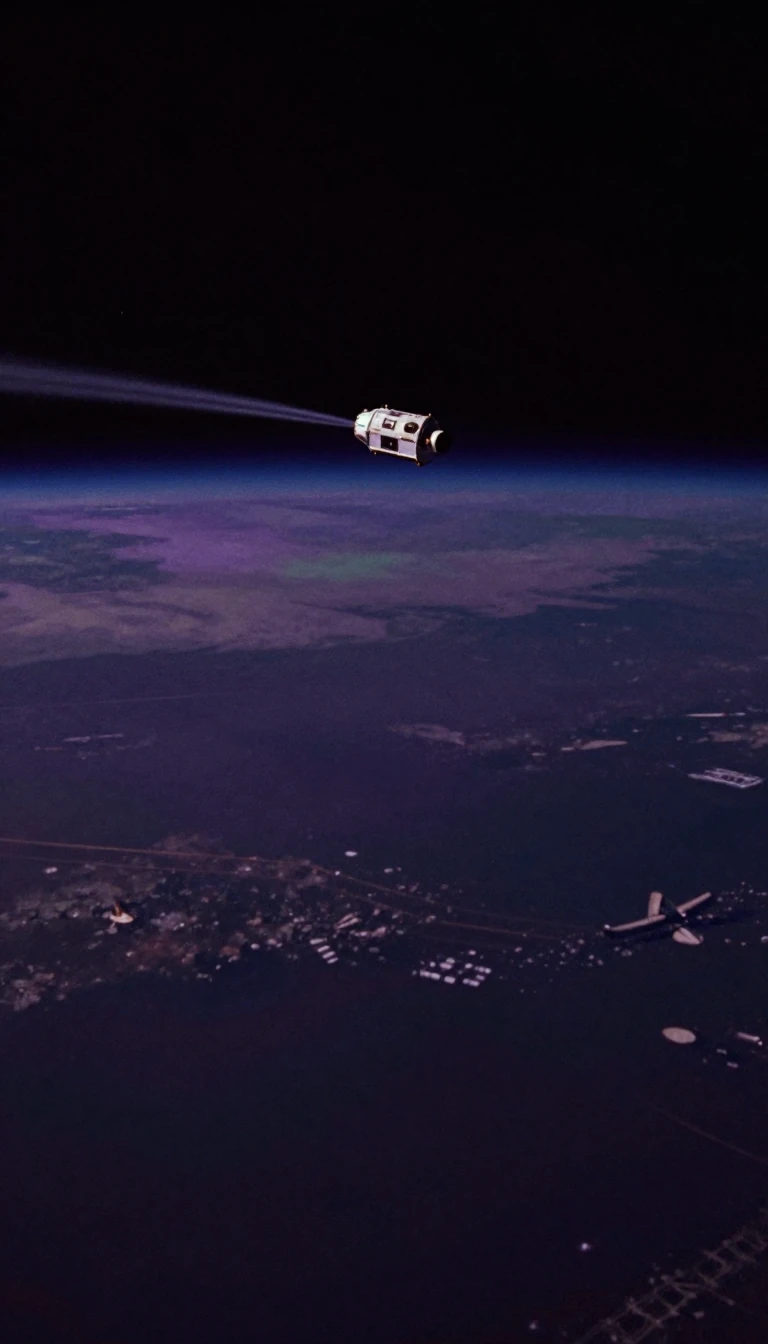
In short: Space is getting crowded, and dead satellites pose a collision risk. To keep vital orbital lanes clear, operators often boost decommissioned craft into a graveyard orbit—a distant, supersynchronous parking spot. It is a practical solution that saves fuel while preventing the buildup of dangerous debris in high-traffic zones.
A graveyard orbit serves as a celestial retirement home for satellites that have reached the end of their operational lives. For craft in geostationary orbit, the energy required to fully de-orbit and burn up in the atmosphere is prohibitive. Instead, operators perform a maneuver to push the satellite a few hundred kilometers beyond its operational path. This process is far more efficient, demanding only the amount of fuel typically consumed during three months of standard stationkeeping.
The Inter-Agency Space Debris Coordination Committee provides specific guidelines for these maneuvers, accounting for solar radiation pressure and gravitational tugs from the sun and moon. Regulations have tightened significantly over the decades. Since March 18, 2002, the Federal Communications Commission has mandated that all geostationary satellites licensed in the United States must commit to this disposal process. In 2023, the agency demonstrated its enforcement power by issuing its first-ever fine to DISH for failing to properly decommission the EchoStar VII satellite.
While graveyard orbits offer an expected lifetime of millions of years, the rise of massive satellite constellations has forced a shift in strategy. Unlike geostationary satellites, which are boosted higher, modern low-Earth orbit networks like those operated by SpaceX and OneWeb are designed to descend. By moving to a lower altitude, these satellites leverage atmospheric drag to ensure they naturally reenter and incinerate within a year of decommissioning. This transition reflects a broader evolution in space management, moving from permanent storage to active, rapid removal as the orbital environment grows increasingly congested.
Opens the Intellect+ feed with this card first. Swipe up for the next one.
Sources
- Summary by Intellect · source: Graveyard orbit
To cite this card, link to https://intellectplus.co.uk/app/space-graveyard-orbit.
How we source, check and correct cards: Editorial standards.
General information, not professional advice. Spotted an error? Flag the card or see corrections and complaints.
Intellect Plus is a visual educational discovery platform for exploring fascinating facts and ideas. Brain Food, Not Brain Rot. What is Intellect Plus?
Related
More in Celestial mechanics · More in Space · Latest · A–Z · All topics
