Orbital inclination defines the tilt of an object's path through space relative to reference planes.
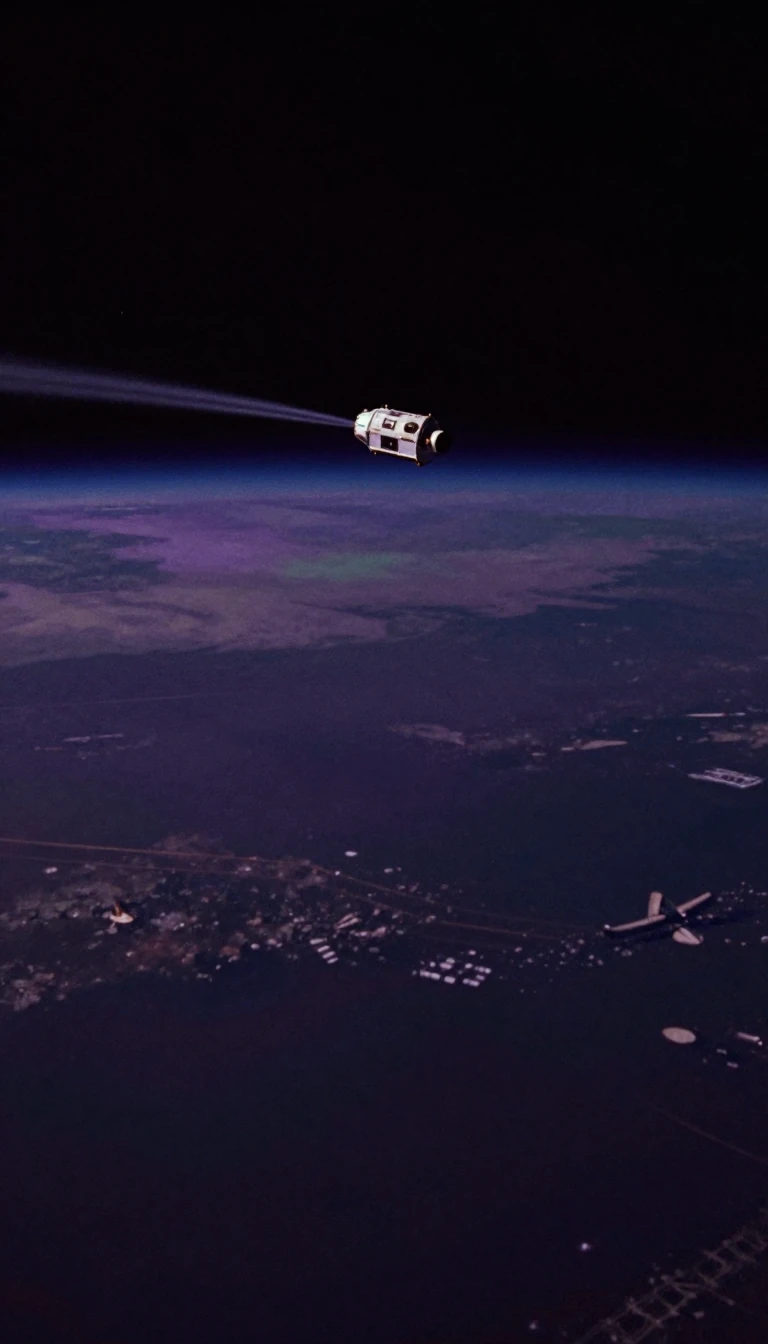
In short: Orbital inclination is a fundamental measure of how a celestial object's path tilts relative to a chosen reference plane. Whether tracking satellites around Earth or exoplanets in distant systems, this angle dictates everything from transit visibility to the complex gravitational dance of moons and planets across the solar system.
At its core, orbital inclination is one of six elements defining an orbit's orientation. For satellites, the reference plane is typically the planet's equator, where an inclination of 0° signifies a prograde orbit perfectly aligned with that equator. As the angle increases, the path tilts, reaching 90° for polar orbits and exceeding 90° for retrograde motion. For Earth-orbiting artificial satellites, a critical inclination of 63.4° is significant because it eliminates apogee drift caused by the planet's oblateness.
The choice of reference plane depends on the observer's perspective. While astronomers studying the Solar System often use the ecliptic—the plane of Earth's orbit around the Sun—those studying exoplanets use the plane of the sky. In exoplanet research, inclination measures the angle relative to our line of sight. An edge-on orbit (90°) allows us to observe transits, while face-on orbits (0°) are harder to detect via radial velocity. Because this method favors edge-on orientations, many detected exoplanets have true masses only slightly higher than their minimum calculated masses.
Natural satellites follow different rules based on their distance from their host. Peter Goldreich’s 1966 research highlighted a transition point: moons closer to their planet generally align with the equatorial plane, while those further out align with the ecliptic due to solar tides. This framework helps explain the origins of various moons, though it also highlights anomalies like the lunar inclination problem. Despite being within the critical distance from Earth, the Moon never maintained an equatorial orbit, a mystery that continues to challenge models of its formation.
Opens the Intellect+ feed with this card first. Swipe up for the next one.
Sources
- Summary by Intellect · source: Orbital inclination
To cite this card, link to https://intellectplus.co.uk/app/space-orbital-inclination.
How we source, check and correct cards: Editorial standards.
General information, not professional advice. Spotted an error? Flag the card or see corrections and complaints.
Intellect Plus is a visual educational discovery platform for exploring fascinating facts and ideas. Brain Food, Not Brain Rot. What is Intellect Plus?
Related
More in Celestial mechanics · More in Space · Latest · A–Z · All topics
