Why satellites must constantly burn fuel just to stay in the right place
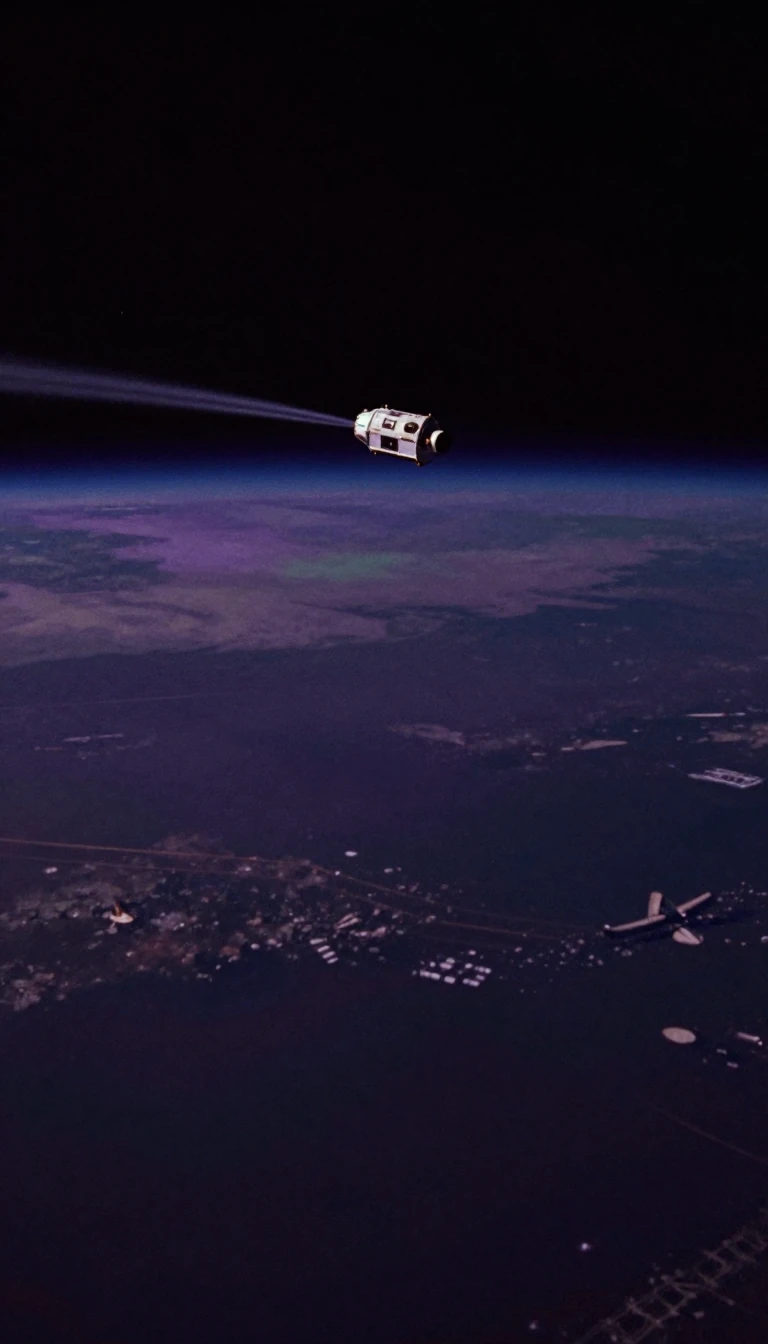
In short: Space is not a static void. Satellites face constant gravitational tugs, atmospheric drag, and solar pressure that threaten to drift them off course. To maintain their precise positions, spacecraft must perform regular, calculated thruster burns—a delicate dance of orbital mechanics known as station-keeping that dictates the lifespan of every mission.
Orbital station-keeping is the essential process of using thruster maneuvers to counteract non-Keplerian forces that perturb a spacecraft's path. For satellites in low Earth orbit, the primary adversary is atmospheric drag, which leaches orbital energy and can lead to premature re-entry. The International Space Station, for instance, must be periodically reboosted to maintain its altitude of 400 to 430 kilometers. Even at higher altitudes, where drag is faint, maneuvers remain necessary to keep orbits synchronized with Earth's rotation for consistent ground tracking.
The challenges shift for geostationary satellites, which must maintain a fixed position relative to the rotating Earth to serve non-steerable antennae. These craft face significant perturbations from the gravitational pull of the Sun and Moon, which cause inclination changes. Correcting this 'North-South' drift is fuel-intensive, requiring approximately 50 meters per second of delta-v annually. Conversely, 'East-West' control manages the orbital period and eccentricity, often using more efficient plasma or ion thrusters to save weight and extend mission life.
For missions at Lagrange points—equilibrium spots between two large bodies—station-keeping is a matter of survival. Orbits like the halo or Lissajous are inherently unstable; without active control, a spacecraft would drift away entirely. However, these points can be remarkably efficient. Missions at Earth-Sun L1, such as SOHO and ACE, require less than 1 meter per second of delta-v per year. The James Webb Space Telescope similarly relies on precise station-keeping in its halo orbit around L2, where the accuracy of its initial launch trajectory directly determines how much propellant remains for its decade-long mission.
Opens the Intellect+ feed with this card first. Swipe up for the next one.
Sources
- Summary by Intellect · source: Orbital station-keeping
To cite this card, link to https://intellectplus.co.uk/app/space-orbital-station-keeping.
How we source, check and correct cards: Editorial standards.
General information, not professional advice. Spotted an error? Flag the card or see corrections and complaints.
Intellect Plus is a visual educational discovery platform for exploring fascinating facts and ideas. Brain Food, Not Brain Rot. What is Intellect Plus?
Related
More in Celestial mechanics · More in Space · Latest · A–Z · All topics
