The Saros cycle allows astronomers to predict eclipses with remarkable eighteen-year precision.
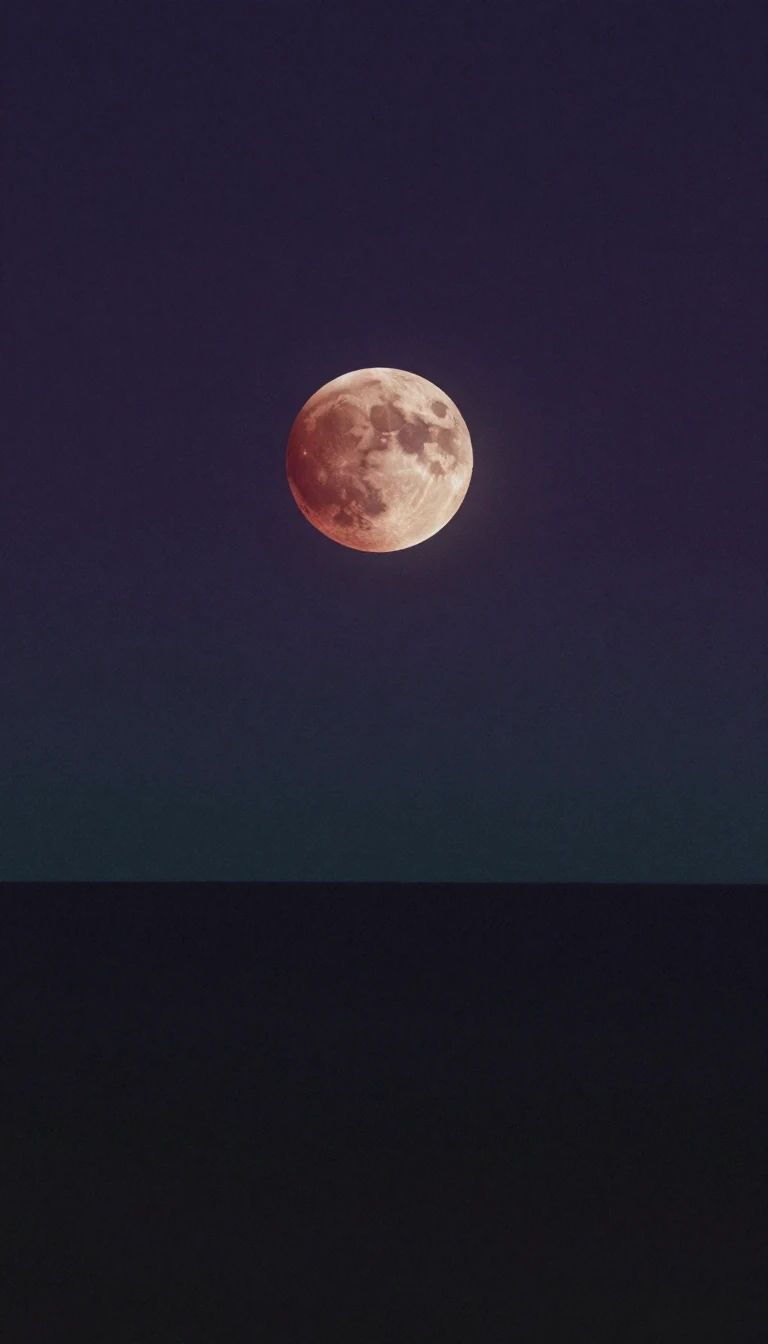
In short: For millennia, observers have tracked the Saros, an interval of roughly eighteen years and eleven days. This celestial heartbeat marks the return of the Sun, Earth, and Moon to nearly identical relative positions, causing the cycle of solar and lunar eclipses to repeat with uncanny, predictable regularity.
The Saros cycle is a consequence of complex orbital mechanics. Because the Moon’s orbit is inclined by about 5 degrees relative to the ecliptic—the Earth’s path around the Sun—eclipses do not occur every month. Instead, they only happen when the Moon is near one of its nodes, the points where its orbital plane intersects the ecliptic. The Saros period effectively synchronizes these nodal passes with the lunar phases, ensuring that the three bodies align in a nearly straight line once again.
This cycle spans 18 years and 11 days, or 18 years and 10 days depending on the number of leap years included. During this interval, the geometry of the Earth-Moon-Sun system resets. An observer remaining in one location could witness 19 or 20 lunar eclipses over the course of 18 years. Because the distance between the Earth and the Moon remains nearly identical at the start and end of each Saros, the resulting eclipses share similar durations and appearances.
Historically, this pattern has been a cornerstone of astronomical record-keeping. Ancient observers, including the Chaldeans, identified the cycle to forecast future events. By the time of the Antikythera Mechanism, constructed between 150 and 100 BCE, the 223-lunar-month period was already being mechanically tracked. While the name 'Saros' was only applied to the cycle in 1686 by Edmond Halley, the underlying mathematical harmony has guided eclipse prediction for centuries, proving that even the most complex celestial movements follow rigid, observable rules.
Opens the Intellect+ feed with this card first. Swipe up for the next one.
Sources
- Summary by Intellect · source: Saros | Lunar-Solar Cycle, Eclipse Prediction & Astronomy | Britannica
- Also: Saros (astronomy)
To cite this card, link to https://intellectplus.co.uk/app/space-saros-astronomy.
How we source, check and correct cards: Editorial standards.
General information, not professional advice. Spotted an error? Flag the card or see corrections and complaints.
Intellect Plus is a visual educational discovery platform for exploring fascinating facts and ideas. Brain Food, Not Brain Rot. What is Intellect Plus?
Related
More in Celestial mechanics · More in Space · Latest · A–Z · All topics
