Why the universe is running away from us at an ever-increasing speed
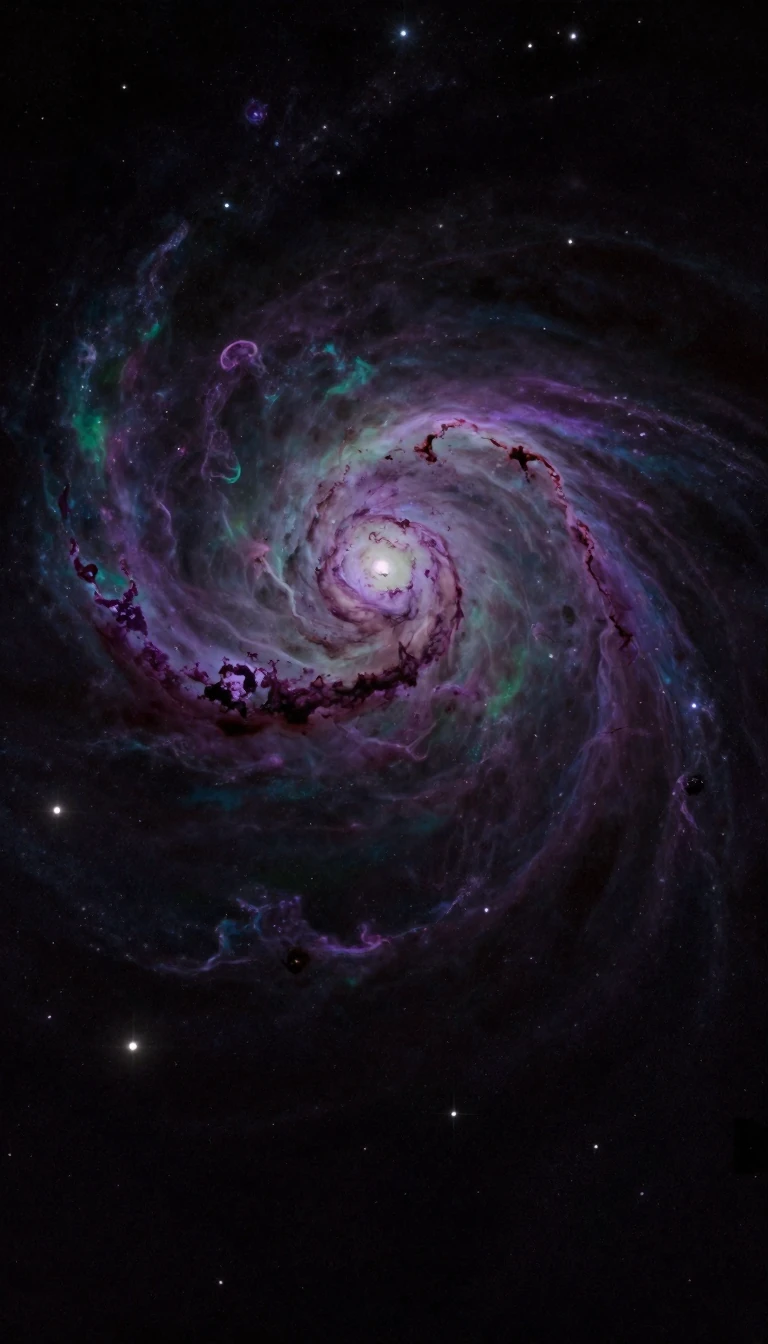
In short: The further away a galaxy is, the faster it appears to be moving away from Earth. This phenomenon, known as recessional velocity, is the cornerstone of our understanding of an expanding universe. By measuring the redshift of distant light, astronomers can calculate how quickly the cosmos is stretching apart.
In 1929, astronomer Edwin Hubble established a fundamental relationship now known as the Hubble-Lemaître law. He observed that galaxies are not static; instead, they recede from our vantage point at speeds directly proportional to their distance from us. This linear correlation means that the further an object is, the faster it retreats, providing empirical evidence that the universe itself is expanding.
The mechanism behind this observation relies on redshift. As light travels from a distant galaxy, its wavelength shifts toward the red end of the spectrum. The greater this shift, the faster the object is moving away. This relationship is quantified by the Hubble constant, which describes the expansion rate of the universe. Current scientific consensus places this constant between 67 and 73 kilometers per second per megaparsec. By taking the reciprocal of this value, cosmologists estimate the age of the universe to be between 13 and 14 billion years, a key pillar of the Big Bang theory.
However, this relationship is not a universal rule for every object in the sky. Nearby galaxies often possess peculiar velocities—individual movements independent of the universe's expansion—that can overwhelm the recessional effect. For instance, the Andromeda Galaxy is actually approaching us at 300 kilometers per second, despite being 2.5 million light-years away. Similarly, Messier 81, located 12 million light-years from Earth, shows a blueshift as it moves toward us at 34 kilometers per second. In these cases, the local motion masks the underlying expansion, reminding us that while the universe is expanding on a grand scale, local gravity still dictates the dance of nearby neighbors.
Opens the Intellect+ feed with this card first. Swipe up for the next one.
Sources
- Summary by Intellect · source: Hubble’s law | astronomy | Britannica
- Also: Recessional velocity
To cite this card, link to https://intellectplus.co.uk/app/space-recessional-velocity.
How we source, check and correct cards: Editorial standards.
General information, not professional advice. Spotted an error? Flag the card or see corrections and complaints.
Intellect Plus is a visual educational discovery platform for exploring fascinating facts and ideas. Brain Food, Not Brain Rot. What is Intellect Plus?
Related
More in Observational astronomy · More in Space · Latest · A–Z · All topics
