Satellite galaxies are the fundamental building blocks of the massive structures in our universe.
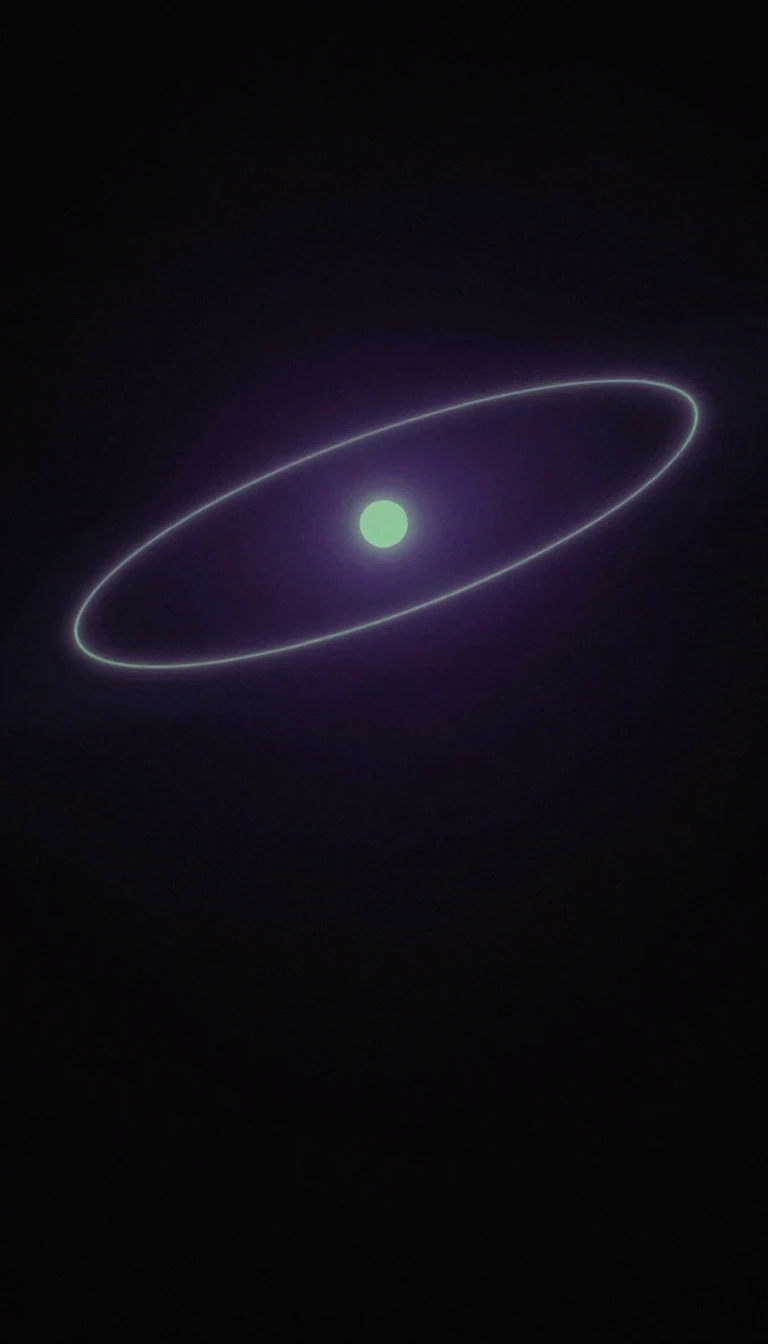
In short: Smaller companion galaxies orbit massive hosts, mirroring the way planets circle the Sun. These satellites are not merely passive bystanders; they are the essential, albeit tumultuous, raw material for galaxy growth. By studying these cosmic survivors, astronomers are unlocking the secrets of dark matter and the evolution of the universe.
Satellite galaxies are gravitationally bound companions that orbit a more massive host galaxy. While often categorized as dwarf galaxies, they are distinct from globular clusters due to their extended, diffuse nature and their massive dark matter halos. These halos are thought to be acquired during the formation process, acting as a gravitational anchor that keeps the satellite tethered to its host. Within the standard cosmological model, known as the Lambda-CDM model, these dwarfs are considered the primary building blocks of the universe, hierarchically clustering over time to form larger structures like galactic groups and clusters.
The life of a satellite galaxy is frequently chaotic. As they orbit, they are subjected to environmental pressures, such as tidal and ram pressure stripping, which can drain them of the cold gas necessary for star formation, effectively rendering them quiescent. Furthermore, satellites may collide with their host in a minor merger or merge with other satellites in a major merger. These interactions are critical for understanding how galaxies grow. Astronomers use spectroscopic and kinematic observations of these satellites to test cosmological models, specifically examining how dark matter is distributed and how environmental factors influence galactic evolution.
Our understanding of these objects has evolved significantly since the early 20th century. During the 1920 Great Debate, astronomers like Harlow Shapley and Heber Doust Curtis argued over the size of the Milky Way and the nature of nebulae. It was not until 1923 that Edwin Hubble used Cepheid Variable stars to measure the distance to the Andromeda galaxy, proving that the universe was far larger than previously imagined and that these nebulae were distant galaxies. Today, modern surveys like the Sloan Digital Sky Survey have identified 59 satellite galaxies orbiting the Milky Way, though cosmological theories suggest there should be many more, a discrepancy known as the missing satellites problem.
Opens the Intellect+ feed with this card first. Swipe up for the next one.
Sources
- Summary by Intellect · source: Satellite galaxy
To cite this card, link to https://intellectplus.co.uk/app/space-satellite-galaxy.
How we source, check and correct cards: Editorial standards.
General information, not professional advice. Spotted an error? Flag the card or see corrections and complaints.
Intellect Plus is a visual educational discovery platform for exploring fascinating facts and ideas. Brain Food, Not Brain Rot. What is Intellect Plus?
Related
More in Galactic and extragalactic astronomy · More in Space · Latest · A–Z · All topics
