Why astronomers search for the coldest, dustiest corners of the universe
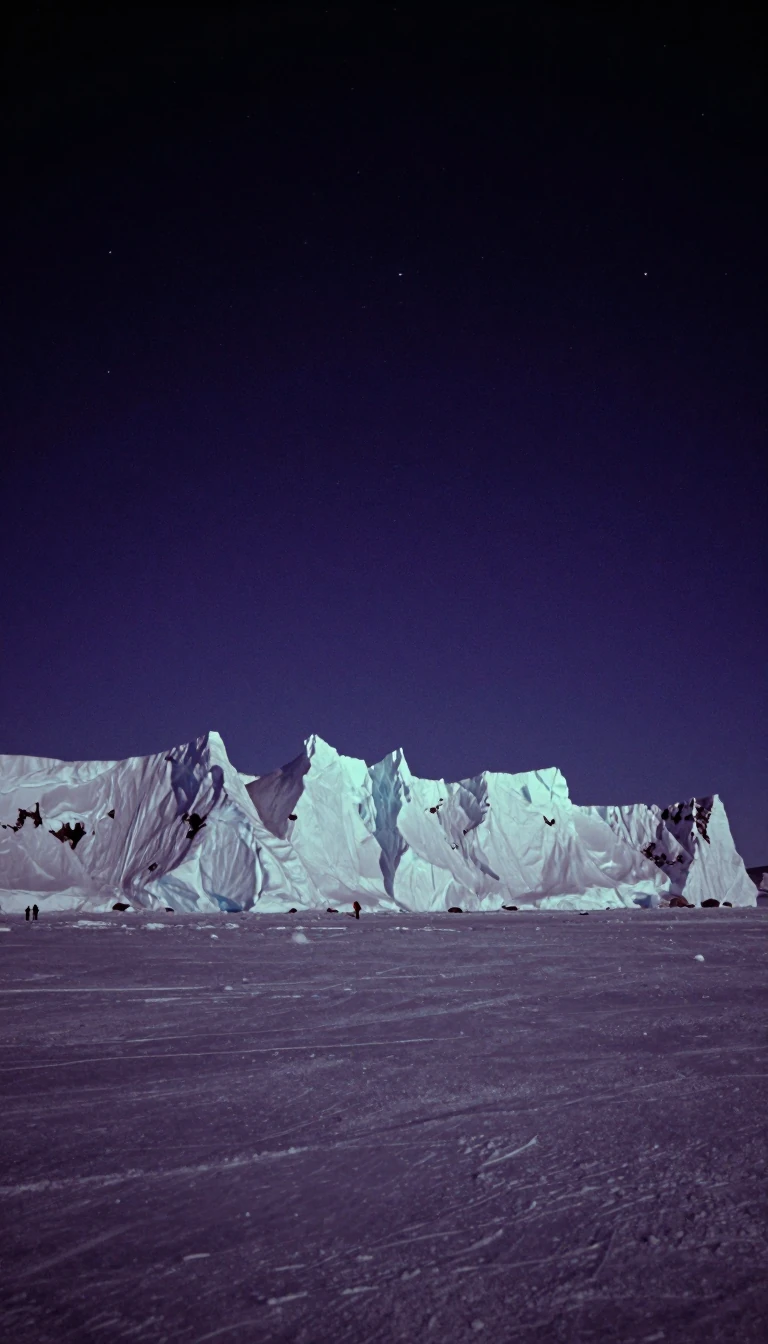
In short: Submillimetre astronomy captures the invisible glow of cold gas and dust, revealing the hidden mechanics of star birth and galaxy evolution. By peering through the electromagnetic spectrum between microwaves and infrared, scientists can map the origins of the cosmos, provided they can escape the suffocating interference of Earth's atmosphere.
Submillimetre astronomy operates in the terahertz range, focusing on wavelengths typically between a few hundred micrometres and a millimetre. This region is vital because interstellar dust absorbs nearly half of all radiation emitted by stars and galaxies, re-emitting it in these specific bands. By observing this emission, researchers can trace molecular clouds and dark cloud cores, effectively documenting the entire lifecycle of a star from its initial collapse to its eventual birth. Beyond star formation, these observations allow astronomers to study protoplanetary discs, the environments surrounding supermassive black holes, and secondary anisotropies in the cosmic microwave background.
The primary challenge for ground-based observatories is the Earth's atmosphere, which is saturated with water vapour that absorbs and attenuates submillimetre signals. To overcome this, telescopes must be placed in exceptionally dry, cool, and stable locations. Sites like Mauna Kea in Hawaii, the Atacama Plateau in Chile, the South Pole, and Hanle in India are prized for their clarity. While Mauna Kea remains the most established and accessible, high-altitude sites like Greenland’s Summit Station or the Antarctic interior offer even lower levels of precipitable water vapour, providing a clearer window into the southern skies and the early universe.
To bypass atmospheric limitations entirely, scientists have deployed instruments into space and on high-altitude platforms. Notable missions include the Soviet BST-1M, NASA’s Submillimeter Wave Astronomy Satellite (SWAS), and the European Space Agency’s Herschel Space Observatory. Herschel, which orbited the second Lagrangian point (L2) 1.5 million kilometres from Earth, carried the largest mirror launched into space until 2021. These space-based efforts, combined with massive ground-based interferometers like the Atacama Large Millimeter Array (ALMA), allow researchers to constrain models of quantum gravity and investigate the role of gravitational waves, proving that the coldest light in the universe holds the keys to its most profound mysteries.
Opens the Intellect+ feed with this card first. Swipe up for the next one.
Sources
- Summary by Intellect · source: Submillimetre astronomy
To cite this card, link to https://intellectplus.co.uk/app/space-submillimetre-astronomy.
How we source, check and correct cards: Editorial standards.
General information, not professional advice. Spotted an error? Flag the card or see corrections and complaints.
Intellect Plus is a visual educational discovery platform for exploring fascinating facts and ideas. Brain Food, Not Brain Rot. What is Intellect Plus?
Related
More in Observational astronomy · More in Space · Latest · A–Z · All topics
