 Intellect Plus
Cultures
14,790 cards. Each one is a 40-second story with a five-minute read behind it. Page 235 of 247.
Subtopics: African cultures · Ancient peoples · Anthropology · Arab & Persian culture · Asian folklore · Australian & Pacific cultures · Calendars & new year · Celtic mythology · Chinese culture · Clothing and fashion · Communication · Culture · Culture of Korea; Culture of South Korea · Education · Egyptian mythology · Endangered languages · Ethnology · Ethnology and anthropology · Etiquette & manners · Fairy tales & folk tales · Fashion through the ages · Festivals & celebrations · Folk dance · French & Italian culture · Hairstyles & jewellery · Handicrafts · Indian culture · Indigenous cultures of the Americas · Japanese culture · Journalism and mass media · Language · Language families · Language learning · Languages · Latin American culture · Legendary creatures · Nordic culture · Norse mythology · Peoples & civilisations · Pilgrimage & sacred journeys · Proverbs & idioms · Public holidays · Russian & Eastern European culture · Sign languages · Superstitions · Traditional dress · Traditional games · Traditions & customs · UK & Irish culture · US culture · Weddings · Writing systems
 The Australian city that has been almost entirely rebuilt four timesFrom devastating Japanese air raids to the fury of Cyclone Tracy, Darwin’s history is a cycle of destruction and rebirth. Discover how this tropical gateway, once known as Palmers…
 The rare linguistic fingerprint of the Horn of AfricaMost languages follow predictable patterns, but the Cushitic family breaks the rules. From rare grammatical alignments to unique throat-based consonants, these languages offer a w…
 The ancient name for Cumbria means more than just a placeLong before it was a modern English county, this landscape was defined by a sense of shared identity. The very names of the region—Cumbria and Cumberland—reveal a deep-seated ling…
 Is it cultural exchange or just a new form of colonialism?When a dominant group adopts the symbols of a marginalized community, the line between appreciation and exploitation becomes razor-thin. It is not just about fashion or music; it …
 The ancient Egyptian identity that survived the Arab conquestLong before the Arab-Muslim conquest, the term 'Copt' referred to all Egyptians. Today, it identifies a resilient Christian minority. Discover how this community preserved ancient…
- The lost ancestor of Welsh, Cornish, and BretonBefore the rise of Old English, a single language unified much of Britain and Brittany. Known as Common Brittonic, this ancient tongue left behind no written books, only hidden tr…
 The ancient linguistic echoes of the British IslesLong before the arrival of the Anglo-Saxons, a single ancestral tongue unified much of Britain. From the Roman era to the shores of Brittany, the evolution of the Brittonic langua…
 The Norse-Gaelic roots and warring legacies of Clan MacLeodFrom the legendary Fairy Flag to the bloody battles of the Highlands, the history of Clan MacLeod is a saga of shifting loyalties, ancient lineages, and a deep connection to the I…
 The legal battle for New Zealand's oldest cityIs a city defined by its population, its history, or a clerical error? In New Zealand, the title of 'city' is a contested landscape of shifting laws, royal patents, and administra…
 The English city built on a foundation of New Zealand swamplandWith its Gothic architecture and 'Garden City' moniker, Christchurch feels profoundly English. Yet, this South Island hub was once a vast network of marshes and forests, shaped by…
 The maritime empire that shaped Southeast Asian trade and faithLong before modern borders, the Chams commanded the waves of Southeast Asia. As master seafarers, they built a prosperous thalassocracy that linked India and China, leaving a prof…
 The complex history and enduring identity of the Chamorro peopleFrom an ancient caste system and seafaring excellence to the modern struggle for linguistic preservation, the Chamorro people of the Mariana Islands possess a rich, multi-layered …
 The elusive map of the Celtic nations is more than just geographyWhile we often picture a fixed set of countries, the true 'Celtic' identity is a shifting mosaic of living languages, ancient migrations, and linguistic echoes that stretch from t…
- The state-sponsored mission to 'kill the Indian in the child'For over 160 years, a network of Canadian boarding schools worked to systematically erase Indigenous identities. Funded by the government and run by Christian churches, the system…
 The ancient chemical that shaped civilizations and even bleached Celtic hairFrom the nixtamalization of Aztec maize to the heavy, blonde manes of the ancient Gauls, calcium hydroxide has been a silent architect of human culture for millennia. This versati…
 From a gold-rush outpost to a global tourism gatewayOnce a swampy settlement born from gold fever, Cairns has transformed into a vital regional hub. Beyond the tropical scenery, its history is etched in the struggle for resources, …
 How a Silk Road community survived centuries of systemic oppressionFor generations, the Bukharan Jews of Central Asia lived under strict, humiliating laws. They were forced to wear identifying yellow patches and were forbidden from riding horses.…
 More than a fastener: how brooches tracked the movement of empiresFrom Bronze Age utility to the opulent halls of the Renaissance, the brooch has never been just about holding fabric together. These ornaments served as vital chronological indica…
 Was the famous Saint Brigid actually an ancient Irish goddess?For centuries, scholars have debated whether the beloved Saint Brigid is a Christian figure or a clever rebranding of a pagan deity. From sacred perpetual fires to the arrival of …
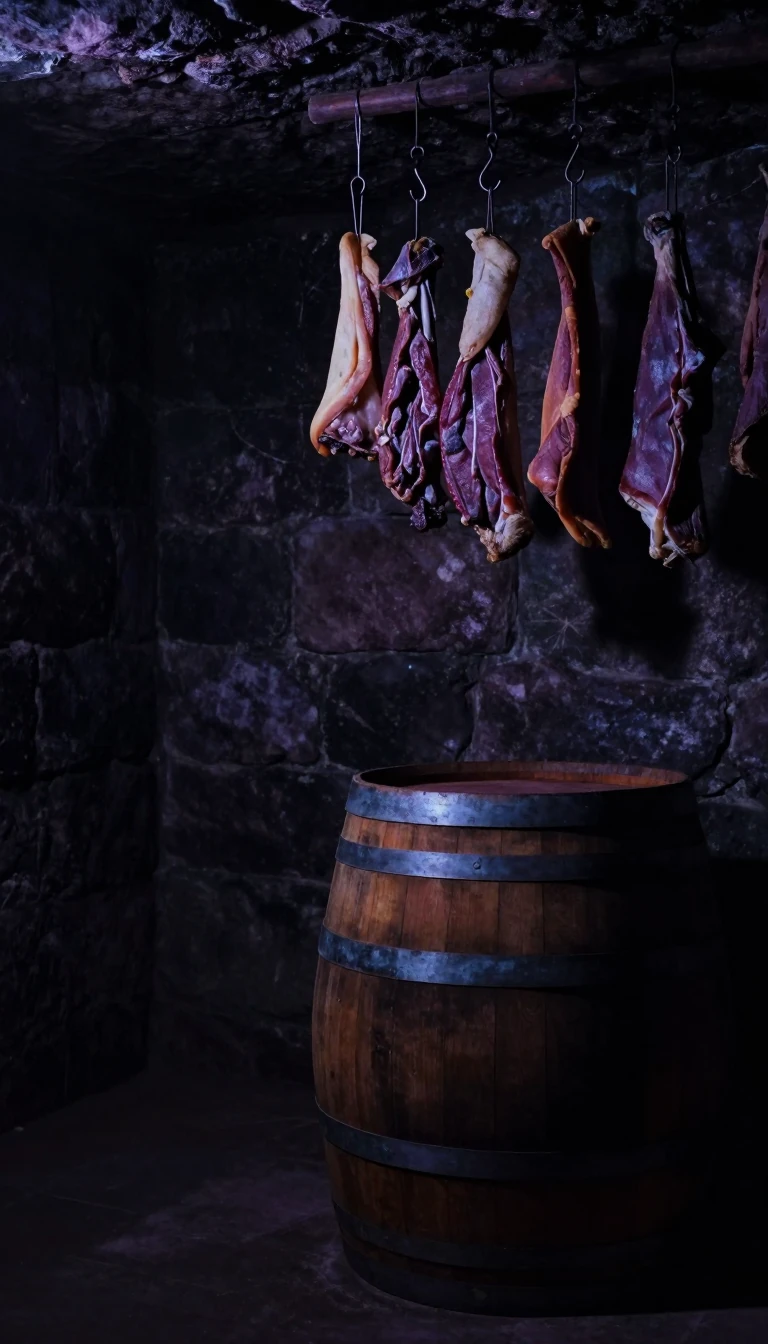 The global history of blood sausage is written in every local ingredientFrom the street markets of Kenya to the holiday tables of Puerto Rico, blood sausage is a culinary chameleon. While its core is congealed animal blood, its true identity lies in t…
 The flexible neck and vocal songs of the sea canaryKnown as the sea canary for its high-pitched whistles, the beluga whale possesses a unique anatomy. Unlike most whales, its unfused neck vertebrae allow for incredible head mobili…
 Were the Bashkirs actually a legendary tribe of wolf-leaders?From the 10th-century chronicles to the Napoleonic Wars, the history of the Bashkir people is a saga of migration and resistance. But beneath the political shifts lies a deeper my…
- The ancient poet who could grant immortality or raise blisters on a kingIn the Celtic world, a poet’s song was more than art; it was a weapon. While bards could secure a warrior's eternal fame through praise, their sharp satires were feared to physica…
- The linguistic origin of 'barbarian' is actually just a collection of nonsense soundsTo the ancient Greeks, the word 'barbarian' wasn't a judgment of character, but a reaction to sound. They used it to describe anyone whose language lacked the familiar rhythms of …
 The divine descent: understanding the ancient Hindu concept of the avatarWhile we often use the word to describe digital personas, the original concept of an avatar is far more profound. It describes a cosmic descent, where a powerful deity takes mater…
 From penal colony to multicultural hub: the evolving identity of AustraliaOnce a remote outpost for British convicts, Australia has transformed into a diverse, modern society. How did a nation defined by isolation and the 'White Australia' policy become…
 More than just messengers: the true meaning of the first apostlesThe word 'apostle' is often translated as messenger, but its Greek roots suggest something far more significant. Far from being mere carriers of news, these figures were handpicke…
 The vanishing echoes of the Andamanese: a thousand-year isolation interruptedFor millennia, the indigenous peoples of the Andaman Islands lived in profound isolation, shaped by the rhythms of the Bay of Bengal. But a single century of colonial contact brou…
 The accidental city born from a railroad and a Prohibition-era experimentAnchorage was never intended to be a permanent settlement. It began as a temporary tent city for railroad workers in 1915. Today, it is a global logistics powerhouse, sitting at a…
 The lost linguistic branch that rewrote the history of Indo-European originsLong thought to be a mystery, the Anatolian languages hold the key to the earliest split in the Indo-European family. By preserving ancient sounds lost in Greek or Sanskrit, these…
- The radical reformers who believed only adults could truly repentIn the 16th century, a group of dissenters emerged that refused to recognize the validity of infant baptism. They argued that faith requires a conscious choice—a stance so radical…
 More than a charm: the ancient science of spiritual defenseFrom prehistoric Venus figurines to Roman gold boxes, humans have long used objects to manipulate fate. Whether through Egyptian magic or Catholic sacramentals, these items were n…
 How a single newspaper article launched a global human rights movementIn 1961, a London lawyer read about two students imprisoned for a toast to liberty. This moment of shared indignation sparked the creation of Amnesty International, an organizatio…
 The mysterious origins of the almanac: a linguistic puzzle of pseudo-Arabic prestigeWe call it an almanac, but its true name is a historical enigma. While many assume an Arabic origin, scholars suggest the word might be a Western invention designed to sound prest…
- The seasonal rhythm of the Algonquian seasonal economyLong before European contact, Algonquian-speaking peoples mastered a sophisticated, mobile way of life. By synchronizing their migrations with the life cycles of fish, birds, and …
 The boom, the bust, and the winds that change everythingFrom the massive oil reserves discovered in 1947 to the sudden warmth of the Chinook winds, Alberta is a province defined by extremes. It is a land of dramatic temperature swings,…
 The linguistic survivor that once used ten different alphabetsAs the sole survivor of its unique Indo-European branch, Albanian carries a profound history. From ancient Balkan roots to a period of astounding orthographic diversity, this lang…
- The violent incident that sparked a movement for systemic equityIn 1946, a Black World War II veteran was blinded by police after a bus dispute. This tragedy moved President Truman to act, laying the groundwork for what we now call affirmative…
 The enduring survival of a people once declared extinctFor much of the 20th century, colonial narratives insisted that the Aboriginal Tasmanians had vanished. Yet, despite the devastation of the 19th-century Black War and the loss of …
 The search for a Welsh-speaking sanctuary in the Argentine desertIn 1865, a group of Welsh settlers arrived in Patagonia, fleeing English influence and seeking a 'little Wales beyond Wales.' They expected lush valleys but found a parched semi-d…
- The ancient art of breaking pottery to prove a message is realLong before digital encryption, people used broken ceramics to verify identities. This ancient practice of splitting a single object between two parties reveals the profound origi…
 How a medieval merchant accidentally standardized the English languageBefore the printing press, English was a chaotic patchwork of regional dialects. One man, driven by the physical exhaustion of hand-copying texts, brought a new technology to Engl…
- The industrial heart of England is undergoing a profound structural transformationOnce defined by the heavy soot of coal and wool, West Yorkshire is reinventing itself. From the legal protection of its famous forced rhubarb to the rise of a major financial hub,…
 Did a single ancestor language once unite the West Germanic world?For decades, linguists debated whether West Germanic was a true family tree or just a collection of neighbors mimicking each other. Today, new evidence suggests a shared ancestor—…
- The linguistic survival of a language once on the brink of extinctionFrom the 6th-century Battle of Dyrham to the 1981 census low, the Welsh language has faced centuries of fragmentation and decline. Yet, through Bible translations and modern educa…
- The long, turbulent struggle for Welsh sovereignty from 1282 to todayFrom the fall of the last native prince to modern-day political shifts, the movement for Welsh independence is far from a new phenomenon. While recent polls show fluctuating suppo…
 How did colonial settlement shape a distinct culture across oceans?The Ulster Scots were shaped by waves of migration, conflict, and planned colonization across centuries. Their journey took them from the Scottish Lowlands to the American frontie…
 The ghostly sound that once defined the English languageYou likely use it without realizing. While modern standard English has largely smoothed it away, this raspy, breathy consonant still lingers in the rugged dialects of Scotland and…
- The lost sound of Old English you no longer speakMost modern English speakers have never heard a voiced velar fricative. While absent from contemporary varieties of English, this specific vibration of the vocal cords once shaped…
 The many faces of the Vlachs: from Roman descendants to nomadic shepherdsOnce used to label 'strangers' and 'foreigners,' the term Vlach has historically shifted from describing entire ethnic groups to defining a specific way of life. From the mountain…
 The UN’s unfinished list of territories that have not yet achieved self-governmentSince 1946, the United Nations has tracked a specific group of territories whose people have not yet attained full self-government. While dozens have been removed through independ…
- They are not relics of the past, but masters of intentional isolationFar from being primitive survivors lost in time, many uncontacted tribes are making a deliberate, modern choice. They actively resist intrusion to protect their autonomy, yet they…
 The conditional loyalty of a movement defined by its bordersOften viewed as a subset of British nationalism, Ulster loyalism is driven by a distinct, localized identity. It is a movement characterized by a complex relationship with the Bri…
- How immigration and hip-hop created a new Canadian dialectBeyond the famous names of Toronto's rap scene lies a complex linguistic phenomenon. Multicultural Toronto English is more than just slang; it is a multi-ethnic dialect shaped by …
- The private mythology that was never meant for the public eyeBefore the fame of Middle-earth, J.R.R. Tolkien was engaged in a private, lifelong project. He wasn't just writing stories; he was inventing entire languages and a complex cosmolo…
 The tiny Pacific territory that is the world's first 100% solar-powered nationSpanning just 10 square kilometers, the three atolls of Tokelau face an uncertain future. While the territory leads the globe in renewable energy, its people navigate a complex id…
 How do you hear the difference between a piano and a guitar?Even when playing the exact same note at the same volume, a piano and a guitar sound entirely distinct. This auditory fingerprint is known as timbre. It is the invisible texture o…
 The Crown is not a person, but a legal corporationWhen you hear the term 'the Crown,' you might imagine a monarch in regalia. However, in constitutional law, it represents a sophisticated legal fiction: a corporation that separat…
- The mathematical DNA hidden within a single thread of tartanBeyond the iconic Scottish clans lies a complex geometric logic. Every tartan pattern, or 'sett', is a precise sequence of intersecting colored bands. From ancient Xinjiang weaves…
 How the physical fragility of palm leaves reshaped an ancient writing systemThe Tamil script is more than just a way to record language; it is a living record of material history. From the evolution of 'soul-letters' to the structural changes forced by th…