 Intellect Plus
Ancient peoples
49 cards. Each one is a 40-second story with a five-minute read behind it.
 A prehistoric masterpiece built on spiritual unity and engineering mysteryStonehenge stands as a testament to human cooperation, but its true purpose remains a subject of intense debate. Was it a celestial clock, a healing center, or a display of aristo…
 Archaeological finds are shattering our assumptions about ancient human progressHistory is often written as a linear climb toward modernity, but new discoveries suggest otherwise. This video explores seven specific archaeological finds that reveal sophisticat…
 Decoding the mysteries of our ancestors with Joe RoganExplore a curated collection of Joe Rogan's most compelling discussions regarding ancient civilizations. This roundup highlights deep dives into lost history and archaeological my…
 Modern humans inhabited Central Europe in a cold steppe environment 43,500 years agoResearchers analyzing the Willendorf II site in Austria found evidence that modern humans settled north of the Alps as early as 43,500 years ago. By examining stone tools and anim…
 Ancient footprints reveal diverse ways early humans walked millions of years agoResearchers who excavated a long-overlooked archaeological site in Tanzania found evidence that our ancestors may have moved with different styles of bipedalism. By using 3D scann…
 Archaeological evidence suggests Neandertals practiced intentional burials for their deadResearchers investigating the famous La Chapelle-aux-Saints site found strong evidence that Neandertals deliberately buried their dead. By conducting a 12-year fieldwork project a…
 Body shape variations in humans may be driven by climate adaptationResearchers who studied the physical traits of both modern and fossil hominids found that significant differences in body size and shape can be linked to environmental conditions.…
 Early humans preferred diverse habitats over harsh open environments in EuropeResearchers analyzing fossil records from Spain found that early humans in Europe tended to inhabit diverse landscapes like woodlands and savannas. By studying the dental records …
 Before the written word, Britain was a land of ice and migrationFor nearly a million years, Britain's history was written in stone and ice rather than ink. From hunter-gatherers tracking mammoths across a shifting land bridge to the first farm…
 Archaeological evidence suggests early hominins practiced persistent carnivory 2 million years agoResearchers analyzing zooarchaeological sites in Kenya found evidence that early hominins were consuming animal meat as early as 2 million years ago. By examining well-preserved r…
 Human activity and climate change likely combined to drive late Quaternary extinctionsA review of research on Late Quaternary extinctions found that the disappearance of large and slow-breeding mammals across the globe suggests a significant human contribution. Whi…
- Neandertals likely invented specialized bone tools before modern humans arrived in EuropeResearchers have identified specialized bone tools, known as lissoirs, in a Neandertal context that predates the arrival of modern humans in Europe. These tools, which were previo…
- Fossils of an early hominid reveal a unique mix of climbing and walkingResearchers examining over 110 fossils from 4.4-million-year-old sediments in Ethiopia found that Ardipithecus ramidus possessed a unique blend of physical traits. This early homi…
 Ancient shell beads in North Africa suggest early origins of symbolic human behaviorArchaeologists who excavated a cave in Morocco discovered shell beads dating back approximately 82,000 years. These perforated marine shells, found at the Grotte des Pigeons site,…
 New 1.7 million year old site reveals early human tool useArchaeologists have identified a new site in Tanzania's Olduvai Gorge that dates back 1.7 million years. This site provides some of the earliest evidence of Acheulean technology, …
 Humans and Neandertals may have co-existed for millennia in Western EuropeResearchers using statistical modeling found that modern humans and Neandertals likely lived in the same regions of France and northern Spain for between 1,400 and 2,900 years. Wh…
 Neanderthals systematically collected feathers and claws from raptors and corvids across EuropeResearchers who analyzed a database of 1,699 Pleistocene Palearctic sites found a widespread and systematic association between Neanderthals and specific bird species. The study i…
- Before it was a modern nation, Arya defined a lineage, a language, and faith.The term Arya was once the foundational identity for Iranian peoples, weaving together ethnicity, language, and Zoroastrian belief. Though it faded after the Islamic conquest, thi…
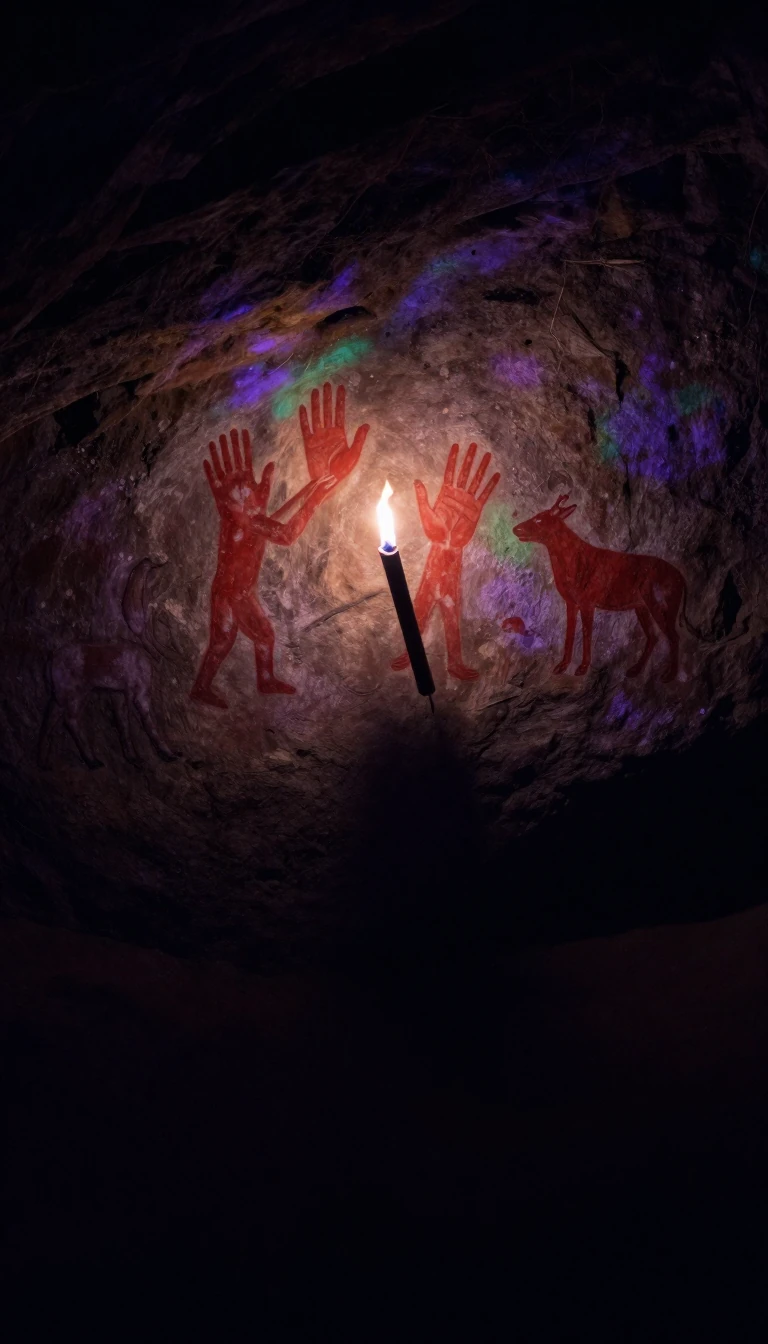 Neanderthals created intentional cave art using pigments transported from outside their environmentResearchers analyzing Middle Paleolithic paintings in Spain's Cueva de Ardales found evidence of deliberate artistic behavior by Neanderthals. By examining red pigment samples fro…
 Neanderthals hunted massive straight-tusked elephants over thousands of yearsAn archaeozoological study of 125,000-year-old lake deposits in Germany revealed that Neanderthals actively hunted straight-tusked elephants, which were the largest land mammals o…
 Climate patterns shaped when early humans migrated out of AfricaResearchers using high-resolution climate reconstructions found that rainfall availability played a vital role in human dispersal. By modeling the minimum rainfall required for hu…
 An ancient engraved bone suggests Neanderthals practiced symbolic expressionResearchers studying a 51,000-year-old bone found in a German cave discovered an engraved giant deer toe bone. The discovery of these deliberate incisions in a Middle Palaeolithic…
 Early humans likely sought out diverse landscapes to aid their survival and migrationResearchers using Earth system models and fossil data found that early hominins were not restricted to single environments. While early African ancestors primarily inhabited open …
 Neanderthals vanished from Northwest Europe earlier than previously thoughtResearchers who re-examined fossil remains from Belgium found that Neanderthals disappeared from Northwest Europe much earlier than once believed. By using advanced dating techniq…
 Genetic patterns suggest modern humans and Neandertals interbred tens of thousands of years agoResearchers who analyzed the DNA of modern Europeans found evidence of interbreeding between our ancestors and Neandertals. By measuring the extent of linkage disequilibrium—how o…
 Ethiopia's Konso tools push the earliest Acheulean back to 1.75 million yearsResearchers who dated and analysed stone tools from the Konso Formation in southern Ethiopia found that the region's earliest Acheulean tools are about 1.75 million years old, the…
 Early Homo erectus inhabited high-altitude Ethiopia and used two distinct tool industriesResearchers examining an ancient infant mandible from the Ethiopian highlands found that early Homo erectus lived at high altitudes approximately 2 million years ago. The study al…
- Shared stone tool patterns suggest cultural transmission across Central and East AsiaResearchers studying stone tool assemblages from the Siberian Altai, Zabaikal, and North Mongolia found a highly complex and consistent blade production system. This technological…
 Climate patterns helped shape the physical and mental scale of early humansResearchers studying the genus Homo over the last million years found that environmental factors played a role in how our ancestors evolved. By combining fossil data with paleocli…
 Denisovans used meat, marrow, and hides to survive on the Tibetan PlateauResearchers studying fossils at Baishiya Karst Cave found evidence that Denisovans were highly adaptable. By analyzing animal remains alongside Denisovan remains, the team discove…
 Ancient skull discovery reveals physical diversity in early human ancestorsResearchers examining a nearly complete adult hominid skull from Dmanisi, Georgia, found a specimen dating back 1.8 million years. This fossil, which includes a small braincase pa…
- New dating methods suggest modern humans in Africa are older than previously thoughtResearchers who performed geochemical analyses on fossils in eastern Africa found that the oldest known modern human remains may be significantly older than earlier estimates. By …
 Dietary flexibility and social cooperation likely drove early human evolutionResearchers who analyzed the fossil record of early Homo found that our ancestors' success was driven by more than just adapting to dry grasslands. Instead, their ability to navig…
- New fossil evidence reveals a previously unknown group of early humans in IsraelResearchers analyzing fossils from a site in Israel dated to between 120,000 and 140,000 years ago have identified a previously unknown population of archaic Homo. This group, kno…
- Early humans likely entered Europe without the habitual use of fireA review of archaeological evidence suggests that early hominins may have migrated into northern latitudes like Europe before they mastered fire. While fire was essential for surv…
- Ancient cave sediments can reveal the presence of extinct hominins without fossilsResearchers using targeted enrichment of mitochondrial DNA found that cave sediments act as a reservoir for ancient DNA. By screening numerous sediment samples, the team detected …
- Climate shifts shaped how ancient human species moved and evolvedResearchers using advanced climate simulations and fossil records found that changes in temperature and rainfall significantly influenced where five hominin species lived over the…
- Human evolution was a complex web rather than a simple linear progressionA review of fossil and genetic evidence suggests that the history of Homo sapiens was far more intricate than a straight line of progress. By examining various Middle Pleistocene …
 Early stone tool techniques could be learned individually without cultural instructionResearchers who tested how humans learn to make stone tools found that early knapping techniques do not require social teaching or cultural transmission. By providing participants…
 Human migration patterns are more closely linked to megafauna extinction than climate changeResearchers who analyzed global mammal extinctions found that the disappearance of large animals was primarily associated with human movement rather than shifting climates. By exa…
- Genetic evidence reveals female migration and small community sizes in Neanderthal populationsResearchers analyzing DNA from 13 Neanderthals in Siberia's Altai Mountains found evidence of a highly structured social life. The study observed that some individuals were closel…
- Ancient DNA from cave sediments reveals shifting populations in prehistoric SiberiaResearchers analyzing 728 sediment samples from Denisova Cave found that Denisovans were the first hominins to inhabit the site. The study observed that Denisovan populations unde…
- Early human populations used obsidian transported from distant sources for toolmakingResearchers examining the Olorgesailie basin in Kenya found that between 320,000 and 305,000 years ago, populations in eastern Africa began using obsidian sourced from far away. T…
- Ancient cave art in Iberia may have been created by NeandertalsResearchers using uranium-thorium dating on mineral crusts found that cave paintings in Spain are much older than previously believed. By dating the carbonate layers covering spec…
- Early stone tool use was more widespread across East Africa than previously thoughtResearchers studying ancient sites in Kenya found that the earliest Oldowan stone tools were used much further from Ethiopia than previously known. Analyzing sites dating from 3.0…
 Discovery of a new extinct human relative with a unique mix of traitsResearchers exploring the Dinaledi Chamber in South Africa have identified a previously unknown species of extinct hominin named Homo naledi. This find, comprising at least 15 ind…
- The evolution of fire control was a long process of behavioral adaptationResearchers exploring human evolution found that the mastery of fire was not a single moment of discovery but a complex, long-term process. While many animals react to natural fir…
- A massive ancient skull reveals a previously unknown human lineageResearchers analyzing a well-preserved fossil found in Harbin, China, have identified a new human lineage from the Middle Pleistocene. The specimen features a large cranial capaci…
- Human cultural complexity emerged as a mosaic rather than a sudden packageResearchers reviewing archaeological records of the Middle Stone Age found that human behavioral complexity did not appear as a single, sudden revolution. Instead of a uniform 'mo…