 Intellect Plus
Philosophers
1,976 cards. Each one is a 40-second story with a five-minute read behind it. Page 28 of 33.
 Isidore of Seville: The Last Scholar of the Ancient WorldAs classical culture crumbled into illiteracy and violence, one man preserved the intellectual heritage of antiquity for the Middle Ages. Isidore of Seville, a seventh-century arc…
 Why science needs a history lesson to avoid becoming blind and emptyImre Lakatos argued that science is not a series of sudden, irrational leaps, but a structured evolution of research programmes. By blending Karl Popper’s logic with Thomas Kuhn’s…
 Why was Georgia's most revered national hero assassinated by a gang of gunmen?Ilia Chavchavadze was the intellectual architect of modern Georgia, a poet and publisher who defined the nation's identity. Yet, in 1907, he was ambushed and murdered in a brutal …
 Why the arrow of time is the most important discovery in modern physicsFor centuries, physics treated time as a reversible illusion, denying the reality of the present. Ilya Prigogine shattered this deterministic worldview. By studying systems far fr…
 How an Indian musician brought the mystical traditions of Sufism to the Western worldBorn into a noble Mughal family, Inayat Khan was a master of the sarasvati vina who transformed his ancestral Sufi heritage into a global movement. By blending ancient Eastern dis…
 Ingeborg Bachmann: The Austrian Visionary Who Saw Fascism Surviving in Modern Human RelationsA major 20th-century literary voice, Ingeborg Bachmann explored the persistence of fascism within post-war society and the struggle for an authentic female voice. Her intellectual…
 How a Scottish novelist built a legacy that now sails the stars and oceansIain Banks was a literary polymath who balanced mainstream fiction with visionary science fiction. Beyond his prolific writing career, his influence has permeated modern technolog…
 The medieval polymath who insisted that truth is found in senses, not logicIbn Hazm was an Andalusi intellectual who produced 80,000 pages of work, yet he remains a polarizing figure. A fierce literalist who rejected analogical reasoning, he argued that …
 Why did the ancient world consider this Syrian philosopher to be truly divine?Iamblichus was a Syrian Neoplatonist who transformed how we understand the soul and the cosmos. While his contemporaries saw him as a miracle worker, his rigorous mathematical app…
 The medieval physician who dismantled Galen's anatomy centuries before modern science caught upIbn al-Nafis, a 13th-century polymath, shattered the medical consensus of his time by proving the heart's septum was solid. By rejecting the long-held belief in invisible pores, h…
 How Hélène Cixous challenged the phallogocentric foundations of Western language and thoughtBorn in Algeria, Hélène Cixous became a titan of poststructuralist feminism by dissecting how language reinforces power. Through her concept of écriture féminine, she challenged t…
 Hu Shih: The Philosopher Who Tried to Modernize China Through Pragmatism and DoubtHu Shih was a titan of 20th-century Chinese intellectual life, championing vernacular language, liberal democracy, and the scientific method. By applying John Dewey’s pragmatism t…
 Hugo Ball: The German Dramatist Who Invented Dada to Escape the WarHugo Ball was a German intellectual who fled the First World War to neutral Switzerland. There, he co-founded the Cabaret Voltaire, a radical artistic space that birthed the Dada …
 How a British-born philosopher became the intellectual architect of Nazi racial ideology.Houston Stewart Chamberlain, a British-born thinker who rejected his homeland, transformed into a fervent Germanophile and völkisch activist. By blending romantic conservatism wit…
 Why this 18th-century philosopher spent his final three days digging his own grave.Hryhorii Skovoroda was a wandering Ukrainian thinker who lived like a modern Socrates. He rejected institutional power, taught that happiness comes from finding one's natural call…
 Are you part of a community or just a member of a society?Ferdinand Tönnies, a pioneer of German sociology, argued that our social bonds fall into two distinct categories. One is built on deep, subconscious feelings of togetherness; the …
 Hilary Putnam: The Philosopher Who Spent His Career Arguing Against HimselfHilary Putnam was a titan of 20th-century analytic philosophy who became famous for his intellectual restlessness. He pioneered functionalism, only to later dismantle it, and cham…
- Did a Greek philosopher really drown for discovering the secret of irrational numbers?Hippasus of Metapontum is often cast as the tragic martyr of mathematics, allegedly executed by his own peers for revealing the existence of irrational numbers. Yet, ancient accou…
 Hippolyte Taine sought to turn literary criticism into a rigorous, predictable science.Hippolyte Taine believed that literature was not the product of spontaneous genius, but a predictable output of an author's environment. By analyzing nation, situation, and time, …
 Was this ancient Greek polymath a brilliant genius or history's most arrogant fraud?Hippias of Elis claimed to be an expert on everything, from poetry and mathematics to the fine arts. He even crafted his own clothing to prove his self-sufficiency. Yet, Plato fam…
 How a Dutch physician became the most famous doctor in eighteenth-century EuropeHerman Boerhaave was so renowned that a letter from China reached him with no address other than his name and the continent. As the so-called Dutch Hippocrates, he revolutionized …
- How a textile manufacturer became one of the twentieth century's most profound literary thinkers.Hermann Broch did not begin his full-time writing career until age forty. After selling his family's Austrian textile factory, he pivoted to philosophy and mathematics, eventually…
 How a nineteenth-century psychologist proved that memory could be measured with scientific precisionHermann Ebbinghaus transformed psychology from philosophical speculation into an experimental science. By testing his own memory using thousands of self-created nonsense syllables…
 A forgotten polymath whose revolutionary mathematics were once sold as waste paperHermann Grassmann was a 19th-century German polymath whose groundbreaking work on vector spaces and linear algebra was so far ahead of its time that it was ignored by his peers. A…
 Can mechanical laws and human values coexist in a single, coherent philosophical system?Hermann Lotze, a 19th-century German philosopher and physician, argued that the physical world operates through rigid mechanical laws while simultaneously serving as the stage for…
 The apothecary who traded medicine for the mysteries of the soulAttar of Nishapur was a pharmacist whose patients confessed their deepest troubles to him. These intimate secrets eventually drove him to abandon his shop and travel across contin…
 Henri Lefebvre argued that capitalism survives by colonizing the mundane details of everyday life.A French Marxist philosopher who spent decades as a taxi driver and resistance fighter, Henri Lefebvre transformed how we understand modern existence. He argued that capitalism do…
 Was Henry Thomas Buckle the man who tried to turn history into a science?A self-taught polymath and world-class chess player, Henry Thomas Buckle spent seventeen years writing a massive history of civilization. He believed human progress followed fixed…
 Why did the most famous American economist of the 19th century propose one tax?Henry George observed a paradox: as societies grew wealthier through technological progress, the poor became increasingly destitute. His solution was a radical single tax on land …
 How a deaf Victorian woman became an intellectual powerhouse and influenced Charles Darwin's evolution theory.Harriet Martineau was a prolific social theorist who defied 19th-century gender norms to become a celebrated writer. Despite a hearing disability and a strained relationship with …
 Was the legendary Old Man of the Mountain a scholar or a ruthless assassin?Hasan-i Sabbah founded the Nizari Ismaili state and the Order of Assassins, yet he was also a polymath deeply versed in geometry and philosophy. While Western legends paint him as…
 Was the Renaissance polymath Heinrich Cornelius Agrippa a master of magic or a skeptic?Heinrich Cornelius Agrippa was a knight, physician, and theologian who navigated the intellectual turbulence of the 16th century. While famous for his seminal work on occult philo…
 The French aristocrat who envisioned a world run by scientists, engineers, and bankers.Henri de Saint-Simon, a French aristocrat turned revolutionary, believed society should be managed like a machine. He argued that the true engine of progress was an industrial cla…
- Why a lonely Swiss academic became the accidental architect of modern psychological terminology.Henri-Frédéric Amiel lived a life of professional isolation, yet his private diary achieved the European fame he never found in his lifetime. Beyond his philosophical musings, his…
 Can a libertarian philosopher logically justify the total rejection of all democratic governance?Hans-Hermann Hoppe, a prominent figure in anarcho-capitalist thought, argues that democracy is a primary driver of civilizational decline. By blending Austrian economics with radi…
 The Victorian minister who mentored Lewis Carroll and invented modern fantasyBefore Tolkien or Lewis, there was George MacDonald. A Scottish minister with a radical theology of universal love, he used fairy tales to explore the human condition, fundamental…
 The Catholic theologian who challenged the Vatican and became a global voice for ethicsHans Küng was a central figure in modern Catholic thought, serving as a key advisor during the Second Vatican Council. Despite his lifelong commitment to the priesthood, his bold …
 How Hans Reichenbach transformed philosophy into a rigorous scientific disciplineHans Reichenbach was a titan of logical empiricism who bridged the gap between physics and philosophy. Forced to flee Nazi Germany, he reshaped American academia and pioneered dis…
 Hans Kelsen designed the modern constitutional court to protect democracy from authoritarian executive power.As the architect of the 1920 Austrian Constitution, Hans Kelsen pioneered a judicial model that separates legal science from politics. His Pure Theory of Law sought to ground lega…
 Why the father of political realism believed nations must always seek maximum powerHans Morgenthau, a titan of 20th-century international relations, argued that states are trapped in a perpetual struggle for dominance. Because national power is notoriously diffi…
 Can we truly understand history if we did not create it ourselves?Giambattista Vico, an 18th-century Neapolitan philosopher, challenged the Enlightenment's obsession with Cartesian logic. He argued that because humans construct their own social …
 How a Catholic philosopher became the first party politician to lead the German EmpireGeorg von Hertling was an unlikely choice for Imperial Chancellor. A conservative Catholic academic who preferred the lecture hall to the Reichstag, he became the first party poli…
 How Germaine de Staël became the intellectual center of a resistance against NapoleonA prominent philosopher and novelist, Germaine de Staël was a formidable political force in revolutionary France. Her salon became the headquarters of European thought, and her pe…
 Giacomo Leopardi: The 19th Century Poet Who Found Sweetness in Existential ShipwreckGiacomo Leopardi was Italy's greatest 19th-century poet, yet his life was defined by physical deformity, domestic imprisonment, and a radical, pessimistic philosophy. From a seclu…
- Why the ghost in the machine is a category mistake, according to Gilbert RyleGilbert Ryle, a central figure in 20th-century British philosophy, famously dismissed the idea of a mind separate from the body as a ghost in the machine. By mapping the logical g…
- Was György Lukács the preeminent Marxist intellectual of the Stalinist era or its critic?Born into a wealthy, titled family, György Lukács became a foundational figure of Western Marxism. He navigated the treacherous politics of the 20th century, oscillating between r…
 Why your personal biases are the secret key to understanding the worldHans-Georg Gadamer argued that we cannot escape our history or culture to reach objective truth. Instead, he believed our prejudices are not obstacles to knowledge but the very fo…
 A philosopher president who traded the halls of power for a quiet life in Dusheti.Giorgi Margvelashvili was an unlikely political figure, rising from academia to become Georgia's fourth president. His tenure was marked by a constitutional shift that stripped hi…
- George Steiner: The Polymath Who Believed Language Could Both Build and DestroyGeorge Steiner was a towering intellectual who navigated the complexities of post-Holocaust culture. A polyglot and survivor of the Nazi era, he argued that language is a double-e…
 Why the stranger is the most objective and powerful person in any social groupGeorg Simmel, a founding father of sociology, argued that the stranger occupies a unique position: simultaneously near and far. By remaining detached from local biases, the strang…
 Why the most quoted philosopher of the twentieth century remains a misunderstood enigmaGeorge Santayana was a brilliant Harvard professor who abandoned academia at forty-eight to live as a wandering intellectual in Europe. Though he remains famous for pithy aphorism…
 Was the father of evolution actually a skeptic who recanted his own scientific theories?Georges-Louis Leclerc, Comte de Buffon, was the 18th-century naturalist who first brought evolutionary questions into the scientific mainstream. Yet, he frequently endorsed the im…
 Why did one thinker inspire both the Bolsheviks and the rise of fascism?Georges Sorel was a French social theorist whose defense of violence and the power of myth mobilized disparate political movements. By rejecting economic determinism, he argued th…
 How a Renaissance physician became the father of geology and mining scienceGeorgius Agricola, born Georg Pawer, transformed our understanding of the earth. By systematically documenting mining practices and mineralogy through direct observation, he repla…
 How a simple hand gesture became a legendary proof against philosophical doubtG. E. Moore, a giant of early twentieth-century analytic philosophy, famously dismantled skepticism about the external world by holding up his hands. While his peers debated compl…
 The aristocratic poet who preferred the beauty of imagination to the reality of livingHe lived in extreme poverty, writing on bare floorboards because bailiffs had seized his furniture. Yet, the French symbolist Auguste Villiers de l'Isle-Adam remained unbowed, dri…
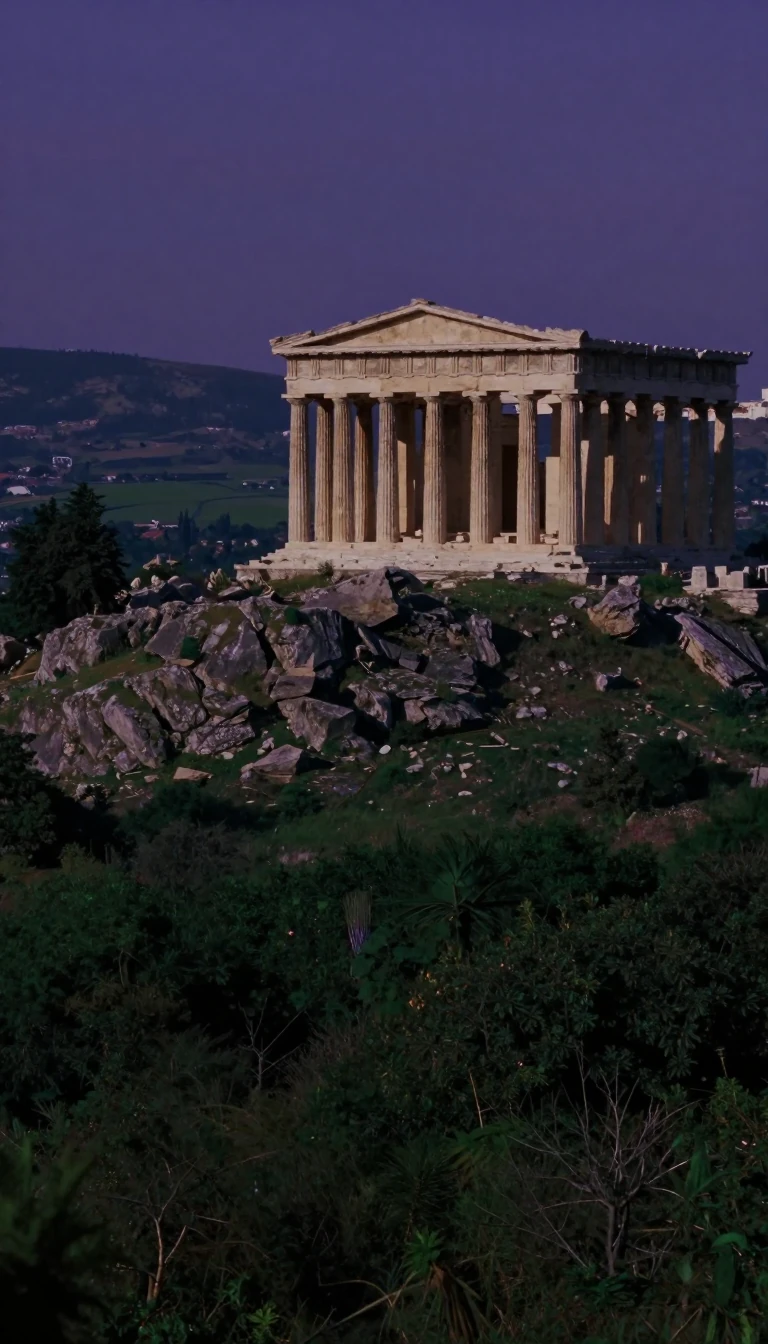 The Byzantine scholar who tried to replace Christianity with a pagan, Platonic utopia.Georgios Gemistos Plethon was a renowned philosopher who secretly authored a radical Book of Laws. He envisioned a reborn Byzantine Empire governed by a hierarchical pantheon of c…
- Can a single book topple a dictator by teaching citizens to withdraw their obedience?Gene Sharp, a political scientist who spent his life studying nonviolent resistance, argued that power is not monolithic. Instead, he believed that all rulers depend entirely on t…
 The 18th-century physicist who invented the paper size in your printer todayGeorg Christoph Lichtenberg was a German polymath whose influence spans from modern xerography to the A4 paper standard. Though he was a pioneering experimental physicist, he is b…
 George Gurdjieff taught that humanity lives in a state of hypnotic waking sleep.A mystic, composer, and teacher, George Gurdjieff claimed most people are unconscious of their own existence. He developed the Fourth Way, a system designed to help individuals aw…