 Intellect Plus
Philosophers
1,976 cards. Each one is a 40-second story with a five-minute read behind it. Page 23 of 33.
 How a chemist-turned-writer decoded the terrifying psychology of the modern mobElias Canetti, a Nobel laureate who began his career as a scientist, spent his life dissecting the invisible forces that turn individuals into dangerous crowds. From the burning o…
 The first woman to earn a university degree was an Italian polymath prodigyIn 1678, Elena Cornaro Piscopia stood before the University of Padua to defend her thesis in Latin. Despite her brilliance, the institution quickly moved to ban other women from f…
 Emanuel Lasker: The Mathematician Who Ruled the Chess World for Twenty-Seven YearsEmanuel Lasker held the World Chess Championship for a record-breaking twenty-seven years, yet he was far more than a player. A research mathematician who proved fundamental theor…
 Emil Cioran: The philosopher who found joy in the absolute inconvenience of existenceEmil Cioran was a master of pessimism who famously claimed that existence is an accident. From his early days as a radical youth in Romania to his life of quiet, scholarly seclusi…
 The monk who traded his habit for the Enlightenment and modernized a nationDositej Obradović was a polyglot monk who abandoned his monastery to traverse Europe, absorbing the rationalist ideas of the Enlightenment. He returned to Serbia not just as a phi…
 Why Emmanuel Levinas argued that ethics must come before all other philosophyEmmanuel Levinas transformed 20th-century thought by proposing that our responsibility to others is not a secondary moral choice, but the very foundation of human existence. For L…
 How a teenage insurgent became the architect of modern Polish intellectual lifeAfter surviving a brutal uprising against Imperial Russia, Bolesław Prus traded his rifle for a pen. He spent four decades as a journalist and novelist, arguing that Poland’s path…
 Did a Nazi-era physicist secretly try to sabotage Hitler's quest for an atomic bomb?Carl Friedrich von Weizsäcker was a brilliant physicist who helped launch Germany's nuclear weapons program. After the war, he claimed he and his colleagues resisted building the …
 How a Byzantine monk became the most influential bridge between two dying worldsBorn in Trebizond, Bessarion was a Greek scholar who rose to become a Roman cardinal and a twice-considered papal candidate. By preserving ancient manuscripts and championing Neop…
 Why did the ancient world consider a cynical legal advocate the wisest of men?Bias of Priene, one of the Seven Sages of Greece, was famous for his bleak view that most men are bad. Yet, he was celebrated as a hero, a master of persuasion, and a man who prov…
 How a shy, sickly German lecturer became the most famous poet in 18th-century Europe.Christian Fürchtegott Gellert was a modest academic whose moral fables and hymns transcended borders, reaching even the common people of London. Though his literary output is ofte…
 Bernard of Clairvaux: The influential mystic who shaped the medieval Church and its crusades.A monk who described himself as the chimera of his age, Bernard of Clairvaux was a powerhouse of medieval influence. He founded over 160 monasteries, swayed popes, silenced hereti…
 From philosopher to minister: The complex political career of Robert HabeckRobert Habeck, a former academic with a doctorate in philosophy, transitioned from a career as a novelist to become a central figure in German politics. Serving as Vice Chancellor…
 How a Soviet philosopher redefined the role of a leader's wife on the world stageRaisa Gorbacheva was more than a political spouse; she was a trained philosopher who brought a rare, humanizing visibility to the Soviet Union. By stepping into the public eye, sh…
- Pierre Bayle used footnotes to dismantle the dogmas of his time with surgical precision.A master of skepticism, Pierre Bayle hid his most subversive ideas in the voluminous annotations of his 1697 masterpiece. By questioning the certainty of religious and philosophic…
 Why Max Scheler believed that love is the essential key to true philosophical knowledgeMax Scheler, once hailed as the strongest philosophical force in early twentieth-century Europe, argued that logic alone is insufficient for understanding reality. Instead, he pro…
 The Syrian philosopher who defined Arab nationalism but lost control of his own party.Michel Aflaq was a central architect of Ba'athism, a political ideology that sought to unify the Arab world through a unique blend of socialism and secularism. Despite his intelle…
- María Zambrano: The Philosopher Who Reconciled Reason with the Human SoulA disciple of Ortega y Gasset, María Zambrano spent four decades in exile, crafting a philosophy that bridged the gap between cold logic and the poetic imagination. Her work, long…
 Louis-Auguste Blanqui: The Revolutionary Who Spent 33 Years of His Life in PrisonKnown as L'Enfermé, or The Prisoner, Louis-Auguste Blanqui was the most feared revolutionary of 19th-century France. He spent nearly half his life behind bars, yet his radical vis…
 How a twelfth-century Andalusian novel sparked the Enlightenment and the Scientific RevolutionIbn Tufayl, a polymath from Al-Andalus, wrote a philosophical novel about a feral child discovering truth through reason alone. This story, Philosophus Autodidactus, became a Euro…
 The Russian Marxist who paved the way for Lenin, then warned against his tyranny.Georgi Plekhanov was the intellectual architect of Russian Marxism, converting a generation of radicals to the cause. Yet, after helping build the movement, he became its most voc…
 Ferdinand Buisson: The philosopher who defined secularism and championed peace in post-war EuropeFerdinand Buisson was a pivotal intellectual who shaped the French education system and coined the term laïcité. Beyond his administrative influence, he was a tireless advocate fo…
 How a French aristocrat’s obsession with bloodlines fueled modern racial pseudoscienceArthur de Gobineau, a 19th-century diplomat, transformed personal elitism into a global theory of racial determinism. By arguing that human history was driven by the biological su…
 Why Audre Lorde argued that the master's tools cannot dismantle the master's houseAudre Lorde, a self-described Black, lesbian, feminist, socialist, mother, and warrior poet, transformed her personal experiences of marginalization into a radical philosophy of l…
 Did the founder of Academic Skepticism actually believe that he knew absolutely nothing?Arcesilaus, the sixth head of Plato's Academy, famously claimed he knew nothing—not even his own ignorance. By rejecting the Stoic belief that reality could be comprehended with c…
- How a nineteenth-century mathematician accidentally invented the blueprint for modern economic analysisAntoine Augustin Cournot was a French polymath who applied rigorous mathematical formulas to economic behavior. Though his groundbreaking work on monopolies and market competition…
 How a French educator turned parlor tricks into a systematic philosophy of the afterlifeBefore he became Allan Kardec, Hippolyte Léon Denizard Rivail was a respected academic and colleague of the famed pedagogue Pestalozzi. In his fifties, he encountered the popular …
- From textile heir to literary icon: The double life of André MauroisBorn into a family of Alsatian wool manufacturers, André Maurois spent his early years managing mills before finding fame as a celebrated French author. His life was defined by a …
 Anne Bradstreet was the first published poet in England's North American colonies.Born into a wealthy Puritan family, Anne Bradstreet navigated the rigid gender roles of 17th-century Massachusetts to become a celebrated literary voice. While she wrote primarily…
 How a stolen bucket and a fog-shrouded miracle defined a northern Italian powerhouse.Modena is more than a hub for luxury sports cars like Ferrari and Maserati. From its origins as a Roman military outpost to its survival through medieval sieges and floods, the ci…
 Why concrete and steel are the perfect, inseparable partners for modern structural engineeringConcrete is incredibly strong under compression but brittle and weak when pulled. Steel, conversely, excels at resisting tension. By embedding steel within concrete, engineers cre…
 Strasserism: The Far-Right Vision of a Medieval, Agrarian, and Anti-Industrial German StateOtto Strasser, a dissident Nazi, proposed a radical alternative to Hitler’s regime: an agrarian society governed by state-sanctioned feudalism. He aimed to dismantle heavy industr…
 Is the universe a personal creation or merely a series of physical accidents?William Lane Craig is a prominent analytic philosopher whose work bridges the gap between rigorous academic inquiry and Christian theology. Known for his formidable debating style…
 Why Trotsky believed the socialist revolution could never stop at a single nation's borders.Trotskyism is defined by the theory of permanent revolution, which argues that in economically backward nations, the capitalist class is too weak to lead a democratic transformati…
 The daughter of a pioneer icon became a founding mother of American libertarianism.Rose Wilder Lane was more than just the daughter of Laura Ingalls Wilder. A prolific writer and war correspondent, she became a central figure in the American libertarian movement…
 Split is not just a city built inside a Roman palace; it is much older.While the iconic ruins of Diocletian's Palace define the city's skyline, Split existed centuries before the Roman emperor arrived in 305 CE. Originally a Greek colony named Aspála…
 Is everything in the universe physical, or is consciousness something entirely different?Physicalism asserts that reality is fundamentally physical, leaving no room for non-physical substances. Yet, this dominant philosophical view faces persistent challenges, from th…
- Why some people believe they are immune to all government laws and taxesSovereign citizens claim they are not subject to government statutes unless they consent to them. By using pseudolegal loopholes and reinterpreting the Constitution, they argue th…
- The Ancient Catholic Order That Still Knights People at the Church of the Holy SepulchreTracing its roots to the First Crusade, the Equestrian Order of the Holy Sepulchre of Jerusalem remains a prestigious Catholic institution. Today, it counts 30,000 members worldwi…
 Is intelligent design a scientific theory or a rebranded version of traditional creationism?Proponents argue that certain biological features are too complex to have evolved, pointing to an intelligent designer. Critics and federal courts, however, view this as a pseudos…
 Why Immanuel Kant believed your moral worth depends entirely on your sense of duty.Kantian ethics is not about achieving good outcomes, but about the purity of your intentions. Immanuel Kant argued that only a good will—acting strictly from a sense of duty—posse…
 Was the French Revolution's greatest orator a visionary statesman or a paid royal traitor?Honoré Gabriel Riqueti, comte de Mirabeau, rose from scandalous imprisonment to lead the French Revolution. While he championed a constitutional monarchy modeled on Britain, his s…
 Is the universe turtles all the way down, or does it have a foundation?An infinite regress occurs when a theory relies on a chain of explanations that never ends. While often dismissed as a logical failure, philosophers debate whether these chains ar…
 Are your most fundamental rights gifts from the government or inherent to your humanity?Philosophers have long debated whether rights are granted by legal systems or exist independently of human law. While some argue that natural rights are universal and inalienable,…
 How a stranded volunteer army seized the Trans-Siberian Railway and a massive gold reserve.During the Russian Civil War, a force of over 100,000 Czech and Slovak volunteers found themselves trapped in Siberia. Instead of surrendering, they seized control of the Trans-Si…
- How a band named after a horse that didn't exist became rock legendsFaith No More rose from the ashes of a group called Faith. No Man, only to adopt a name based on a fake story about a racehorse. Their journey from San Francisco post-punk origins…
 Grover Cleveland remains the only American president to serve two nonconsecutive terms in office.Elected as the 22nd and 24th president, Grover Cleveland was a political anomaly who defied party machines and championed fiscal conservatism. His career was defined by a rigid, u…
 Can a society function entirely without a state by replacing government with private corporations?Anarcho-capitalism proposes a radical vision: replacing all state institutions with voluntary, private market services. Proponents argue that everything from policing to courts sh…
- Why centuries of suspicion turned the Catholic Church into a global political targetAnti-Catholicism is not merely religious disagreement; it is a complex, centuries-old phenomenon rooted in fears of divided loyalties, foreign influence, and moral corruption. Fro…
- Aristotelianism is not a single doctrine but a vast, evolving intellectual traditionAristotelianism is less a fixed set of beliefs and more a sprawling, centuries-long conversation. From ancient Peripatetics to medieval theologians and modern political theorists,…
 The 13th-century scholar who bridged the divide between Christian and Muslim worldsIn a century defined by conflict, one man became a bridge. Bar Hebraeus was a polymath who translated Arabic science into Syriac, preserving Greek and Islamic knowledge for the We…
 How a seventeenth-century bishop used the Bible to justify absolute royal powerJacques-Bénigne Bossuet was the most influential voice of the French church, celebrated for his funeral orations and his defense of royal authority. He argued that kings were God'…
 Can a statement be neither true nor false? One logician thought so.Jan Łukasiewicz, a titan of the Polish school of logic, shattered the classical foundations of thought. By introducing a third truth-value for future events, he challenged the anc…
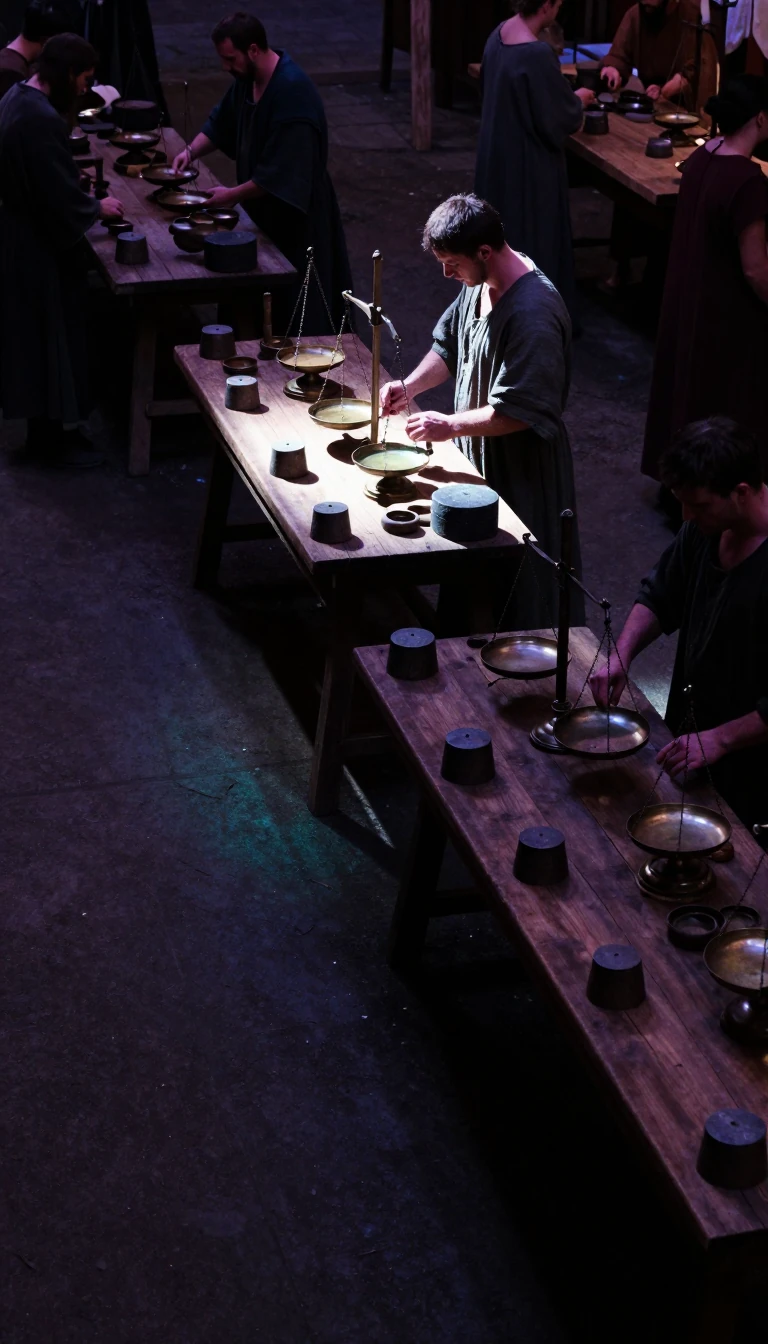 Why a 19th-century French economist once petitioned for the Sun to be bannedFrédéric Bastiat was a master of the satirical thought experiment. To expose the absurdity of protectionism, he famously proposed that candlemakers should petition the government …
 How Halldór Laxness revived the ancient narrative power of Iceland for the modern worldAwarded the 1955 Nobel Prize in Literature, Halldór Laxness transformed Icelandic writing by blending the stark, ancient saga tradition with modern social critique. From his early…
- The King’s Physician Who Invented the Modern Way We Visualize an EconomyFrançois Quesnay, the personal doctor to Louis XV, did not start his economic career until his sixties. Yet, he pioneered the first analytical model of how wealth flows through so…
 Why Félix Guattari believed traditional psychoanalysis was a tool for capitalist social controlFélix Guattari was a radical psychiatrist who rejected the Freudian couch. By viewing humans as desiring machines rather than ego-driven subjects, he sought to dismantle the repre…
- The Socratic disciple who risked his life to study philosophy in disguiseEuclid of Megara was so devoted to Socrates that he snuck into Athens disguised as a woman during a wartime ban to hear his master speak. A founder of the Megarian school, he synt…
 How a Greek mathematician solved the crisis of irrational numbers two millennia agoBefore modern calculus, Eudoxus of Cnidus revolutionized mathematics by creating a rigorous way to compare irrational lengths. His work on proportions, preserved in Euclid's Eleme…
- The Archbishop who taught a future King that absolute monarchy was a dangerous failure.François Fénelon was a celebrated French archbishop and royal tutor who dared to challenge the divine right of kings. Through his famous novel, The Adventures of Telemachus, he cr…