 Intellect Plus
Philosophers
1,976 cards. Each one is a 40-second story with a five-minute read behind it. Page 20 of 33.
 How a suburban youth became the face of France's far-right political transformationJordan Bardella rose from a working-class upbringing in Seine-Saint-Denis to lead the National Rally. By blending nationalist rhetoric with a pro-business economic agenda, he has …
 Was Josemaría Escrivá a saint of ordinary life or a manipulative, secretive egoist?Founder of Opus Dei, Josemaría Escrivá remains a polarizing figure in the Catholic Church. While Pope John Paul II canonized him as a saint of ordinary life, critics describe a ma…
 From child miner to parliamentary pioneer: the radical life of James Keir HardieBorn into poverty and working underground by age ten, James Keir Hardie transformed from a blacklisted miner into the founder of the British Labour Party. His journey from the coa…
 Can science fiction provide a credible blueprint for a sustainable, post-capitalist global society?Kim Stanley Robinson is widely considered the gold standard of literary science fiction. By centering scientists as heroes and exploring alternatives to modern capitalism, he craf…
 How one biologist turned the study of human intimacy into a scientific revolutionAlfred Kinsey began his career cataloging gall wasps, but his obsession with data led him to expose the vast chasm between social norms and actual human behavior. The 2004 biopic …
 Beyond the Servant: The Complex Power Dynamics of the Royal Lady-in-WaitingFar from mere attendants, ladies-in-waiting were often political players, secretaries, and confidantes. Whether in the rigid hierarchies of European courts or the vast, often dang…
- Can faith survive the scrutiny of modern science and rigorous historical criticism?Liberal Christianity emerged as a bold attempt to reconcile religious belief with the Enlightenment’s demand for rational inquiry. By prioritizing empirical observation and critic…
 Can a nation be both Jewish and a liberal democracy? The Liberal Zionist dilemma.Liberal Zionism seeks to reconcile the necessity of a Jewish nation-state with the principles of secularism, human rights, and democratic equality. From its roots in the competing…
 How a grieving president and a Tibetan concept birthed a literary masterpieceGeorge Saunders spent twenty years haunted by a single image: Abraham Lincoln cradling his dead son in a Georgetown crypt. This vision eventually evolved into his 2017 Booker Priz…
 The Lion Gate: A Bronze Age Masterpiece That Never Vanished From Human SightStanding for over three millennia, the Lion Gate of Mycenae remains the only Bronze Age Aegean monument to survive above ground. This imposing entrance, adorned with iconic feline…
 Lipari: A volcanic Mediterranean crossroads of obsidian, pirates, and ancient mythic exileThe largest of the Aeolian Islands, Lipari has served as a Neolithic obsidian hub, a Mycenaean outpost, and a Roman place of exile. From its volcanic origins to its role as a pris…
 Why the vast majority of early cinema has vanished into thin airMost silent-era films are gone forever, victims of intentional destruction, flammable nitrate stock, and studio neglect. Once considered disposable, these movies were often recycl…
 Lugdunum was the Roman Empire's strategic heart, mint, and site of imperial birth.Founded in 43 BC as a refuge for displaced Romans, Lugdunum rapidly evolved into the administrative capital of Gaul. It served as the empire's primary mint, a bustling cosmopolita…
 The Lumpenproletariat: Why Marx Feared the Underclass as a Tool of ReactionCoined by Karl Marx and Friedrich Engels in the 1840s, the term lumpenproletariat describes a social stratum deemed devoid of class consciousness. Often dismissed as social scum o…
 Why does modern work feel so hollow? Karl Marx had a radical answer.Karl Marx argued that capitalism does not just pay workers; it fundamentally estranges them from their own humanity. By separating people from the products they create and the cre…
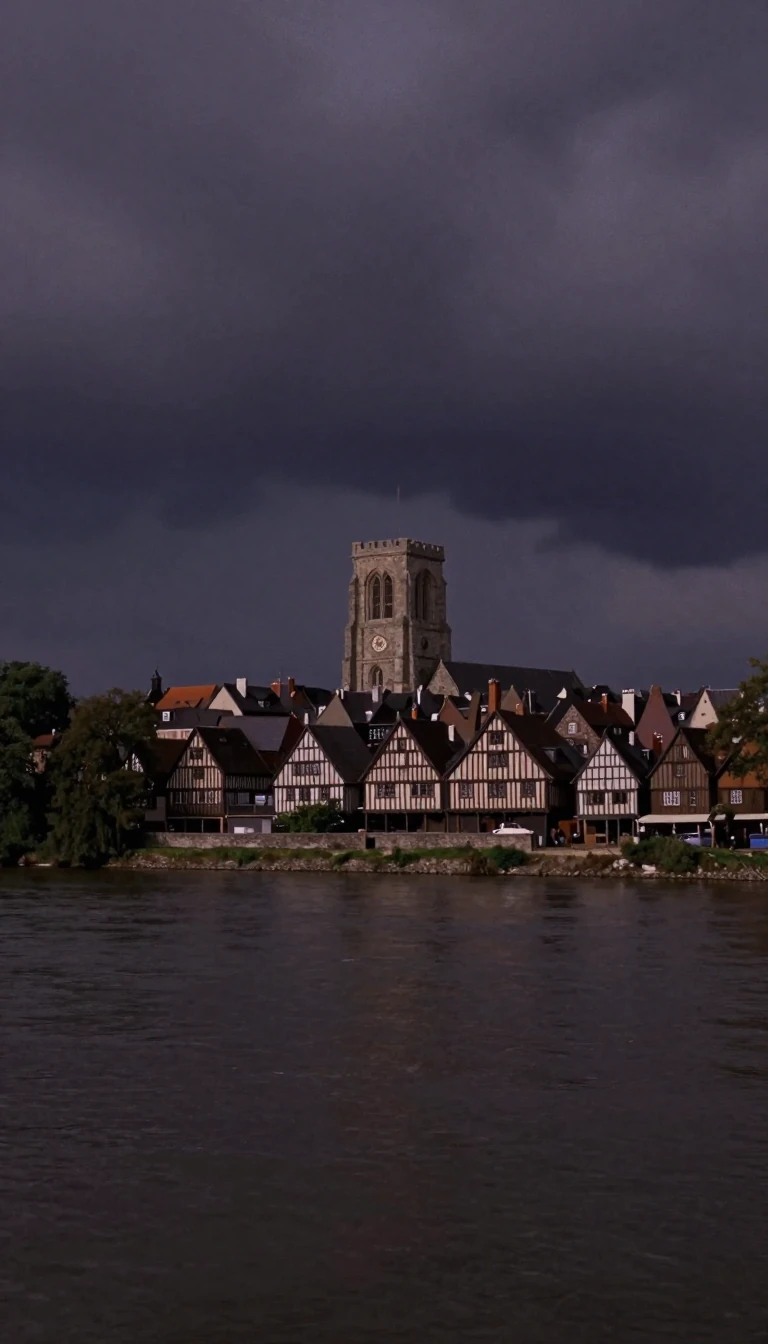 How a rowdy annual fair transformed into London’s most exclusive, high-stakes real estate districtMayfair began as a chaotic, disreputable festival featuring bare-knuckle fighting and semolina-eating contests. After residents successfully campaigned to abolish the nuisance in …
 Can the living truly speak with the dead, or is it all a performance?Mediumship claims to bridge the gap between the living and the spirit world, yet over a century of scientific investigation has failed to validate these phenomena. From Victorian-…
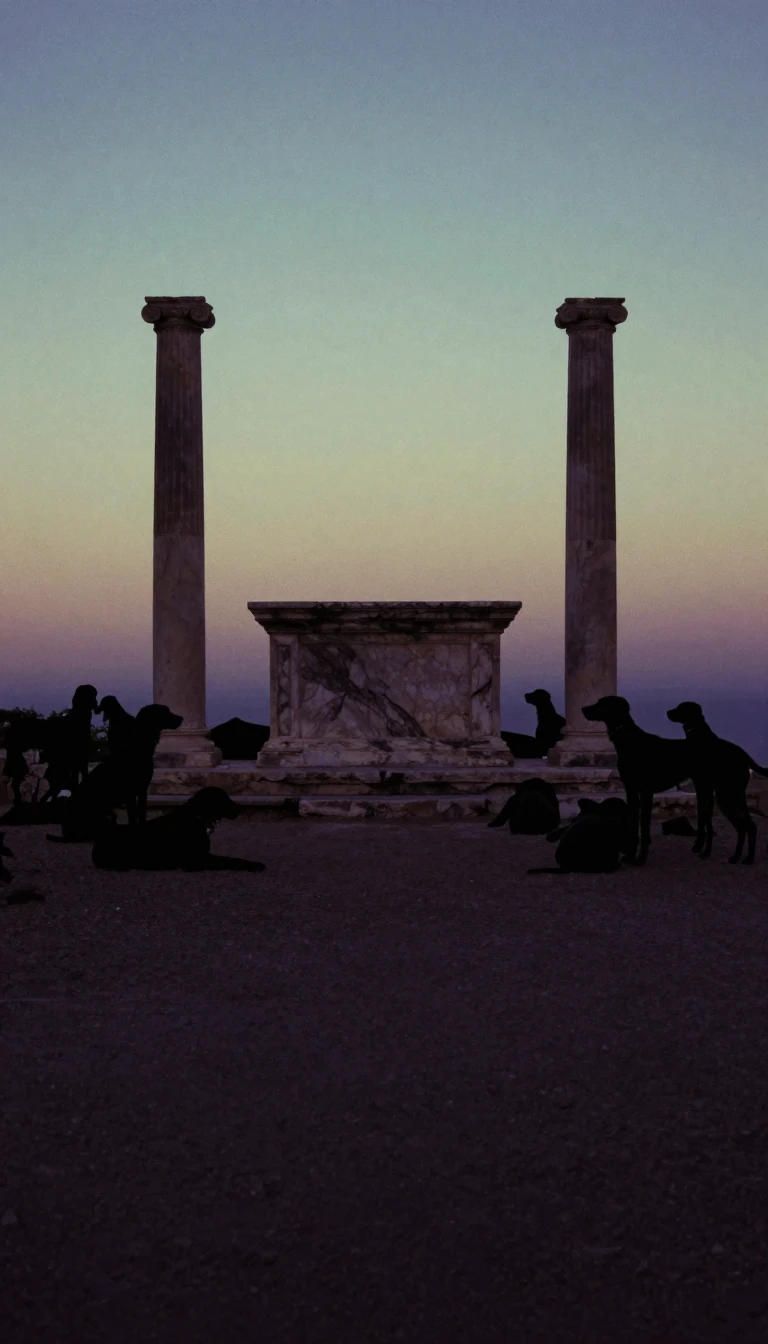 Megara: The Ancient Greek Powerhouse That Once Defeated Elephants With Burning PigsMegara was a pivotal ancient Greek city-state, balancing between Athens and Corinth as a major trade hub. Beyond its strategic ports and philosophical contributions, it is remembe…
 Mensa was founded to be an intellectual aristocracy, but its creators were quickly disappointed.Founded in 1946 by two barristers, Mensa aimed to unite the world's most intelligent minds in a non-political, round-table society. Yet, the founders soon grew frustrated: one lam…
 Why justice cannot be a one-size-fits-all concept for modern societiesMichael Walzer argues that political philosophy often fails by chasing universal abstractions. Instead, he suggests that true justice is rooted in the specific values and traditio…
 Why the label 'Monophysite' is a historical misnomer for ancient Christian traditionsFor centuries, the term Monophysite has been used to describe churches that supposedly denied the humanity of Jesus. Yet, these groups have long rejected the label, arguing their …
 Was the architect of Indian Sufism actually a founder, or a visionary transmitter?Mu'in al-Din Chishti is widely celebrated as the father of the Chishtiyya order in India, yet he did not invent the movement. Instead, he transformed an existing tradition into a …
 Can we finally understand what the Apostle Paul was actually trying to say?N. T. Wright, a leading New Testament scholar and former Bishop of Durham, argues that centuries of theological debate have fundamentally misread Paul. By stripping away modern as…
 How a secret, last-minute legislative maneuver created America's most prestigious scientific advisory body.In the final hours of an 1863 congressional session, a group of scientists bypassed formal debate to establish the National Academy of Sciences. Designed to provide independent, p…
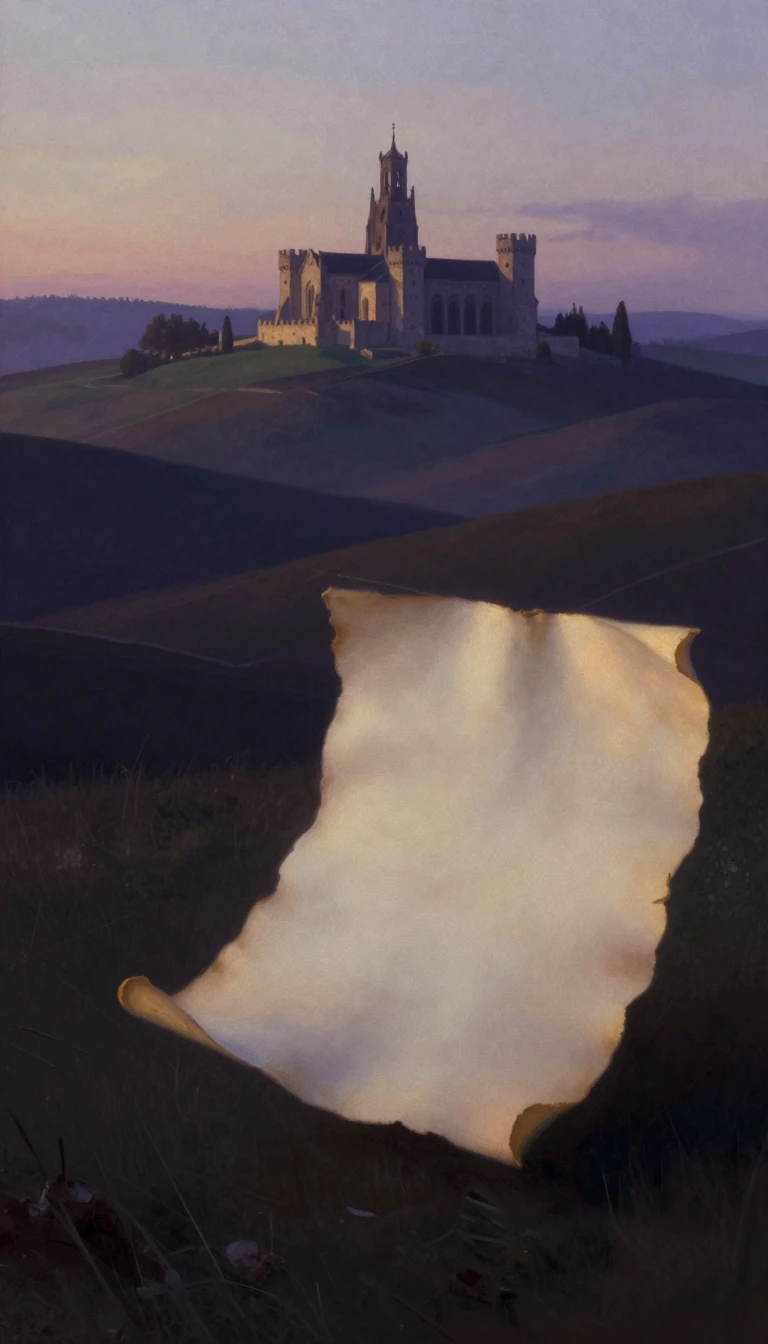 The 1493 Nuremberg Chronicle was the most ambitious printing project of the fifteenth century.Compiled by Hartmann Schedel and printed by Anton Koberger, this massive world history revolutionized book production. Featuring over 1,800 woodcut illustrations, it set new stand…
 The OSS was a wartime intelligence agency that recruited the American social elite.Born from World War II necessity, the Office of Strategic Services (OSS) coordinated espionage, sabotage, and propaganda behind enemy lines. Often dubbed the Oh So Social Club for…
 Why ancient Romans struggled to read their own language's earliest surviving textsLong before the polished prose of Cicero, Latin was a shifting, rugged tongue. While imperial Romans could navigate most pre-classical writing, the oldest fragments—songs from the…
 From youth captain to Premier League champion: the versatile career of Oleksandr ZinchenkoOleksandr Zinchenko transformed from an attacking midfielder into a reliable left-back under Pep Guardiola, securing multiple major trophies in England. Beyond his professional fo…
 How a Quran teacher became the Lion of the Desert and a revolutionary icon.Omar al-Mukhtar was an unlikely general. A devout Quran teacher and mediator of tribal disputes, he spent two decades leading a guerrilla insurgency against Italian colonial force…
 Is omnipotence a logical reality or just a linguistic trap for the human mind?The concept of being all-powerful is a cornerstone of monotheistic faith, yet it faces relentless scrutiny from philosophers and theologians. From the paradoxes of logic to the de…
 Can a political philosophy bridge the gap between the wealthy and the working class?One-nation conservatism emerged in the 19th century as a response to deep societal fractures. It argues that the elite have a moral duty to support the vulnerable, aiming to preve…
 Can a digital library truly own every book ever written without breaking the law?The Open Library project aims to build a single webpage for every book in history. By digitizing physical copies, it offers a massive lending service. Yet, this ambitious mission …
 How a Medieval Manor House Gave One of Oxford's Oldest Colleges Its NameOriel College, Oxford, holds the title of the oldest royal foundation in the university. While its origins trace back to a 1324 license, the institution is named after a 14th-cent…
 Was King Otto of Bavaria truly insane, or was he a political pawn?Otto of Bavaria was a king who never ruled, spending decades in isolation while his throne was held by regents. While officially diagnosed with severe mental illness, historians a…
 Why do we believe in palmistry even when the readings are completely wrong?Palmistry claims to reveal character and destiny through the lines of your hand. While scientific consensus dismisses it as pseudoscience, the practice has persisted for millennia…
 How a small Italian town became the capital of four different kingdomsPavia, a quiet city south of Milan, has served as the political heart of Italy for centuries. From the Ostrogoths to the Lombards and the Visconti court, this strategic garrison t…
 Why Paulo Freire’s seminal book on education was once banned by governments worldwidePaulo Freire’s Pedagogy of the Oppressed argues that traditional schooling is a banking model that treats students like empty piggy banks. By rejecting this passive approach, Frei…
 Did humans possess the innate power to choose salvation without divine intervention?In the 5th century, a theological firestorm erupted over the nature of human will. While Pelagianism argued that humans were born blameless and free to choose good, a more nuanced…
 How a Bohemian Drama Critic Briefly Turned Bavaria into a Socialist RepublicIn November 1918, Kurt Eisner, a Berlin-born journalist with no administrative experience, seized power in Munich to declare the People's State of Bavaria. His utopian experiment …
 Can a Socratic dialogue resolve the deepest questions of Christian faith and existence?Peter Kreeft, a prolific American philosopher, has spent decades bridging the gap between ancient Socratic inquiry and modern Christian apologetics. By reviving the dramatic dialo…
- The French Regent who defied Louis XIV to rule with science and reasonPhilippe II, Duke of Orléans, was a polymath prince who navigated the treacherous politics of the French court. After the death of the Sun King, he dismantled his uncle's restrict…
 Is this ancient manual of celestial magic the secret godfather of modern experimental science?The Picatrix, a 400-page Arabic compendium of talismanic magic and astrology, was once dismissed as occult nonsense. Yet, Renaissance thinkers like Ficino and Campanella saw it as…
 The Italian engineering student who became a global icon of radical social charityPier Giorgio Frassati was an ordinary student who lived an extraordinary life of service. Despite his elite upbringing, he dedicated his time to the poor of Turin and championed s…
 How a Fragile Coalition of Leftists and Republicans Tried to Save Spanish DemocracyIn January 1936, a diverse alliance of socialists, communists, and republicans formed the Popular Front to counter the rising tide of fascism. While they secured a narrow electora…
 From teenage guru to global peace advocate: the evolution of Prem RawatPrem Rawat, once a child guru known as Guru Maharaj Ji, rose to international fame in the 1970s. After navigating intense media scrutiny, family rifts, and a transition from relig…
 Why do some people insist on rewriting the past to suit their own agendas?Pseudohistory is not just bad research; it is the deliberate distortion of the past to serve contemporary political or personal goals. By treating myths as facts and inventing con…
 How a 19th-century church college survived financial ruin to become a global research hubFounded in 1841 to train ministers, Queen's University at Kingston has weathered bank collapses, world wars, and identity shifts. From its early days as a small woodframe house to…
 The Radha Soami movement: A spiritual tradition born from inner sound and living mastersFounded in 1861 by Shiv Dayal Singh, the Radha Soami tradition emphasizes direct experience through Surat Shabd Yoga—the union of the soul with divine inner sound. This faith, whi…
- How a 19th-century papal letter challenged both socialism and laissez-faire capitalismIn 1891, Pope Leo XIII issued Rerum novarum, a landmark encyclical addressing the brutal realities of the industrial age. By rejecting the extremes of state-controlled socialism a…
 Why one of America’s most prominent Marxist economists rejects the necessity of mathematical modeling.Richard D. Wolff, a professor emeritus at UMass Amherst, challenges the dominance of neoclassical economics by questioning its reliance on complex math. He argues that economic th…
 The Romaniote Jews are Europe's oldest Jewish community, predating the better-known Sephardic and Ashkenazi groups.For over 2,300 years, the Romaniote Jews have maintained a distinct identity in Greece, speaking a unique Greek-Hebrew dialect called Yevanic. While often overshadowed by later Se…
 How a Spanish musicology graduate redefined global pop through experimental flamenco and artful reinventionRosalía transformed from a struggling independent artist into a global icon by blending traditional flamenco with modern urban sounds. Her career, marked by rigorous academic trai…
 Why millions of Russians live outside the borders of the modern Russian FederationThe Russian diaspora is a vast, complex web of communities shaped by centuries of religious persecution, political upheaval, and economic instability. From the 17th-century Old Be…
 Can a motorcycle-riding mystic bridge the gap between ancient yoga and modern environmentalism?Jagadish Vasudev, widely known as Sadhguru, transformed from a poultry farmer into a global spiritual leader. While he commands massive influence and addresses world leaders on so…
 How an English monk became the architect of the first unified European churchBorn Wynfrid in Wessex, the man later known as Saint Boniface transformed the religious landscape of eighth-century Germany. By aligning missionary work with Roman authority and C…
 How the Nightingale of India became a revolutionary architect of the nationSarojini Naidu was a celebrated poet whose lyrical verses earned her the nickname Nightingale of India. Yet, she was far more than a literary figure. She became a powerhouse of th…
 Why a former Presbyterian minister became known as the modern Luther in reverseScott Hahn was once a staunch critic of the Catholic Church, actively working to convert Catholics to Protestantism. Today, he is a prominent Catholic theologian. His journey from…
 Can a populist Democrat reclaim the working class by returning to the Senate floor?Sherrod Brown, a fixture of Ohio politics for decades, has spent his career championing a populist agenda focused on the dignity of work. After losing his Senate seat in 2024, he …
 Is Stanford a university, a town, or a massive engine for global technological change?Stanford is more than a prestigious academic institution; it is a unique census-designated place in California where the boundaries between campus and community blur. Beyond its c…
 How a self-taught poet became the father of modern Tamil literary styleSubramania Bharati was a revolutionary voice who transformed Tamil literature while living in exile. From a child prodigy to a political firebrand, his life was defined by a fierc…