 Intellect Plus
Philosophers
1,976 cards. Each one is a 40-second story with a five-minute read behind it. Page 24 of 33.
 How a lawyer turned physicist used sand to reveal the hidden geometry of soundErnst Chladni, the father of acoustics, transformed how we visualize invisible forces. By bowing metal plates covered in fine sand, he forced the grains to settle into intricate, …
 Why humans are defined not by instinct, but by the symbols we createErnst Cassirer argued that humans are symbolic animals, constructing a universe of meaning through language, myth, and science. While other creatures rely on instinct, we interpre…
 Ernst Mayr: The 20th Century Darwin Who Revolutionized How We Define SpeciesErnst Mayr transformed biology by shifting the focus from mere physical appearance to reproductive isolation. By observing birds in the tropics, he realized that species are defin…
 Can political philosophy save civilization from the destructive power of modern political myths?Eric Voegelin argued that political philosophy is not merely abstract speculation but a vital discipline that defines the constructive use of public power. In an age where humanit…
 Why did a brilliant philosopher call the dominant intellectual trend of his time rubbish?Ernest Gellner was a ferocious critic of linguistic philosophy, the Oxbridge orthodoxy that prioritized custom over universal truth. A lifelong crusader for critical rationalism, …
 How a devout seminary student became the 19th century's most controversial critic of Christianity.Ernest Renan was destined for the priesthood until his philological studies revealed historical inconsistencies in the Bible. This discovery shattered his faith, transforming him …
 Can a Marxist philosopher find the ultimate meaning of history in human hope?Ernst Bloch was a German thinker who believed the universe is moving toward a final, perfected goal. By blending Marxist theory with religious mysticism, he argued that human hist…
 Did this ancient Greek philosopher really leap into a volcano to become a god?Empedocles of Acragas was a polymath whose theories on the four elements shaped Western thought. While his scientific contributions remain significant, his legacy is often oversha…
 The soap salesman who built a utopian empire and died on the LusitaniaElbert Hubbard was a master of reinvention, evolving from a successful soap salesman into a philosopher-publisher. He founded the Roycroft community, an Arts and Crafts collective…
 How a former investment banker became France’s youngest leader since Napoleon IEmmanuel Macron shattered French political norms by winning the 2017 presidency without the support of traditional parties. A former philosophy student and Rothschild banker, he r…
 Before Charles Darwin, his grandfather Erasmus envisioned life evolving from a single filament.Erasmus Darwin was a polymathic physician, inventor, and poet who helped define the Enlightenment. Long before his grandson Charles published his famous theory, Erasmus proposed t…
 Edward Sapir proved that indigenous languages are as complex as any Indo-European tongue.A brilliant linguist and anthropologist, Edward Sapir transformed how we understand human speech. By applying rigorous comparative methods to Native American languages, he shatter…
 Was the father of Greek comedy actually a philosopher who Plato secretly copied?Epicharmus of Cos is credited with inventing Sicilian comedy, yet his legacy is a tangle of contradictions. Was he a mere entertainer, a student of Pythagoras, or a profound think…
 Edward Abbey: The prickly anarchist who wanted his body to fertilize the desert floor.Author of the seminal Desert Solitaire, Edward Abbey was a fierce critic of industrial tourism and a hero to radical environmentalists. He spent his life fighting institutions, fr…
 Edward de Bono: The man who tried to teach the world how to thinkA Rhodes Scholar and physician, Edward de Bono became a global authority on creativity by championing lateral thinking. He authored 85 books, advised governments, and proposed rad…
 How a homeless man on a London park bench became the world's most influential spiritual teacher.After years of severe depression, Eckhart Tolle experienced a sudden, transformative epiphany that dissolved his sense of self. He spent two years in a state of deep bliss, often …
- Edith Stein: From Husserl’s Assistant to Modern Martyr and Patron Saint of EuropeEdith Stein was a brilliant philosopher who studied under Edmund Husserl, the founder of phenomenology. After converting from Judaism to Catholicism and becoming a Carmelite nun, …
- Donna Haraway argues that scientific objectivity is a myth we must learn to abandon.Donna Haraway, a pioneering philosopher of science and technology, challenges the idea that researchers can ever be neutral observers. By exploring the blurred lines between human…
 Edgar Morin: The Philosopher Who Mapped Our Interconnected PolycrisisEdgar Morin, who lived to 104, spent his life dismantling the silos of human knowledge. By pioneering the concept of polycrisis and complex thought, he argued that our greatest ch…
 How D. T. Suzuki brought Zen to the West while masking his own contradictions.Daisetz Teitaro Suzuki transformed how the West perceives Eastern philosophy, framing Zen as a practical, mystical experience. Yet, his legacy is complex. While he became a cultur…
 Dmitry Merezhkovsky: The Russian Intellectual Who Tried to Reconcile History and FaithDmitry Merezhkovsky was a pivotal Russian thinker who bridged the gap between literature and religious philosophy. Known for his historical novels and critical studies, he became …
 The Moldavian Prince Who Shaped How Europe Understood the Ottoman EmpireDimitrie Cantemir was a polymath who navigated the treacherous politics of the 18th century. A prince of Moldavia who became a trusted adviser to Peter the Great, he mastered elev…
 How a banished Roman orator transformed from a wealthy politician into a wandering philosopher.Exiled by Emperor Domitian in 82 AD, Dio Chrysostom shed his status to live as a wandering Cynic. Armed only with two classic texts, he traversed the Roman frontier, eventually re…
 Was the universe a giant, intelligent lung breathing life into everything we see?Diogenes of Apollonia, a 5th-century BC thinker, proposed that air was the divine, eternal source of all existence. By condensing and rarefying, this intelligent substance formed …
- Why a mediocre biographer became the most important source for ancient Greek philosophyDiogenes Laertius is a puzzle. Scholars have called him an ignoramus and a complete ass, yet his work remains the primary window into the lives of the Greek sages. Because so many…
 Did a mysterious priestess from Mantinea actually teach Socrates the true meaning of love?In Plato's Symposium, Socrates credits a foreign prophetess named Diotima with his entire philosophy of love. While she remains the foundational figure for our modern understandin…
- Did the Gospels record history, or did they craft a powerful, legendary myth?David Friedrich Strauss shocked 19th-century Europe by arguing that the miracles of Jesus were not literal events, but rather myths created by early Christians. By applying dialec…
 How a mouse on a temple idol sparked a revolution in Indian religious thoughtDayananda Saraswati, a prominent Hindu reformer, rejected idol worship after witnessing a mouse crawl over a deity during a temple vigil. This singular moment of doubt propelled h…
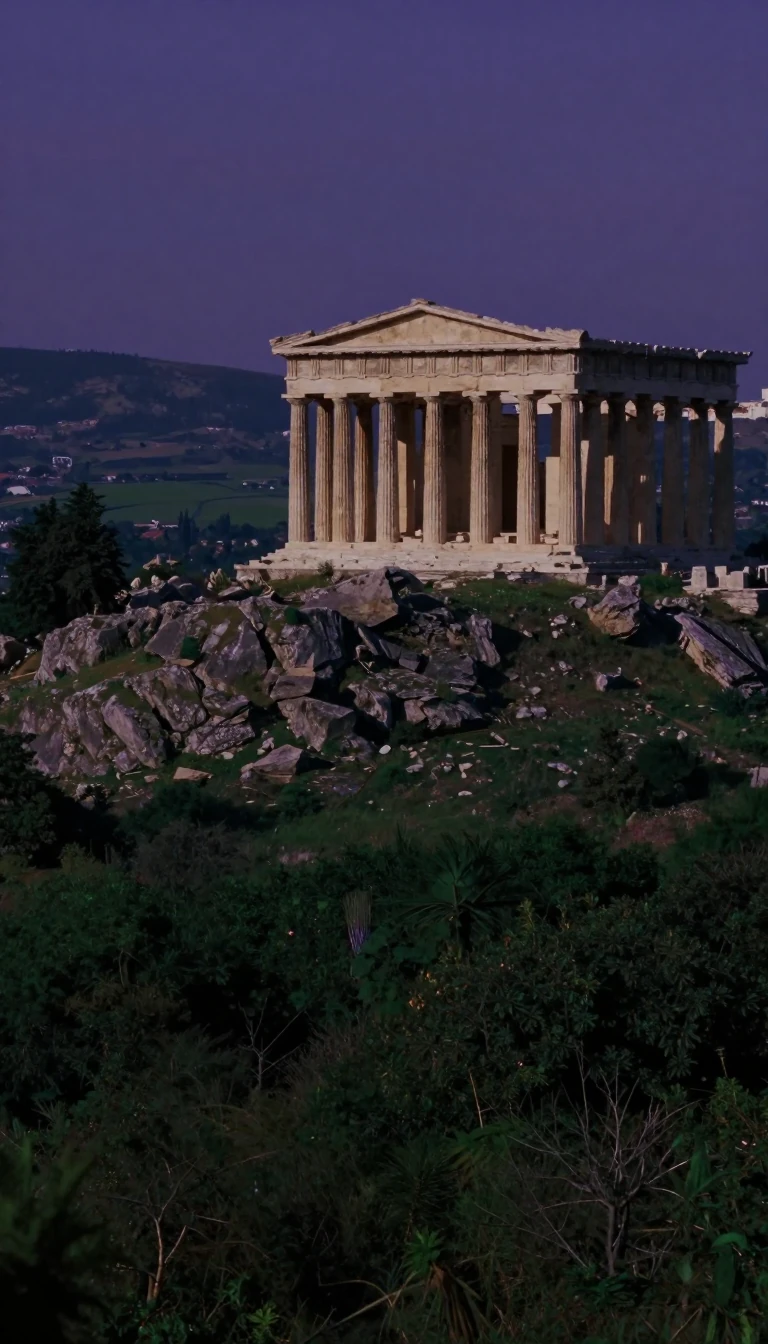 The Athenian ruler who built the Library of Alexandria and lost 360 statuesDemetrius of Phalerum was a philosopher-statesman who governed Athens for a decade under Macedonian rule. Though he introduced major legal reforms and promoted intellectual life, …
 Dietrich Bonhoeffer: The Theologian Who Risked Everything to Oppose the Nazi RegimeDietrich Bonhoeffer was a prominent German Protestant theologian who transitioned from academic life to active resistance against Adolf Hitler. His journey from a scholar of syste…
 Can a society ever be truly free if its citizens refuse to examine themselves?Cornelius Castoriadis argued that autonomy is not just a political goal but a psychological necessity. By bridging the gap between social institutions and the human psyche, he cha…
 How a wealthy Roman lawyer became the most influential bishop of early North AfricaCyprian was a successful orator and legal expert who converted to Christianity at thirty-five. He rose rapidly to become the Bishop of Carthage, navigating intense imperial persec…
- How Criss Angel Transformed the Image of Magic from Old-Fashioned to Pop Culture CoolCriss Angel did not just perform magic; he weaponized it. By blending industrial music, death-defying stunts, and a gritty, street-level aesthetic, he moved the art form from dust…
 Was this ancient Greek sage a king, a poet, or a master of riddles?Cleobulus of Lindos remains one of the Seven Sages of Greece, yet his true life is obscured by centuries of myth and forgery. While ancient writers debated whether he ruled as a k…
 Without Chrysippus, there would have been no Stoa: the man who defined Stoicism.Born in Soli around 279 BC, Chrysippus became the Second Founder of Stoicism. A prolific writer who produced over 705 works, he transformed the school's early ideas into a rigorou…
- Clare of Assisi wrote the first monastic rule in history authored by a woman.Clare of Assisi defied her noble family to embrace a life of absolute poverty, eventually securing papal approval for her own radical monastic rule. She became a powerful leader w…
 Why a wealthy tax collector became the most dangerous philosopher in Enlightenment FranceClaude-Adrien Helvétius was a tax-collecting socialite who turned his back on luxury to challenge the moral foundations of his era. His radical belief that humans are driven solel…
 Claude Lanzmann rejected archival footage to force a confrontation with the Holocaust's reality.For his nine-and-a-half-hour masterpiece Shoah, Claude Lanzmann banned all archival war footage. Instead, he relied on grueling, firsthand oral testimony and contemporary site vis…
 The Stoic philosopher who spent his nights carrying water to pay for his education.Cleanthes was a former boxer who arrived in Athens with only four drachmae. To fund his studies under Zeno, he worked as a night-time water-carrier. His endurance earned him the n…
 Why Charlotte Perkins Gilman argued that the domestic home was a trap for womenCharlotte Perkins Gilman was a pioneering sociologist who believed the traditional home stifled human potential. By linking economic dependence to marriage, she argued that women …
 Was the Spartan sage Chilon the true architect of the Peloponnesian League's rise?Chilon of Sparta, one of the legendary Seven Sages of Greece, transformed Spartan society through militarization and political innovation. Beyond his reputation for brevity, he al…
 Did a German jurist start the Enlightenment by lecturing in his native language?Christian Thomasius was a radical intellectual who dared to lecture in German rather than Latin in 1687. By challenging traditional prejudices in theology and law, he helped shift…
- Charles Péguy was a poet of the poor who died for a fractured France.Born to a chair-mender in Orléans, Charles Péguy became a fierce socialist, a Dreyfusard, and eventually a devout Catholic who refused to attend Mass. A man of impossible contradi…
- Why your sense of self is not something you can achieve entirely aloneCanadian philosopher Charles Taylor argues that human identity is not a solitary project. Instead, our sense of who we are depends on recognition from others. By bridging analytic…
 How a deaf French poet became the intellectual architect of integral nationalismCharles Maurras was a towering figure in early 20th-century European thought, whose radical ideas on state supremacy and national identity anticipated the rise of fascism. After l…
- The ancient philosopher who argued that justice is merely a convenient, artificial social construct.Carneades of Cyrene, a radical skeptic, once shocked the Roman Senate by arguing for justice one day and dismantling his own case the next. He believed absolute truth was unreacha…
 How a Roman statesman saved Western culture by teaching monks to copy pagan texts.Cassiodorus was a high-ranking official in the Ostrogothic kingdom who pivoted from politics to preservation. By founding the Vivarium monastery, he established a rigorous traditi…
 The Laughing Buddha is not Gautama Buddha, but a wandering monk named BudaiOften mistaken for the historical Buddha in the West, the rotund, smiling figure known as Budai was actually a historical Chinese monk named Qieci. Revered as an incarnation of th…
 How a disgraced imperial bondservant wrote the greatest novel in Chinese literary historyBorn into the immense wealth of the Qing dynasty's elite, Cao Xueqin saw his family empire collapse into ruin. From the depths of poverty in Beijing, he spent a decade crafting a …
 Was the historical Jesus merely a literary invention of early Christian consciousness?Bruno Bauer, a radical 19th-century philosopher, argued that the Gospels were not historical records but creative literary works. By positioning Jesus as a mythic figure rather th…
- Is Brihaspati a divine teacher, a materialist philosopher, or the planet Jupiter?The name Brihaspati spans thousands of years of Indian thought, shifting from a Vedic deity of sacred speech to the regent of the planet Jupiter. Yet, paradoxically, the same name…
 How a disgraced Roman statesman wrote the most influential book of the Middle Ages.Imprisoned for treason and awaiting execution, Boethius penned the Consolation of Philosophy. This masterpiece, written in his final days, bridged the gap between ancient Greek wi…
- Benjamin Tucker: The American Philosopher Who Merged Individual Liberty With Radical Free-Market SocialismBenjamin Tucker was a pivotal figure in American anarchism, crafting a sophisticated philosophy that fused individualist liberty with labor egalitarianism. By editing the influent…
 How a Bohemian priest stripped the mystery from calculus to reveal its logical core.Bernard Bolzano was a 19th-century polymath who dared to challenge the foundations of mathematics. By rejecting the vague concept of infinitesimals, he pioneered a rigorous approa…
 Bernard-Henri Lévy: The French Public Intellectual Who Swapped Marxism for Global Crisis ReportingBernard-Henri Lévy rose to prominence as a leading voice of the New Philosophers, a group that dismantled the Marxist dogmas dominating post-war France. Moving beyond the academy,…
 How a man who lived to ninety-nine bridged the gap between two centuries.Bernard Le Bovier de Fontenelle was the ultimate intellectual bridge, connecting the literary giants of the seventeenth century to the Enlightenment thinkers of the eighteenth. A …
 Why modern freedom is not the same as the liberty of the ancient worldBenjamin Constant, a pivotal 19th-century thinker, argued that we misunderstand liberty by applying ancient ideals to modern life. He distinguished between the participatory, publ…
- Why did this legendary feminist intellectual choose to write her name in lowercase?Born Gloria Jean Watkins, the cultural critic known as bell hooks adopted her great-grandmother’s name to honor a woman famous for her sharp, bold tongue. By styling her pen name …
- How a devastating earthquake shaped Italy’s most influential 20th-century philosopherIn 1883, a catastrophic earthquake killed Benedetto Croce’s family, leaving him buried and orphaned. This trauma shattered his world, yet his response was to retreat into an auste…
 Why do millions of strangers feel a deep, horizontal comradeship for one another?Benedict Anderson argued that nations are not ancient, biological facts but modern, imagined constructs. By analyzing how capitalism and print media converged in the 18th century,…