 Intellect Plus
Scientific discoveries
102 cards. Each one is a 40-second story with a five-minute read behind it. Page 2 of 2.
 Why the most famous model in macroeconomics is both a relic and a foundationDeveloped in 1937, the IS-LM model became the dominant framework for understanding national economies for decades. While modern research has largely moved on, the model remains a …
 Why this 14-million-year-old star cluster looks like a piece of fancy jewelleryIn the constellation Crux lies the Jewel Box, a brilliant open cluster that appears to the naked eye as a hazy fourth-magnitude object. First identified in 1751, this collection o…
 The tiny, elusive moon of Jupiter that vanished for fourteen years after its discoveryJupiter LV is a small, retrograde satellite that has spent much of its known existence hidden from view. First spotted in 2003, this two-kilometer-wide rock promptly disappeared f…
 How a tiny moon of Jupiter vanished for fifteen years after its initial discoveryIn 2003, astronomers identified a small, distant object orbiting Jupiter. Then, it simply disappeared from view. For over a decade, this natural satellite remained a ghost in the …
- The tiny, lost moon of Jupiter that spent seventeen years hiding in plain sightJupiter LXXIII is a small, retrograde moon that vanished from scientific view shortly after its discovery in 2003. For nearly two decades, astronomers lost track of this two-kilom…
 Is this tiny, uninhabited sliver of rock truly the northernmost land on Earth?Kaffeklubben Island sits just 713.5 kilometres from the North Pole, holding the title of the world's northernmost undisputed land. While shifting gravel banks often challenge its …
 How a century-old propeller design mastered the art of low-head hydroelectric power generationDeveloped in 1913, the Kaplan turbine revolutionized energy production by introducing adjustable blades to water turbines. This innovation allowed for efficient power generation i…
 The pelvic floor exercise you know by name was first described by a womanWhile Arnold Kegel popularized these exercises in 1948, the original description appeared over a decade earlier in 1936, authored by Margaret Morris. These movements, which target…
 Why the most romantic opening in chess history was declared dead by Bobby Fischer.The King's Gambit is a centuries-old chess opening defined by a reckless sacrifice of a pawn to seize the center. Once the favorite of romantic-era masters, it eventually fell out…
 Can you imagine a surface that has no inside, no outside, and no boundary?The Klein bottle is a mathematical marvel that defies our three-dimensional intuition. Named after Felix Klein, this non-orientable surface is essentially a loop that folds back o…
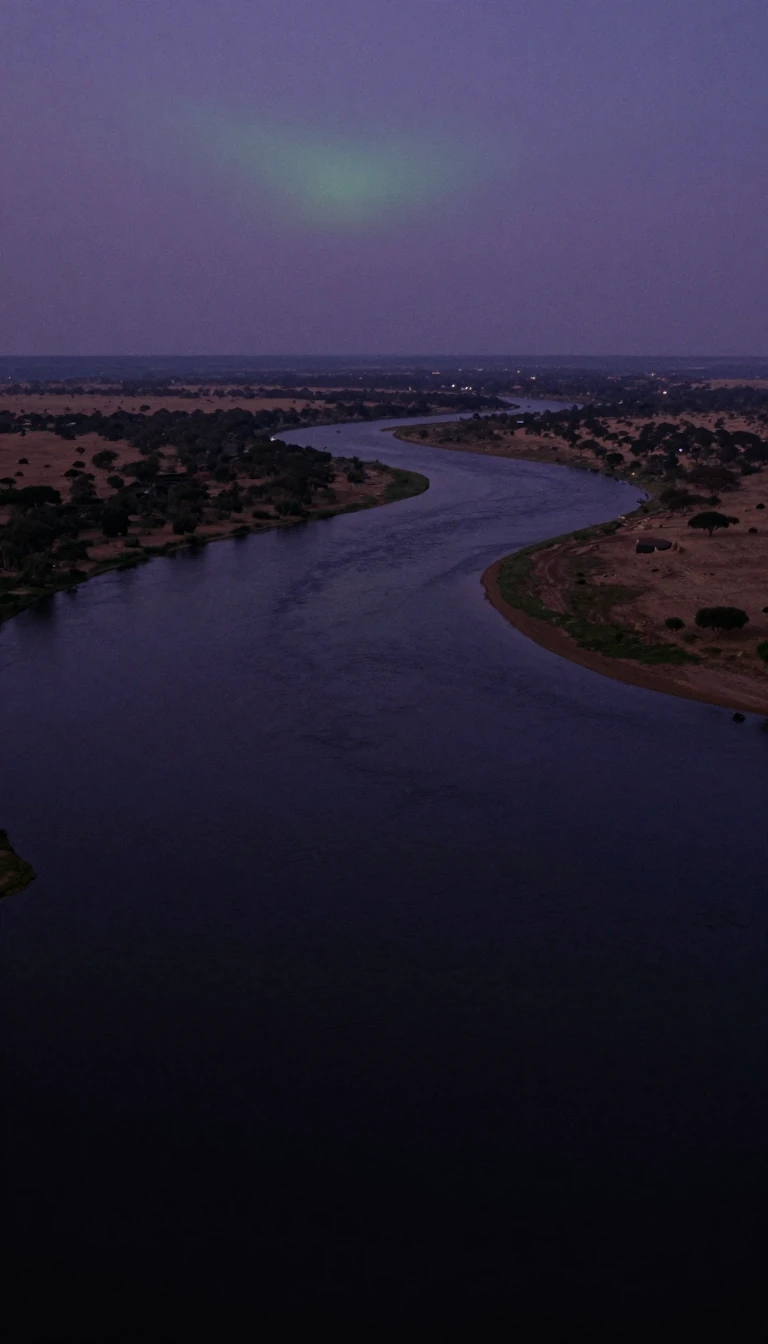 Lake Bangweulu is a vast, shallow African wetland system that defies simple geography.Spanning 15,000 square kilometers in northern Zambia, Lake Bangweulu is less a single body of water and more a shifting mosaic of swamps, lagoons, and floodplains. Its boundaries …
 How an Icelandic volcanic fissure eruption triggered a global climate crisis in 1783In 1783, a massive volcanic event in Iceland unleashed a poisonous haze that drifted across Europe and beyond. This "Laki haze" choked the Northern Hemisphere, causing widespread …
 Why this cosmic balloon is actually a dying star’s final, glowing gaspThe Little Dumbbell Nebula, or M76, looks like a pinched balloon floating in the constellation Perseus. This planetary nebula is actually an expanding shell of gas cast off by an …
 Is this tiny Jovian moon a fragment of a shattered asteroid or a lone wanderer?Megaclite is a small, irregular moon orbiting Jupiter, but its true origins remain a subject of intense scientific debate. While it is officially grouped with other satellites tha…
 When a magnet floats above ceramic, you are witnessing the Meissner effect in action.Superconductors do more than just conduct electricity without resistance. When cooled below a critical temperature, they actively expel magnetic fields from their interior. This p…
 The movie camera evolved from scientific instruments designed to trace invisible natural phenomena.Before capturing cinema, cameras were scientific tools. Early inventors like Francis Ronalds used clockwork-driven photosensitive surfaces to record instrument variations at obser…
 Is Neuro-linguistic programming a breakthrough in human potential or just sophisticated psychopablum?Emerging in the 1970s, Neuro-linguistic programming promised to decode the secrets of exceptional performance and cure everything from phobias to the common cold. While it became …
- Why this famous celestial continent is actually a massive, glowing cloud of ionized gasThe North America Nebula, or Caldwell 20, is a striking emission nebula in the constellation Cygnus. While its distinct shape mimics the North American continent, it is actually a…
 Why this 8,000-year-old celestial ghost in Ursa Major looks like a staring owlFloating 2,030 light years away, the Owl Nebula is a cosmic illusion born from a dying star. Its haunting, eye-like appearance is not a trick of the light, but a specific geometri…
 Is Saturn's moon Paaliaq actually a shattered remnant of a larger, ancient space body?Discovered in 2000, Paaliaq is an irregular moon of Saturn that defies the standard rules of planetary formation. With a highly oval orbit and a distinct reddish hue, this small s…
- The Penrose triangle is a geometric impossibility that defies our three-dimensional realityAt first glance, the Penrose triangle appears to be a simple, solid object made of three beams meeting at right angles. Yet, it is a classic optical illusion that cannot exist in …
 The Petri dish was not actually invented by the man who bears its name.While Julius Richard Petri is immortalized by the ubiquitous laboratory dish, he did not invent the culture plate itself. Instead, he refined a method developed by his mentor, Rob…
 The Phaistos Disc: A 4,000-Year-Old Mystery of Movable-Type PrintingDiscovered in a Minoan palace in 1908, this fired clay disc features 242 symbols pressed into soft clay using individual stamps. This ancient technique, predating Gutenberg by mil…
 Why did Europe once measure the world using an eighty-degree scale?Before the Celsius scale became the global standard, the Réaumur scale defined water's freezing point at zero and its boiling point at eighty. Named after René Antoine Ferchault d…
 The Red Spider Nebula hosts one of the hottest white dwarf stars ever discoveredLocated in the constellation Sagittarius, the Red Spider Nebula is defined by its dramatic, two-lobed structure. At its heart lies a white dwarf star so intense it generates super…
 Reiki is a popular healing practice, but does it have any scientific basis?Reiki practitioners claim to channel a universal life force to treat ailments, yet the practice lacks any empirical evidence or plausible biological mechanism. Despite its widespr…
- A tiny Jovian moon spent nearly two decades hiding in plain sightS/2003 J 12 is a diminutive natural satellite of Jupiter, measuring only a few kilometers across. After its initial discovery in 2003, the object vanished from scientific view, be…
- The tiny Jovian moon that vanished for seven years before being found againDiscovered in 2003, the small, irregular moon S/2003 J 16 spent years as a lost object in our solar system. It was only through a retrospective analysis of telescope images that a…
 A tiny, wandering moon of Jupiter reveals the violent history of our solar systemDiscovered in 2003, S/2003 J23 is a minuscule, irregularly shaped satellite orbiting Jupiter in the wrong direction. This retrograde moon is part of the Pasiphae group, a collecti…
- A tiny, wandering moon of Saturn that vanished for nearly two decadesDeep in the outer reaches of Saturn's gravity, a four-kilometer-wide rock known as S/2004 S 17 orbits in a strange, retrograde path. First spotted in 2004, the moon slipped from v…
- A tiny, wandering moon of Saturn may be on a collision course with Phoebe.Discovered in 2007 and briefly lost to astronomers, S/2007 S 2 is a small, irregular satellite orbiting Saturn. As a member of the Norse group, this moon moves in a retrograde dir…
 Why the Scoville scale is a surprisingly human-centric way to measure pure fireThe Scoville scale ranks the heat of chili peppers, but it is not a simple machine reading. Created by Wilbur Scoville in the early 1900s, this system relies on the taste buds of …
- Why the Sicilian Defence is chess's most combative and enduringly popular opening moveThe Sicilian Defence begins with 1...c5, a move that rejects symmetry to create dynamic, sharp positions. While it initially neglects development, it grants Black a central pawn m…
- Messier 24 is not a star cluster but a window into our galaxyMost deep-sky objects are singular entities, but Messier 24 is a cosmic illusion. It is not a cluster or a nebula, but a rare, clear tunnel through dense interstellar dust. This 6…
 How a simple trick of light freezes time to reveal the invisible worldA stroboscope uses rapid, rhythmic flashes to make high-speed motion appear frozen or slowed. By synchronizing light pulses with a moving object’s frequency, this device turns blu…
 How a lost comet was found by calculating its dance with a gas giantComet 9P/Tempel 1 was once considered lost to the void, disappearing from view for decades after gravitational nudges from Jupiter altered its path. Astronomers eventually recover…
- The Tesla coil: How a 19th-century invention turns lightning into a wireless power dreamInvented by Nikola Tesla in 1891, the Tesla coil is an electrical transformer that generates spectacular, lightning-like arcs of high-voltage electricity. While Tesla originally e…
 The triode vacuum tube: the humble invention that sparked the age of electronics.Before the transistor, the triode was the world's first practical electronic amplifier. By placing a simple grid between a cathode and an anode, engineers gained the power to cont…
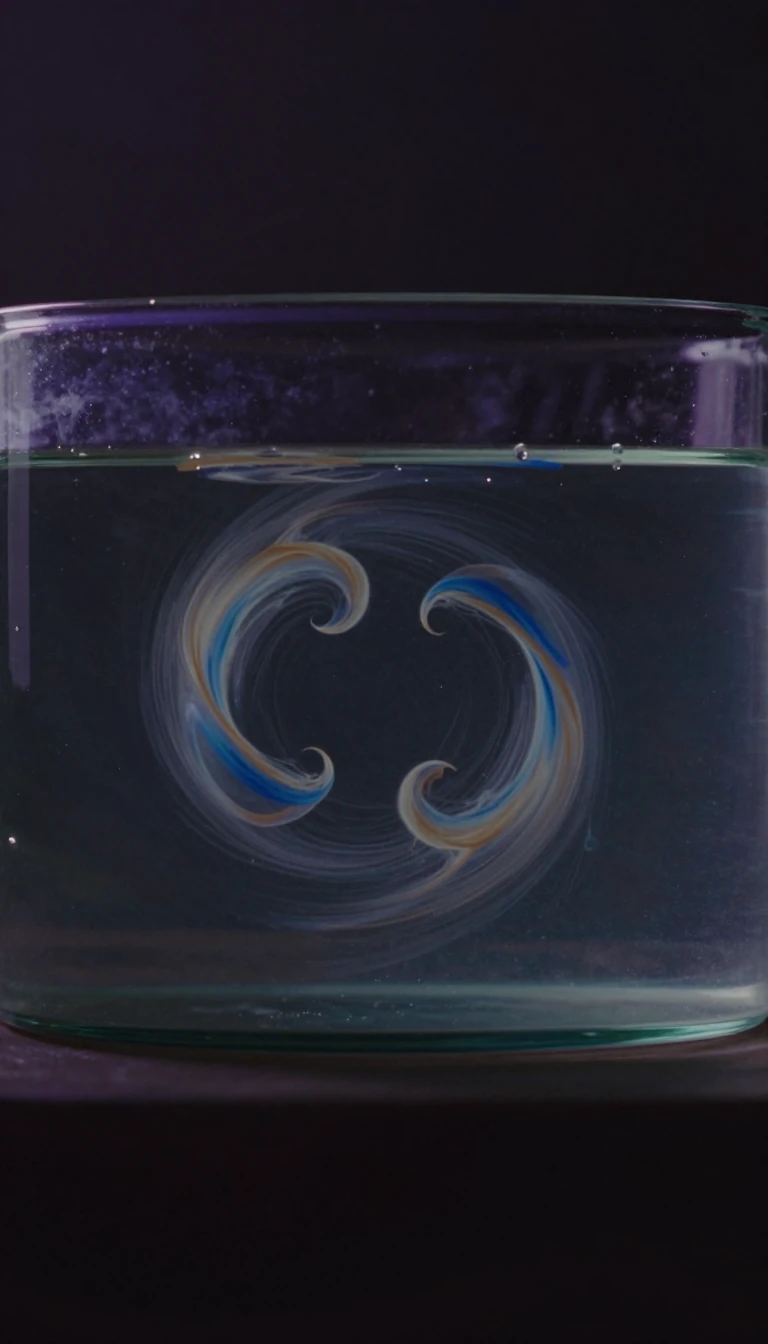 Why the sky is blue, but your eyes are a structural illusionThe Tyndall effect explains why light beams become visible in smoke and why glacial water glows turquoise. It is a phenomenon of scattering, where particles suspended in a medium …
 Why this V-shaped star cluster is named after a flock of migrating ducksThe Wild Duck Cluster, or Messier 11, earns its name from the V-shaped arrangement of its brightest stars, which resembles a flock of waterfowl in flight. Located 6,200 light-year…
 The accidental entry in the Messier catalog that turned out to be a mistakeCharles Messier is famous for his catalog of deep-sky objects, but one entry, Winnecke 4, stands out as a blunder. While hunting for a reported nebula in 1764, Messier found only …
- The shattered remains of a lost world orbiting SaturnMost moons form from the dust surrounding a young planet. But Saturn’s Inuit group tells a more violent story. These irregular satellites, led by the moon Siarnaq, are likely the …