 Intellect Plus
Society
7,726 cards. Each one is a 40-second story with a five-minute read behind it. Page 105 of 129.
Subtopics: Ancient · Basics · Charity & volunteering · Childhood · Communication · Contemporary · DIY & home improvement · Early modern · Education · Education & schools · Everyday inventions · Everyday life: General · Family and kinship · Family life · Family, kinship and interpersonal relationships · Generations · Hobbies & collecting · Home & housekeeping · Home living · Household items · Housing · International organizations · Journalists · Law · Law & justice · Law enforcement, intelligence, and security officials · Leisure & holidays · Mass media · Modern · Pets · Post-classical · Postal services · Public transport · Railways · Roads & driving · Social media & the internet · Socialites and favorites · Society · Society and social sciences: General · Sociology · Stages of life · UK & Ireland: life
 The secret herbal liqueur that monks limit to protect their vow of silenceFor centuries, only two monks at a time have known the secret recipe for Chartreuse, a complex French liqueur made from 130 herbs. Despite global demand soaring to over 30 million…
 Why this 17th-century card game remains a staple of modern submarine cultureCribbage is a rare survivor of the 1600s, evolving from the game of noddy into a strategic test of probability and peg-based scoring. Beyond its popularity in the English-speaking…
 From royal privilege to biometric security: the evolving story of the British passportOnce a simple hand-drafted paper document signed by monarchs, the British passport has transformed into a high-tech, polycarbonate-protected travel essential. While its design has…
 Beyond the red carpet: how a British charity shapes global screen cultureThe British Academy of Film and Television Arts is more than a trophy-granting body. From its origins as a small film collective in 1947 to its current role as a global powerhouse…
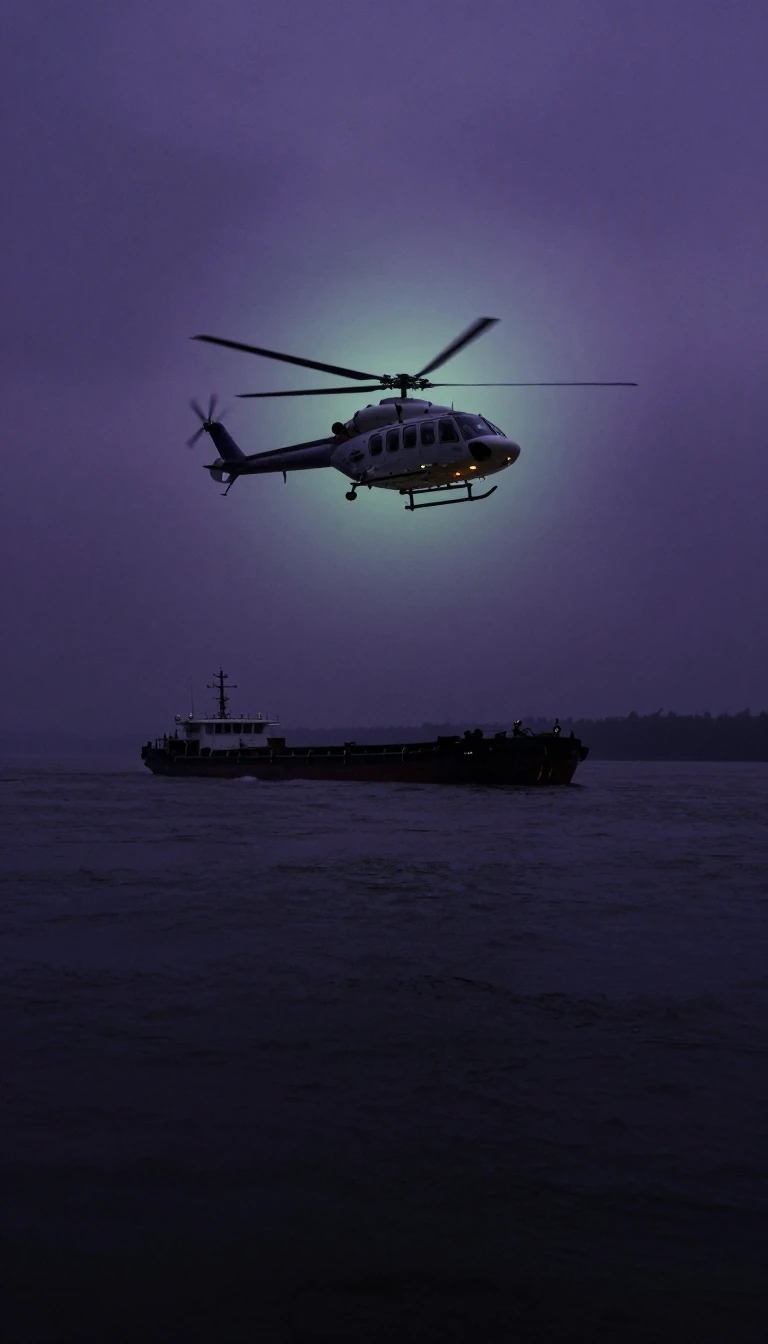 The Whisperjet: How a Four-Engine Regional Airliner Conquered the World’s Quietest AirportsDesigned to operate from short, noise-sensitive runways, the British Aerospace 146 became the most successful civil jet program in British history. By opting for four engines inst…
 Is Kentucky's signature spirit actually named after a French royal house or a street?Bourbon is a distinctly American spirit, yet its origins remain shrouded in myth. While often linked to Kentucky's Bourbon County, historians suggest the name may actually trace b…
 Why the legal profession is split into barristers and solicitors in some countriesIn many common law jurisdictions, the legal profession is divided into two distinct roles: the barrister, who specializes in courtroom advocacy, and the solicitor, who handles cli…
 Why the Royal County of Berkshire is more than just a London commuter beltBerkshire is a study in contrasts, balancing the high-tech corridors of the M4 against the ancient, rolling chalk downlands of the west. Known as the Royal County, it blends centu…
 From teenage mother to Deputy Prime Minister: The unconventional rise of Angela RaynerAngela Rayner’s political trajectory defies the traditional Westminster archetype. Leaving school at 16 without qualifications, she rose from a care worker and trade union represe…
 How a 1981 cult classic redefined the boundaries of horror and comedyJohn Landis’s An American Werewolf in London remains a landmark of practical effects and tonal experimentation. By blending visceral, agonizing physical transformations with irrev…
- Why the Princess Royal is considered the hardest working member of the British monarchyAnne, Princess Royal, has attended over 20,000 official engagements since 1968. Often cited as the royal family's anchor, she balances a reputation for sharp wit and rule-breaking…
 Why the legal definition of arson has shifted from protecting homes to punishing fire.Arson is more than just setting a fire; it is a complex crime with roots in medieval law. While once strictly defined as the malicious burning of a dwelling, modern statutes have …
 How a 1997 Landslide Redefined British Politics and Ended Eighteen Years of Conservative RuleThe 1997 United Kingdom general election was a seismic shift, delivering a massive 177-seat majority for Tony Blair’s Labour Party. It marked the end of the longest continuous gov…
 Why the 2001 UK General Election became known as the quiet landslideThe 2001 general election was a repeat of 1997, handing Tony Blair a second consecutive landslide victory. Yet, the atmosphere was defined by profound voter apathy, with turnout p…
- How the 1983 UK General Election Reshaped the Political Landscape for DecadesIn 1983, Margaret Thatcher secured a landslide victory that defied her earlier unpopularity. Driven by the Falklands War and a fractured opposition, the Conservatives achieved the…
- How Labour won a third term with the smallest majority in modern historyIn 2005, Tony Blair secured an unprecedented third consecutive victory for the Labour Party. Yet, the result felt like a defeat. With a plummeting majority and a popular vote shar…
- Did a single emperor’s military prowess expand the Gupta Empire to the Arabian Sea?Chandragupta II, also known as Vikramaditya, transformed the Gupta Empire into a regional superpower through relentless military campaigns and strategic marriages. From the Indus …
 Is political journalism becoming more about winning games than holding power accountable?While the press is meant to act as a democratic watchdog, a shift toward 'strategy-based' reporting is changing the landscape. As journalists focus on electoral tactics and politi…
 Why governments and kidnappers alike rely on the strategic silence of a media blackoutA media blackout is the deliberate restriction of information, ranging from state-enforced censorship to voluntary agreements between journalists and authorities. While often asso…
- Investigative journalism is the high-stakes pursuit of truth that powerful figures want kept hidden.Reporters who practice investigative journalism dedicate months or years to uncovering corruption, abuse, and systemic wrongdoing. Often operating against the wishes of those they…
 Why do criminal trials and nations claim to act in the name of the people?The word people is more than a collective noun; it is a potent political instrument. From the ancient Roman Senate to modern socialist republics and American courtrooms, invoking …
 How a future governor used sports-inspired discipline to navigate early academic and political hurdlesBefore becoming California's 40th governor, Gavin Newsom faced severe dyslexia that forced him to rethink how he learned. He channeled his energy into athletics, playing basketbal…
 Why the most effective boycotts rely on third-party pressure rather than just consumer willpower.A boycott is more than just refusing to buy a product; it is a calculated act of social or economic ostracism. While the term originated in 1880s Ireland, modern research suggests…
 Why the definition of a private school changes completely depending on the countryPrivate schooling is rarely a simple binary of public versus private. From state-subsidized institutions in Ireland to voucher-funded models in Sweden, the global landscape of ind…
 Are the United Nations' ambitious 2030 Sustainable Development Goals actually within our reach?Adopted in 2015, the 17 Sustainable Development Goals aim to secure global prosperity and environmental health by 2030. Yet, recent reports reveal a sobering reality: only a fract…
- Why do nations without any coastline maintain their own naval forces?This video examines the geopolitical and strategic reasons why landlocked countries choose to invest in navies. It explores the surprising reality of maritime operations for natio…
 Why the modern summit is the essential glue of our global political systemHigh-stakes meetings between world leaders are more than just photo opportunities. They are the primary mechanism for global governance, designed to build interpersonal trust betw…
 Is the British Monarchy’s Survival Guaranteed by Law or Just Habitual Public Preference?While the United Kingdom has functioned as a constitutional monarchy for centuries, a persistent republican movement has challenged the crown since the 1600s. Despite legal threat…
 Why did the United States turn a public health crisis into a global war?The war on drugs is not a single event but a decades-long policy shift that prioritized law enforcement over medical treatment. While the term was popularized by Richard Nixon in …
 Is ESG a vital tool for sustainability or a way to bypass democracy?Once a niche ethical movement, ESG now manages over US$30 trillion in assets. While proponents argue it is essential for long-term fiduciary duty, critics warn that large investme…
 From a colonial free school to a billion-dollar research hub in Newark, DelawareThe University of Delaware began in 1743 as a small school in a minister's home. Today, it is a major R1 research institution with over 24,000 students. Its evolution from a strug…
 What defines a megachurch, and why are these massive congregations reshaping modern religious life?A megachurch is typically a Protestant congregation drawing at least 2,000 weekly attendees. These massive institutions often feature stadium seating and suburban locations, funct…
 Is society a rigid machine or a dance between our choices and rules?Social structure is the invisible framework shaping everything from your career to your identity. While it feels like a fixed, external force, sociologists argue it is actually a …
- Why the world's most prominent tax havens are often wealthy, OECD-compliant nationsThe traditional image of a tax haven—a remote island with secret bank accounts—is largely outdated. Today, the most effective tax havens are often highly developed, transparent ec…
 Why society uses stigma to define who is an insider and who is an outsiderStigma is not just a social nuisance; it is a powerful mechanism for group solidarity. By labeling individuals with undesirable traits, societies create clear boundaries between i…
- Is trickle-down economics a genuine theory or just a persistent political ghost?The idea that wealth at the top naturally flows downward to benefit everyone is a staple of political debate. Yet, economists and historians struggle to find a formal theory match…
 The Pagans Motorcycle Club: A Secretive American Outlaw Gang With A Violent HistoryFormed in 1959, the Pagans evolved from a group of denim-clad riders into one of the most notorious outlaw motorcycle gangs in the United States. Known for their fierce territoria…
- How a group of heavy metal fans mutated into a global criminal organizationOriginating in 1980s Los Angeles to protect Salvadoran immigrants, MS-13 evolved into a ruthless transnational gang. Driven by deportation policies and post-war instability in Cen…
- The Bloods were not founded as a criminal enterprise but as a defensive alliance.Born in the late 1960s Los Angeles, the Bloods emerged as a protective coalition against the rising influence and violence of the Crips. What began as a desperate neighborhood sur…
- The legendary wealth of King Croesus was likely built on taxes, not magic.Croesus, the last king of Lydia, is synonymous with unimaginable riches. While myths claim he possessed a Midas-like touch, historians suggest his true fortune stemmed from strate…
- The political whip: how parties keep their members from wandering off the reservationDerived from the hunting field, the political whip is the enforcer of party discipline. From the UK to the US, these officials ensure legislators show up, vote the party line, and…
 From humble sergeant to dictator: the rise and fall of Fulgencio BatistaFulgencio Batista began his career as a stenographer in the Cuban army, eventually seizing power twice. His second regime, marked by corruption, gambling, and brutal repression, t…
 Why a futurist changed his name to a date to escape his pastBorn Fereidoun Esfandiary, the philosopher FM-2030 rejected traditional naming conventions as relics of a tribalistic past. By adopting a date as his name, he signaled his commitm…
- How the centre-left evolved from revolutionary roots to managing modern democratic capitalismThe centre-left occupies a unique space in politics, blending social justice with market-based economies. Once defined by radical reform, it now navigates a world shaped by global…
 Maximilian Schell: The Universal Artist Who Refused to Be Defined by a Single RoleBorn in Vienna and shaped by the turmoil of the Second World War, Maximilian Schell evolved from a reluctant actor into an international icon. Whether portraying Nazi officers or …
- Was Rome’s second king a master of war or a visionary architect of peace?Numa Pompilius, the legendary Sabine successor to Romulus, famously traded the sword for the spirit. By establishing Rome's religious institutions, calendar, and professional guil…
 Is the path to human freedom a total retreat from modern civilization?Anarcho-primitivism argues that our societal and environmental crises are not bugs, but features of civilization itself. By tracing alienation back to the Neolithic Revolution, th…
 Is Springfield's most reviled billionaire actually a master of corporate survival and pure evil?Charles Montgomery Burns is the quintessential embodiment of corporate greed, a frail, ancient nuclear plant owner who views his employees as disposable assets. From his sinister …
 The Lion of the Senate: How Ted Kennedy Shaped Modern American Legislative HistoryEdward Moore Kennedy served in the U.S. Senate for 47 years, becoming a legislative powerhouse despite personal tragedy and political scandal. Known as the Lion of the Senate, he …
 Why the highest non-general military rank is pronounced like a piece of cornThe word colonel traces back to the Spanish term for a column of soldiers, yet its English pronunciation defies its spelling. Once a contractual role held by aristocrats, the titl…
 From illiterate scullery maid to the first woman to rule the Russian Empire.Born Marta Helena Skowrońska, Catherine I rose from humble, orphaned beginnings to become the Empress of Russia. Her journey from a servant in a pastor's household to the wife of …
- How a fictional Renaissance assassin became the enduring face of a global gaming franchise.Ezio Auditore da Firenze is more than a video game protagonist; he is a cultural icon. Born into Italian nobility in 1459, his journey from a vengeful youth to a wise Mentor of th…
 How a fictionalized Leonardo da Vinci navigates Renaissance power and his own unruly imaginationDa Vinci's Demons reimagines the early life of Leonardo da Vinci as a high-stakes political thriller. Conceived by David S. Goyer, the series blends historical figures with a ques…
 Did Rome truly conquer Greece, or did Greek culture quietly capture the Roman Empire?While history books often frame the Roman era as a period of decline and foreign occupation, the reality was far more nuanced. Greece remained a vibrant, highly urbanized cultural…
 Why ancient Athens mocked the Boeotians as dullards despite their immense cultural and political powerBoeotia was a powerhouse of ancient Greece, producing legendary poets like Pindar and Hesiod and military geniuses like Epaminondas. Yet, Athenians famously dismissed them as prov…
 Must a truly tolerant society tolerate those who seek to destroy it?The paradox of tolerance suggests that if a society extends unlimited tolerance to the intolerant, it risks being destroyed by them. This philosophical dilemma, famously articulat…
- How a Tuscan City-State Once Defied Florence to Reclaim Its Lost IndependenceLong before it became a quiet center for art and history, Arezzo was a fiercely independent city-state. Its struggle against Florentine dominance defined its medieval life, culmin…
- AUKUS is more than just submarines: a deep dive into a trilateral security pactBeyond the headlines about nuclear-powered submarines, AUKUS represents a profound shift in how Australia, the United Kingdom, and the United States integrate their military-indus…
- Gilda Radner was a comedic pioneer whose greatest challenge was her own health.As an original cast member of Saturday Night Live, Gilda Radner defined a generation of sketch comedy with iconic characters like Roseanne Roseannadanna. Yet, behind the laughter,…
- Henry Fonda: The Everyman Actor Who Almost Became a Journalist InsteadBefore he became a Hollywood icon, Henry Fonda was a shy, aspiring journalist who found his true calling on stage. By hiding behind scripted characters, he escaped his own tongue-…