 Intellect Plus
Navigation and timekeeping
43 cards. Each one is a 40-second story with a five-minute read behind it.
 Why your alarm clock snooze button is stuck at exactly nine minutesThe nine-minute snooze duration on your phone is a mechanical relic from 1956. Early gear-driven clocks could not align teeth to hit exactly ten minutes, forcing engineers to choo…
 Why the fourth month of our year has been a shape-shifter for millenniaApril is more than just a calendar entry; it is a historical survivor. From its uncertain Latin roots to its fluctuating length under Roman emperors, the month has been redefined …
 Why astronomers count time differently than historians and why it matters for the starsTo calculate the interval between ancient events, astronomers ignore the historical BC/AD system in favor of a decimal integer sequence. By inserting a year zero, they simplify co…
 August was not lengthened to match July, despite what you might have heardThe story that Emperor Augustus added days to his namesake month to rival Julius Caesar is a medieval myth. In reality, the month was already 31 days long when it was renamed in 8…
 Why 16th-century navigators turned their backs to the sun to find their way homeBefore the sextant, sailors relied on the backstaff to measure solar altitude. By keeping the sun at their back, they avoided the blinding glare of direct observation. Invented by…
 China's BeiDou satellite network now rivals the global dominance of American GPS technologyNamed after the Big Dipper, China's BeiDou system has evolved from a regional experiment into a sophisticated global navigation constellation. By providing precise timing and geol…
- Why the Buddhist calendar is slowly drifting away from the seasons of the yearAcross Southeast Asia, the Buddhist calendar serves as a vital guide for religious life. Yet, because it relies on sidereal years—which are slightly longer than the tropical years…
 Why do our clocks run clockwise? The answer lies in the shadow of the sun.The familiar clockwise rotation of clock hands is not a technical necessity, but a historical echo. Because mechanical clocks originated in the Northern Hemisphere, they were desi…
- Before magnetic needles, navigators charted the world using the rising and setting of stars.Long before modern GPS, ancient mariners relied on a sidereal compass rose to find their way across open oceans. By tracking the rising and setting positions of specific stars, th…
 Why December is the most misnamed month in our modern calendarDecember is the twelfth month of the year, yet its name is derived from the Latin word decem, meaning ten. This linguistic relic persists because the original Roman calendar began…
- The digital clock existed long before the LED screen became a household standardWe associate digital clocks with glowing electronic displays, but the concept of reading time through numerals rather than hands dates back to the 19th century. From mechanical ju…
 How radio waves became the invisible compass that turned the tide of global war.Radio direction finding allows us to pinpoint the source of a signal by measuring its arrival angle. From early mechanical loops to modern phased arrays, this technology evolved f…
 Why Friday is named after a goddess, a planet, or a simple numberAcross the globe, Friday is defined by its position in the week, its religious weight, or its celestial associations. From the Germanic goddess Frigg to the Roman planet Venus, an…
 Why Europe built its own satellite network to escape American military controlGalileo is the European Union's independent answer to GPS. Designed for civilian use, it provides high-precision positioning without the risk of being disabled by foreign military…
 The hourglass was once the most reliable way to track time on the ocean.Before mechanical clocks dominated, the hourglass served as a vital tool for mariners and everyday life. Immune to the motion of ships and temperature shifts that plagued water cl…
- Why the world's most precise clock is a weighted average of hundreds of othersInternational Atomic Time, or TAI, is the gold standard for global timekeeping. Rather than relying on a single device, it aggregates data from over 450 atomic clocks across 80 la…
- A simple wooden pole that once guided sailors across the vast, unknown oceansBefore the precision of the sextant, navigators relied on the Jacob's staff to measure the heavens. This deceptively simple tool, consisting of a sliding cross-piece on a graduate…
 Why did the Roman year suddenly shift its start to the middle of winter?January is the first month of our calendar, but it was not always the start of the year. For centuries, the Roman year began in March. The shift to January 1 was a tactical, emerg…
 Why the seventh month of our year was once known as the fifthBefore it was named for a Roman dictator, July held a different title reflecting its original place in the calendar. While we now recognize it as the start of the year's second ha…
- Why June is the most astronomically significant month for our planet's seasonal cycleJune marks a celestial turning point, hosting the summer solstice in the Northern Hemisphere and the winter solstice in the Southern. This month dictates the extremes of daylight,…
- Why the world’s most precise clocks occasionally need a mysterious extra secondTo keep our atomic clocks in sync with the Earth’s wobbly rotation, humanity occasionally inserts a leap second. It is a necessary correction for precision timekeeping, yet it cre…
- Why your calendar might be drifting through the seasons without you noticingA pure lunar calendar tracks the Moon, not the Sun. Because twelve lunar cycles fall about eleven days short of a solar year, these calendars drift through the seasons every thirt…
- Why ancient civilizations synchronized the moon's phases with the sun's annual journeyLunisolar calendars reconcile two celestial rhythms that refuse to align. By tracking lunar months while anchoring the year to the solar cycle, these systems ensure seasons remain…
 Why did the Roman calendar once treat March as the first month of the year?Long before January took the lead, March served as the annual starting point for the Roman calendar. Named for the god of war, it signaled the return of military campaigns and agr…
 Is May named for a goddess of fertility or the wisdom of the elders?The fifth month of the year carries two distinct origin stories. While many associate the name with the Greek goddess Maia, Roman poet Ovid offered a competing theory: that the mo…
- Why does the world collectively dread the arrival of the first day of the week?Across cultures, Monday is a day of profound contradiction. While it is linguistically rooted in the moon and ancient celestial worship, modern society often treats it as a source…
 Why is the eleventh month named after the Latin word for nine?November is the eleventh month of our modern calendar, yet its name preserves a relic of ancient Roman timekeeping. Derived from the Latin novem, meaning nine, the name reveals th…
- Before the sextant, the octant revolutionized navigation by using mirrors to measure celestial angles.The octant, an early eighteenth-century innovation, allowed navigators to determine their position by measuring the angle between the horizon and celestial bodies. By using a clev…
 Why October is the eighth month of the year despite being the tenthOctober is a linguistic relic of a time when the year was shorter. Named for the Latin word for eight, it was the eighth month in the ancient Roman calendar. When later reformers …
- Can ships be safely steered from thousands of miles away without a captain onboard?Piloting relies on fixed points of reference to navigate water, air, or land. Traditionally, this requires a navigator to be physically present. However, a 2024 Danish initiative …
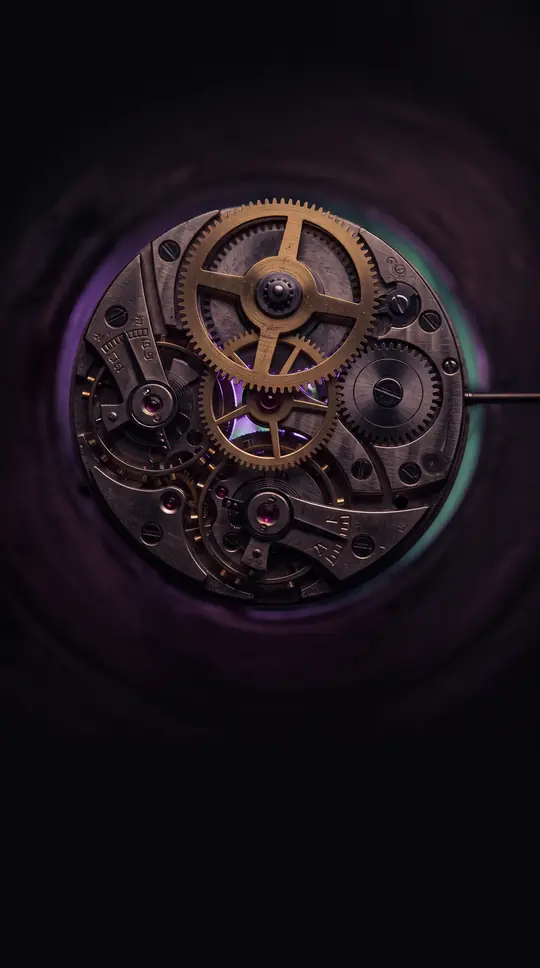 Before the wristwatch, the pocket watch was the ultimate tool for precision and status.For centuries, the pocket watch was the standard for men, evolving from heavy, drum-shaped brass cylinders into sophisticated instruments of extreme accuracy. While now a niche ac…
 Why the present moment is a stubbornly persistent illusion in modern physicsWe intuitively feel that 'now' is a universal, objective anchor point for all sentient beings. Yet, modern physics suggests that absolute simultaneity does not exist. If your pres…
 Why a simple slice of silicon dioxide became the world's most accurate timekeeperQuartz clocks rely on the piezoelectric effect, where a crystal vibrates at a precise frequency when electrified. By dividing these rapid oscillations into a one-second pulse, the…
 How a Cold War military project became the invisible compass in your pocketSatellite navigation began as a multibillion-dollar military endeavor to track submarines. Today, it is a ubiquitous utility, with signals so faint they are weaker than thermal no…
 Why Saturday is named after a Roman god, a bath, and the SabbathSaturday is a linguistic and cultural paradox. While English ties the day to the Roman god Saturn, other languages trace it to ancient bathing rituals, the Hebrew Sabbath, or even…
 Why your calendar is a constant battle against the Earth's orbital driftA solar calendar tracks the Earth's journey around the Sun, but the math is notoriously messy. Because a year isn't exactly 365 days, ancient civilizations and modern popes have s…
- Why your thumb is the weakest link in measuring a record-breaking sprintA stopwatch is designed for precision, yet human reaction time introduces a persistent margin of error. While we rely on manual button presses to capture elapsed time, our biologi…
- Why Sunday is the first day of the week for some and seventh for othersSunday is a global constant, yet its position in the week is a matter of intense debate. While ISO 8601 defines it as the seventh day, many cultures and religious traditions insis…
- Why Thursday is named after thunder gods, teachers, and the planet JupiterThursday is a linguistic battlefield between ancient deities and simple arithmetic. While Germanic cultures honor thunder gods like Thor and Thunor, others define the day by its n…
- Why the Earth is a terrible clock and how we fixed it with atomsFor centuries, humanity relied on the Earth’s rotation to track time. But the planet is a fickle timekeeper, slowing down due to tidal friction and irregular core movements. To ke…
 Why the humble timeline is a surprisingly deceptive map of human historyWe treat timelines as objective records of the past, but they are actually sophisticated visual metaphors. From ancient king lists to modern digital interfaces, the way we arrange…
- Why does the world associate Tuesday with war, fire, and the planet Mars?Across cultures, Tuesday is rarely just a calendar entry. From the Norse god of combat to the red planet Mars, this day carries heavy symbolic weight. Whether viewed as an unlucky…
- Why Wednesday is named after a Germanic god, a Roman planet, and a fastWednesday is a linguistic and cultural crossroads. While English speakers honor the god Woden, Romance languages invoke Mercury, and others simply count the days. From the Eastern…