 Intellect Plus
Cards starting with W
29,907 cards. Page 373 of 499.
 Why the General who defeated Robert E. Lee at Gettysburg felt doomed by his promotion.George Meade was a career engineer who never sought the top command of the Union Army. When he was abruptly appointed to lead the Army of the Potomac just days before the Battle o…
 Why the Genovese crime family is considered the Ivy League of the underworldKnown as the Westside, the Genovese family is the oldest and largest of New York's Five Families. While other organizations crumbled under street-level scrutiny, the Genovese main…
 Why the gentleman thief remains a captivating archetype in global storytellingThe gentleman thief is defined by charm, impeccable manners, and a refusal to use force. Whether in classic literature or modern anime, these characters often steal for the thrill…
 Why the gentlest cooking method is the secret to perfect eggs and fishPoaching is the art of cooking food submerged in liquid at temperatures just below a simmer. By avoiding the turbulence of boiling water, this technique preserves the delicate str…
 Why the genus Artemisia is a botanical puzzle that defies simple classificationWith nearly 500 species, the Artemisia genus—encompassing everything from culinary tarragon to rugged sagebrush—is notoriously difficult to categorize. While traditional methods r…
 Why the geography of the United States is far more unusual than it appearsExplore the unexpected geographical complexities of the United States. This video uses detailed animations to reveal the hidden patterns and strange features within the American l…
 Why the geometry of carbon rings determines the stability of alicyclic compoundsAlicyclic compounds are organic molecules defined by their carbon rings, which can be saturated or unsaturated but never aromatic. While they range from simple monocyclic structur…
 Why the George Cross remains a point of contention on the Maltese national flagThe Maltese flag is a simple bicolour, yet it carries a heavy historical weight. Featuring a George Cross awarded for wartime bravery, the design has sparked decades of debate. So…
 Why the Georgian Elite Rented Pineapples to Impress Their Dinner Party GuestsFor the Georgian nobility, dinner parties were elaborate displays of wealth and social standing. From complex multi-course meals to strictly regulated wine consumption, the dining…
 Why the Georgian language stands alone, defying every major linguistic family on Earth.Georgian is a linguistic island. Unrelated to any major global language family, it belongs to the unique Kartvelian group. With its own ancient script, a complex verb system that …
 Why the Georgian Socrates turned consciousness into a professional act of lonely defianceMerab Mamardashvili, often called the Socrates of his era, treated philosophy not as a static discipline but as a living, paradoxical event. By focusing on the raw experience of c…
 Why the German 88mm gun became a symbol of fearExplore three compelling accounts of the 8.8 cm Flak, a weapon so effective it became one of the most feared German instruments of the Second World War.
 Why the German cockroach is the ultimate survivor of the urban landscapeDespite their name, these resilient insects likely originated in South Asia. They have evolved to thrive in human buildings worldwide, outsmarting our best pest-control efforts th…
 Why the German Empire treated a captured territory as its own private imperial project.After the Franco-Prussian War, Alsace-Lorraine was not integrated as a standard state but held as a direct imperial territory. This unique status, driven by strategic military nee…
 Why the German Empire's black-white-red flag remains a complex symbol of national identityThe German Empire's tricolor flag was born from a practical need for maritime identity, blending Prussian and Hanseatic colors. Though it became a potent political emblem across s…
 Why the German Leopard 2 remains a dominant force in modern armored warfareDeveloped during the Cold War to counter Soviet armor, the Leopard 2 became a cornerstone of global military power. This video examines the engineering and performance capabilitie…
 Why the German military shifted their focus to Cote 304 at VerdunFollowing a massive failure at Mort Homme, German forces pivoted their strategy at the Verdun salient. By targeting Cote 304 on the western edge, they hoped to finally break the d…
 Why the German Potato Masher grenade was designed for leverage, not just raw lethalityThe iconic German Stielhandgranate, or potato masher, redefined trench warfare. By adding a long wooden handle to a heavy explosive head, German engineers gave soldiers significan…
 Why the German revolutions of 1848 failed to build a unified, liberal nationDriven by economic hardship and the spark of French insurrection, German states erupted in 1848. While liberals sought a unified fatherland and constitutional reform, deep interna…
 Why the German Spring Offensive stalled just two weeks after its initial successTwo weeks into the German Spring Offensive, Operation Michael began to lose both its momentum and its strategic focus. As supply lines crumbled, starving German soldiers were dist…
 Why the German word Heimat is impossible to translate into EnglishHeimat describes a profound sense of belonging that transcends simple geography. It is a social and spatial anchor, a place of deep trust where behavioral expectations are met. Wh…
 Why the ghost in the machine is a category mistake, according to Gilbert RyleGilbert Ryle, a central figure in 20th-century British philosophy, famously dismissed the idea of a mind separate from the body as a ghost in the machine. By mapping the logical g…
 Why the ghost kitchen boom vanished as quickly as it appearedGhost kitchens promised a revolution in food delivery by operating out of unidentifiable spaces. This video examines their rapid rise during lockdown and why the business model st…
 Why the Ghost of Christmas Past is a masterclass in shifting, spectral symbolismCharles Dickens created a figure that defies simple categorization. Neither strictly male nor female, this flickering spirit embodies the fluidity of memory itself. By blending co…
 Why the giant manta ray is a biological marvel facing a precarious futureWith wingspans reaching 26 feet, these massive filter feeders are some of the ocean's most impressive inhabitants. Yet, their slow growth and infrequent breeding make them incredi…
 Why The Gifted chose to tell a superhero story without the X-MenIn an alternate timeline where the X-Men have vanished, a suburban family goes on the run after discovering their children possess mutant abilities. Created by Matt Nix, this seri…
 Why the Giza plateau remains the ultimate symbol of ancient architectural ambition and enduranceRising from the edge of the Western Desert, the Giza necropolis stands as a testament to Fourth Dynasty engineering. Home to the Great Pyramid and the monuments of Khafre and Menk…
 Why the glamorous world of professional modeling is actually a test of psychological enduranceThe catwalk may look effortless, but professional modeling is a grueling, unpredictable career that demands immense mental fortitude. Beyond the physical exhaustion of constant tr…
 Why the glass in your car dashboard is more complex than you thinkModern vehicle interiors are increasingly mirroring the design of smartphones, with screens becoming larger and more prominent. This video explores the engineering behind automoti…
 Why the global animal feed industry is a frontline in the fight against resistanceThe United Nations predicts that antimicrobial resistance could become our greatest killer by 2050. Bioprocess engineer Leon Marchal explains why the rising use of antibiotics in …
 Why the global animal feed industry is a key battleground for human healthAs antimicrobial resistance threatens to become the world's leading cause of death by 2050, bioprocess engineer Leon Marchal explores how the massive scale of antibiotic use in li…
 Why the global aviation industry is facing a critical pilot shortageAs air travel demand surges, a growing deficit of qualified pilots threatens to destabilize global flight schedules. This video examines the underlying causes behind the worldwide…
 Why the global climate story is not yet writtenIn this discussion, systems innovator Ryan Panchadsaram and strategist Anjali Grover join TED science curator David Biello to evaluate our current progress in addressing the clima…
 Why the global competition for skilled labor is the next great economic conflictTrade wars cost the global economy trillions annually, yet we overlook a more subtle, high-stakes battle: the movement of human capital. As education becomes portable, nations are…
 Why the global definition of a fishery includes everything from kelp to jellyfishA fishery is not just a place where fish are caught. It is a complex economic engine involving 500 million people, ranging from industrial fleets to small-scale harvesters. While …
 Why the global economy is more than just money, trade, and cold hard factsAnthropologist Arjun Appadurai argues that our world is defined by five overlapping, disjunctive flows: people, media, technology, finance, and ideas. By treating the imagination …
 Why the global economy is not a collection of independent nations but one systemTraditional economics views countries as isolated actors, but world-systems theory argues they are parts of a single, integrated machine. By analyzing the global division of labor…
 Why the global economy watches oil prices so closely, even when they drop.Oil remains a critical resource for financial markets. This video examines why investors track oil prices and explores the counterintuitive reality that falling prices can sometim…
- Why the global electric vehicle market is losing its momentumElectric vehicle sales growth has slowed significantly this year. This video examines the recent performance of industry leaders like Tesla and BYD, the impact of increasing globa…
 Why the global energy transition is not a replacement but an additive processWe often assume that moving toward new energy sources means abandoning old ones. History suggests otherwise. Energy transitions are typically additive, meaning we simply pile new …
 Why the global financial system relies on a cooperative messaging networkSWIFT connects 11,000 banks worldwide, acting as the backbone of international finance. This video explores the origins of this cooperative organization and the significant conseq…
 Why the global human population is shifting toward an older and more urban futureWith over 8.2 billion people on Earth, our demographic landscape is undergoing a profound transformation. While the total population continues to climb toward a projected 10.4 bil…
 Why the global ice cream supply chain functions perfectly without a central commanderEver wonder how your favorite ice cream flavor reaches you despite a complex global network of farmers and retailers? This video explains how the price system acts as an invisible…
 Why the global Jewish population is concentrated in a handful of urban hubsThe world's Jewish population is not spread evenly across the globe. Instead, it is heavily clustered within a few major metropolitan centers, often characterized by high standard…
 Why the global megafire crisis requires a total redesign of human lifeAs fires exceeding 100,000 acres become more frequent worldwide, traditional firefighting is no longer enough. George T. Whitesides explores how we must move beyond reactive suppr…
 Why the global net-zero strategy is fundamentally flawedMicrosoft's first chief environmental officer, Lucas Joppa, views climate change through the lens of coding. This video explores why our current net-zero strategies are failing an…
- Why the global oil crisis affects nations differently than you might expectThe Strait of Hormuz is experiencing significant shipping delays, causing global oil prices to surge. This episode examines how three distinct nations—New Zealand, Zimbabwe, and C…
- Why the global order fractured between 1931 and 1934, leading toward inevitable war.Following the First World War, rising nationalism and economic instability created a volatile global climate. This video examines how the ambitions of Italy, Japan, and Germany ch…
 Why the global precision of GPS is vital for more than just navigationWhile we rely on GPS to find our way, its true power lies in its ability to keep time with extreme accuracy. This video explores how this technology supports the invisible infrast…
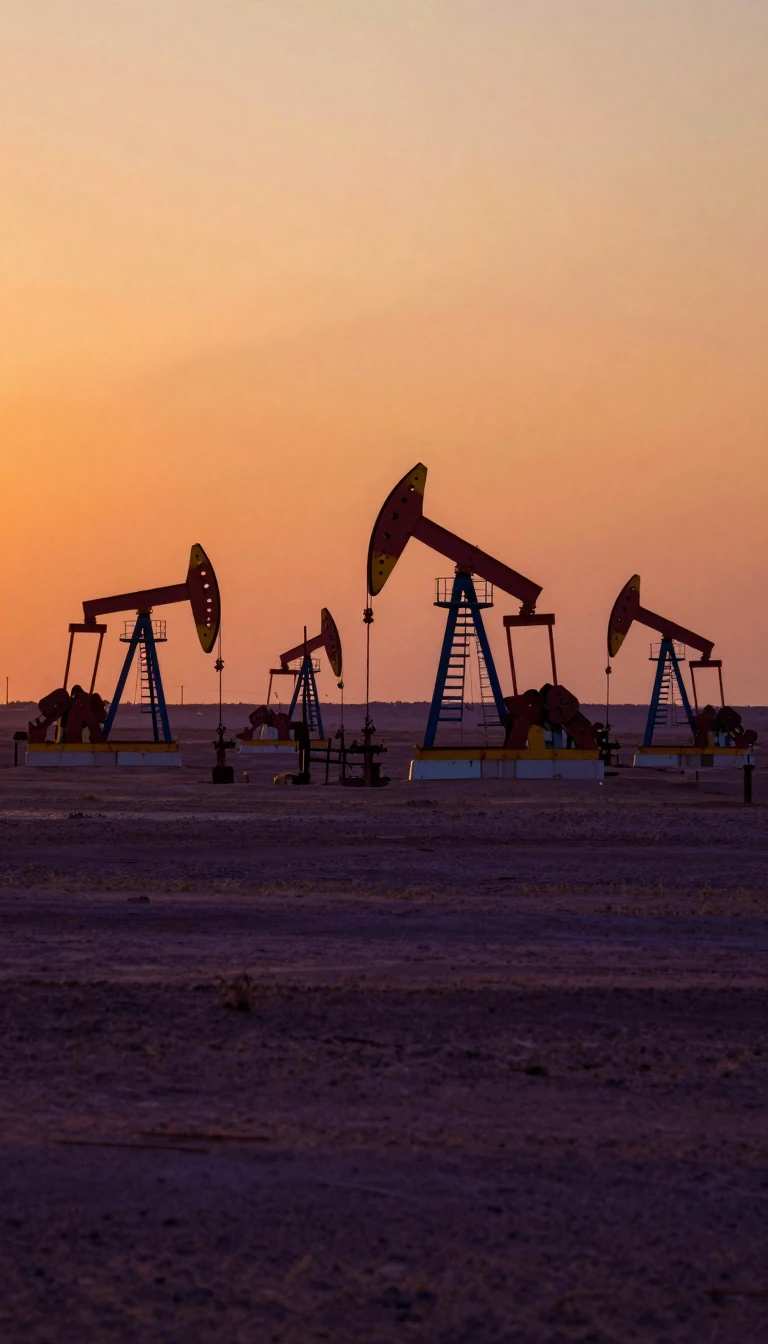 Why the global price of oil is no longer a simple matter of supplyFor decades, oil prices were kept stable by a cartel of companies known as the Seven Sisters. That era ended in the 1970s, replaced by a volatile landscape driven by geopolitical …
 Why the global price system is an emergent marvel rather than human designProfessor Tabarrok explains how prices function as both signals and incentives. By examining the global rose trade and oil markets, this video reveals how dispersed knowledge coor…
 Why the global rise in eco-anxiety is a rational response to crisisAs scorching temperatures and massive wildfires become more frequent, a new psychological phenomenon is taking hold. For many, the weight of environmental change is more than just…
 Why the global rise of artificial light is disrupting plant lifeAs human-made light spreads across the planet, even the darkest corners of the earth are changing. This surge in artificial light at night is more than a visual nuisance; it is ac…
 Why the global semiconductor industry is facing an increasingly desperate thirst for waterSemiconductor manufacturing is an incredibly water-intensive process, and as global droughts intensify, chipmakers are finding themselves in a precarious position. From the strain…
 Why the global sheep industry relies on controversial procedures to manage millions of animals.Sheep farming is a massive global enterprise, yet it remains defined by intense, often painful management practices. From tail docking to castration, farmers balance economic viab…
 Why the global shift to green energy is the next industrial revolutionThe transition to a sustainable energy grid requires an unprecedented volume of materials, from billions of solar panels to millions of wind turbines. Climate strategist Marielle …
 Why the global standard for voting is shifting toward younger citizensWhile 18 is the most common age to cast a ballot, a growing movement is pushing to lower the threshold to 16. As democratic nations debate the rights of the youth, the question re…
 Why the global supply chain broke and why it may never fully recoverThe pandemic exposed a fragile global trade network built on efficiency rather than resilience. When lean manufacturing met sudden, unpredictable demand shifts, the system buckled…
 Why the global telecommunications infrastructure contains a fundamental, hidden security vulnerability.This video investigates the structural weaknesses inherent in our modern phone networks. By examining the underlying architecture of global communication systems, it reveals how t…
 Why the global trade in counterfeit goods has become a multi-billion dollar industryCounterfeiting is no longer just about cheap knockoffs sold on street corners. It is a sophisticated, globalized operation infiltrating everything from luxury fashion to military …