 Intellect Plus
Cards starting with Y
856 cards. Page 13 of 15.
 Your muscles communicate with your organs through a secret language of proteinsWhen you exercise, your muscles do more than just burn fuel. They act as an endocrine organ, secreting signaling molecules called exerkines that travel through your bloodstream to…
 Your muscles hoard sugar they refuse to share with the rest of your bodyAn adult's muscles hold roughly 400 grams of glycogen, several times what the liver stores. Yet muscle cells lack the enzyme needed to release glucose into the blood, so that fuel…
 Your muscles remember even when your mind forgetsWhen you stop practicing a skill, your muscles don't just reset to zero. Through a complex interplay of neural pathways and even epigenetic changes, your body retains a blueprint …
 Your musculoskeletal system is more than just a frame; it is a metabolic powerhouse.Beyond providing structure and enabling movement, your musculoskeletal system acts as a vital storage bank for minerals and a complex engine for energy metabolism. It is a dynamic…
 Your neck is a marvel of engineering, supporting a heavy head with seven bones.The human neck is far more than a simple connector. It is a complex, seven-bone structure that balances a ten-to-thirteen-pound head while protecting the vital spinal cord. From t…
 Your neck packs airway, gullet, glands and the brain's blood supply into four compartmentsThe neck holds up the head, lets it swivel in every direction, and shields the nerves linking brain and body. Crammed inside a surprisingly small column are the windpipe, the thro…
 Your nervous system is fundamentally electric, allowing for direct control of human movement.The human nervous system operates on electrical signals, a fact that enables us to bypass the brain to control muscles. This video explores the implications of this biology, from …
 Your network's physical layout and logical data flow are often two different things.A network is more than just wires and devices. It is a dual-layered system: the physical topology defines where cables run and nodes sit, while the logical topology dictates how d…
 Your next big opportunity is likely hidden in a stranger's networkWe often default to social circles filled with people who think just like we do. Organizational psychologist Tanya Menon explores how breaking these habits can expand your social …
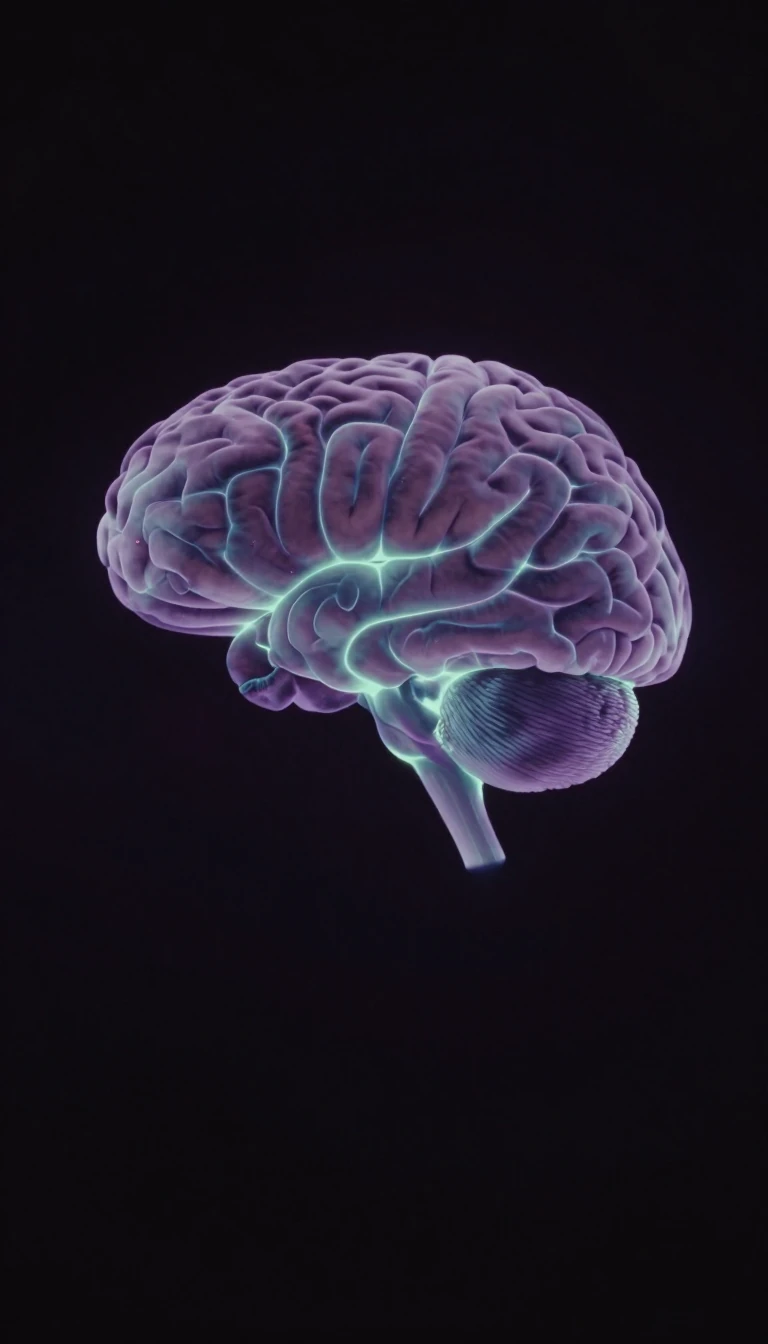 Your occipital lobe is the brain's visual processor, but it does much more than see.Located at the back of your skull, the occipital lobe acts as the primary hub for visual processing. When this region malfunctions, the consequences range from total blindness to …
 Your own body contains physical evidence of the evolutionary history of human beingsHuman beings are unique, but our biological makeup is a direct result of natural selection. This video explores how our anatomy and genetic code serve as tangible proof of our evo…
 Your own body fizzes with thousands of radioactive decays every secondA typical person carries about 0.017 grams of potassium-40, enough to produce roughly 4,400 atomic decays each second. In SI terms that is 4,400 becquerels. The unit is so tiny th…
 Your palms hold a map of who you were versus who you becameIn the practice of palmistry, your hands are not just tools for interaction but records of personal evolution. By comparing your dominant and recessive hands, practitioners claim …
 Your pancreas hides a tiny, vital organ that regulates your body's energy supplyScattered throughout your pancreas are roughly one million microscopic clusters of cells known as the islets of Langerhans. These tiny patches act as the body's metabolic command …
- Your perception of reality is actually a sophisticated internal predictionWhat if your senses are lying to you? This video explores how your brain calculates and fabricates your entire sensory experience, filling in gaps and even altering your perceptio…
 Your personal data is being harvested, but it might also save your life.Host Alok Patel investigates the massive trail of digital information we leave behind daily. This documentary examines the tension between the risks to individual privacy and the …
 Your personal life is a modern invention, not a universal human experienceFor most of history, survival and social roles defined existence, leaving little room for individual choice or privacy. Today, we treat the separation of work and leisure as a fun…
 Your perspective on life events matters more than the events themselvesDoes graduating or moving out actually change who you are? Research suggests that while major milestones provide the stage, your internal mindset and subjective appraisal of those…
 Your pet might have a preferred side, just like youHumans are famously right-handed, but the preference for one limb over another extends far beyond our species. From domestic cats to dogs, many animals exhibit a distinct tendency…
 Your phone battery moves more electric charge than a big lightning boltA typical lightning strike carries about 15 coulombs of charge, and even a monster bolt tops out near 350. A standard smartphone battery holds around 10,800. The difference is spe…
 Your phone broadcasts your location even when you aren't making a callTo function, a mobile phone must constantly communicate with the network. This creates a persistent digital breadcrumb trail. Even when your screen is dark and no apps are running…
 Your phone can't play a man's voice. Your brain fills in the missing note.Most telephones can't reproduce sounds below about 300 hertz, yet a typical male voice sits around 150. We still hear its true pitch, because the brain reconstructs a note from th…
 Your phone finds you using the pulse of an atomic clockWhile your phone seems to know your location instantly, the secret lies 12,000 miles above the Earth. This video explains how orbital satellites and quantum mechanics work togethe…
 Your phone's camera click is the ghost of a shutter that isn't there.A skeuomorph is a design detail kept from an older version of an object after its purpose has gone: the camera click on a phone, the floppy-disk 'save' icon, the grille on an elec…
 Your phone's map only works because Einstein was right.GPS satellite clocks run fast by about 38 microseconds a day, because gravity is weaker up there and time runs quicker. It sounds trivial, but uncorrected, positions would drift b…
 Your preferred walking speed is a biological masterpiece of optimizationWhy do you walk at the specific pace you do? It isn't random. Your body naturally selects a speed that balances mechanical efficiency, metabolic fuel use, and physical stability. …
 Your proteins are not finished when they leave the ribosome; they are just beginning.After proteins are synthesized, they undergo post-translational modifications—covalent edits that diversify their function far beyond the genetic code. From adding lipids to attac…
 Your pruney fingers are actually high-performance rain treadsMost people assume your skin wrinkles because it absorbs water like a sponge. However, research suggests this is an active evolutionary adaptation. Your body creates these pattern…
 Your pulse is an artery answering each heartbeatPulse is the rhythmic expansion of an artery as the heart cycles. Felt wherever a vessel can be pressed against bone or muscle—wrist, neck, groin, foot—it offers a quick bedside w…
 Your pupils do more than regulate light; they are windows into your cognitive state.While the pupil is famously the eye's aperture for light, it is also a dynamic indicator of your internal world. Beyond responding to brightness, pupil size fluctuates based on em…
 Your pupils give you away, and you cannot stop themYou can rehearse your words and even fake a convincing smile, but your pupils are beyond your control. They widen on their own when something or someone interests you. Much of the…
 Your refrigerator could help stabilize the national power grid without you noticing a thing.Electrical grids rely on a delicate balance between supply and demand. When they drift, utilities burn expensive fossil fuels to compensate. Dynamic demand technology turns everyd…
 Your restaurant menu is actually your most powerful marketing and sales toolIt is more than just a list of food and prices. A well-designed menu acts as a silent salesperson, guiding a guest's eye and building their confidence. From the physical texture o…
 Your restaurant menu is much more than a simple list of foodA menu acts as a potent brand statement that shapes your entire business model. Your culinary selections dictate essential operational elements, including necessary kitchen staffi…
- Your restaurant's most powerful marketing tool might be sitting right on the tableWhile many owners focus on expensive advertisements, the most influential marketing tool is often the menu. Beyond the food itself, every detail—from the cleanliness of your front…
 Your retina can sense ultraviolet light; your eye's lens simply blocks itHumans are not truly blind to ultraviolet. Our retinal photoreceptors respond quite well to UVA, but the lens filters most of it out and cannot focus what gets through. People bor…
 Your retina is brain tissue, and it is wired back to frontThe retina grows out of the embryonic brain, making it the one piece of the central nervous system anyone can look at without surgery. It is also built inside out: light must pass…
 Your right to speak does not mean your right to say anythingFreedom of speech is often misunderstood as an absolute license to say whatever one wants, wherever one wants. In reality, it is a complex legal shield designed primarily to prote…
 Your runny nose isn't an allergy; it is a biological defense mechanismWhen you eat something spicy, your nose often turns into a faucet. This isn't an allergic reaction to the food, but rather a sophisticated survival tactic. Your body is actually t…
 Your self-concept is not just who you are, but who you hope to become.Self-concept is the collection of beliefs answering the question, Who am I? It is not merely a static description of your current traits, but a dynamic internal model that include…
 Your shadow is not just your dark side, but the key to your wholeness.In analytical psychology, the shadow represents the unconscious aspects of your personality that you refuse to acknowledge. While often perceived as a negative force, this hidden …
- Your shinbone is named after a Roman fluteThe tibia takes its name from the flute of the same name. It is the second-largest bone in the body after the femur and carries almost all the weight passing from knee to ankle, w…
 Your shoulder blade keeps knitting itself together until about age 25The scapula, named from the Latin for a trowel, starts forming in the second month of fetal life, yet parts of it stay cartilage for years. It grows from seven or more separate ce…
 Your shoulder is a golf ball on a tee, held by four small musclesThe shoulder's ball sits in a socket so small and shallow that anatomists compare it to a golf ball balanced on a tee. Four muscles, the rotator cuff, clamp it in place so the big…
 Your signature is not a fixed identity but a fluid, often unreliable, neuromuscular performance.We treat signatures as the ultimate proof of intent and identity, yet they are surprisingly fragile. From the flourish of a pen to a simple mark, signatures are subject to high er…
 Your SIM card guards a secret key it will never hand to your phoneInside every SIM sits a 128-bit key that the chip is built never to reveal, not even to the handset it lives in. Instead the card signs random challenges from the network, proving…
 Your skeleton is a dynamic factory, not a static scaffoldMost people view their bones as a rigid frame, like the rafters of a house. In reality, your skeletal system is a living, metabolic network. It actively produces your blood, store…
 Your skeleton is a living, constantly remodeling masterpiece of biological engineeringFar from being static scaffolding, your bones are dynamic tissues in a state of perpetual renewal. Through a complex cellular tug-of-war, your body constantly breaks down and rebu…
 Your skeleton is actually a high-tech endocrine organWe often think of bones as static scaffolding, but they are actually dynamic messengers. Beyond providing structure and protecting organs, your skeleton releases hormones that com…
 Your skeleton is constantly rebuilding itself, but the balance can shift.Your entire skeleton is replaced roughly every 10 years through a continuous cycle of destruction and creation. However, when the body reabsorbs old bone faster than it can manufa…
 Your skeleton is more than just a calcium storage unitWhile milk is a common staple for bone health, it is only one piece of a complex biological puzzle. Dr. Jen Gunter explains what actually happens to our frames as we age.
- Your skeleton is not a static structure but a shifting landscapeYou might assume your body contains a fixed number of bones, but that count is actually different for everyone and constantly changing. While bone loss is a natural part of aging,…
- Your skeleton sets the stage, but hormones write the scriptWhile your bone structure remains largely fixed after adulthood, your body shape is a living, shifting landscape. From the widening of hips during puberty to the migration of fat …
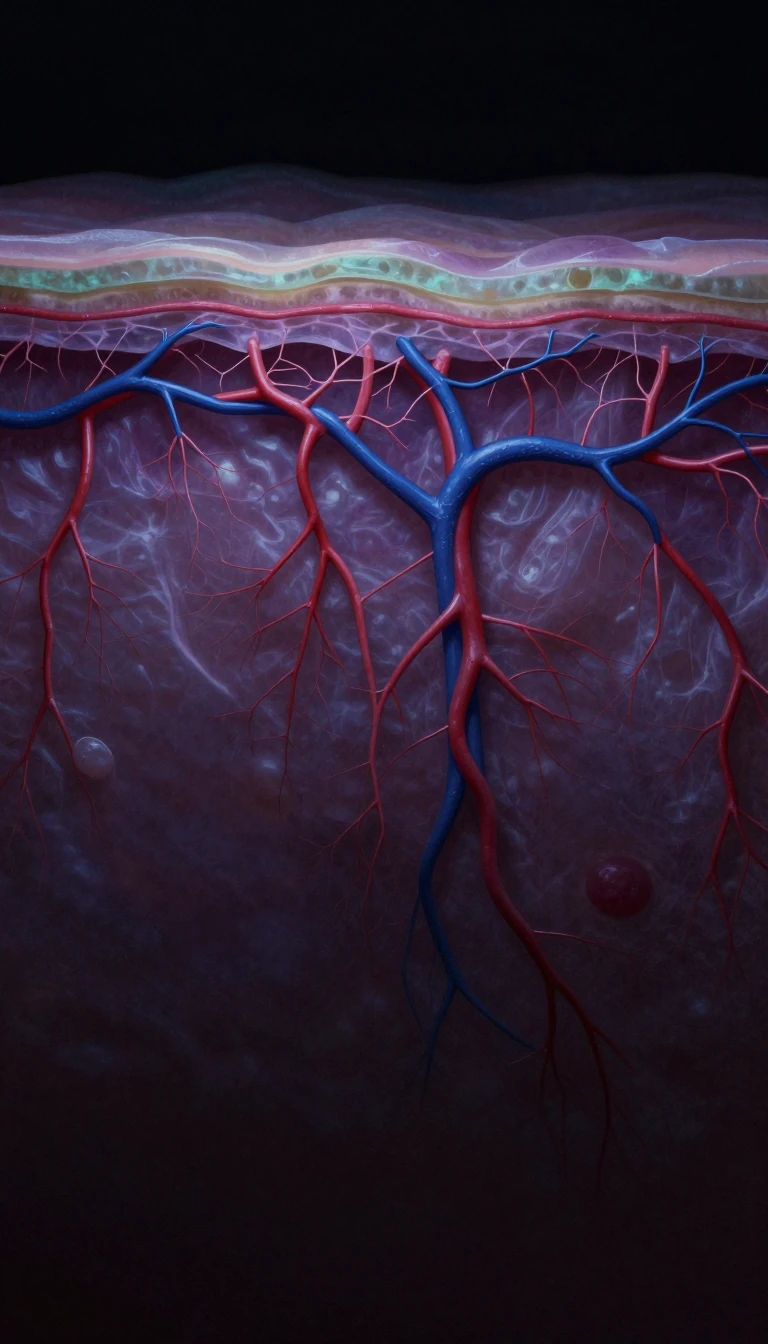 Your skin is a complex, living organ that constantly renews its own protective barrier.As the body's largest organ, skin does far more than hold you together. It is a dynamic, three-layered system that regulates temperature, shields you from infection, and processes…
- Your skin is a living, breathing, and constantly shedding architectural masterpiece of five layers.The epidermis is the body's thinnest layer, yet it serves as our primary shield against the outside world. This complex structure is not just a static covering; it is a dynamic, s…
 Your skin is a massive interface that makes up 16% of your weightIt is the largest organ in your body, acting as a continuous barrier between your internal systems and the outside world. While we often think of it simply as a covering, this com…
 Your skin is a massive organ system weighing about 6 poundsThe integumentary system is far more than a simple covering. It is your body's largest organ system, acting as a sophisticated shield, a temperature regulator, and a chemical ware…
 Your skin is your body's largest organ—but it's also its most misunderstoodDr. Jen Gunter deconstructs five pervasive myths about skin health to reveal what is actually happening with your body's largest organ.
 Your skin's oil glands work by destroying their own cellsTiny glands beside almost every hair follicle coat your skin and hair in sebum, a waxy mix found nowhere else in the body. They make it in a strikingly self-destructive way: the p…
- Your skin’s outer sheet has no blood vessels of its ownEpithelium is a thin cellular blanket with almost no extracellular matrix—think epidermis on skin, or the linings of organs and vessels. It is one of four basic animal tissues, ye…