 Intellect Plus
Cards starting with Y
856 cards. Page 9 of 15.
 Your brain creates new realities by blending impossible scenarios togetherHow do you solve a riddle about a monk meeting himself on a mountain? You don't just imagine it; your brain constructs a new, hybrid reality. This process, called conceptual blend…
 Your brain does not react to emotions; it constructs themWe often feel like passengers to our feelings, but neuroscience suggests a different reality. This talk explores how your brain actively builds your emotional experience from inte…
 Your brain does not run on lightning bolts, but it is electric.Neurons communicate across your body using electrical signals, but these are not the sparks you might imagine. This video clarifies how neurons function, explains the concept of a…
 Your brain does not see the world as it truly isWe often assume our eyes act like cameras, capturing an objective reality. In truth, perception is a complex reconstruction. Your brain takes sensory input and blends it with past…
 Your brain does not see the world; it predicts it.Neuroscientist Anil Seth challenges our most basic assumption: that we experience reality as it truly is. This talk explores how your brain constructs a subjective world—and a sen…
 Your brain doesn't have one memory slot, but several specialized onesMost people think of short-term memory as a single bucket. But your brain actually operates like a multi-lane highway. By splitting information into distinct streams—like a dedica…
 Your brain doesn't see colors; it calculates the differences between themWhen you see a vibrant red, your visual system isn't just registering a single signal. It is performing a high-speed subtraction. By processing information through antagonistic ch…
 Your brain doesn't shut down during deep sleep; it rehearses.For a long time, scientists viewed deep sleep as a period of brain quiescence—a simple 'off' switch. We now know it is a highly active state where the brain actively processes the…
- Your brain doesn't sleep as a single unitWe often think of sleep as a global 'off' switch for the brain, but recent research reveals a much more complex internal choreography. Different regions of your brain can actually…
 Your brain experiences flavor long before your tongue doesNeuroscientist Camilla Arndal Andersen uses brain scans to reveal how our minds subconsciously process taste. This research explains why we crave certain foods and how understandi…
 Your brain has a dedicated, automatic pathway for mimicking the sounds you hear.Speech repetition is not just a social habit; it is a reflexive, neurobiological process that functions independently of comprehension. From infants babbling to adults learning ne…
 Your brain has a hard limit on items, not informationWhy can you remember a phone number but struggle with ten random digits? It is because your working memory has a fixed capacity for "chunks." By grouping raw data into meaningful …
 Your brain has no limit on how much information it can storeWe often worry about forgetting, but your long-term memory is an almost-permanent archive with virtually unlimited capacity. While the ability to retrieve these files may slow wit…
 Your brain is a 24/7 powerhouse, not a dormant engine.The idea that we only use 10% of our brains is one of Hollywood's favorite bits of pseudoscience. It suggests that unlocking a hidden 90% could grant us superpowers. In reality, y…
 Your brain is a miser that hates spending mental effortJust as a miser avoids spending money, your mind seeks to avoid spending cognitive effort. Rather than engaging in sophisticated, energy-intensive reasoning, humans tend to rely o…
 Your brain is a sculpture shaped by the environment throughout your entire lifeIn her 1994 Christmas Lectures, Susan Greenfield revealed that the brain is not a static organ but a dynamic, evolving structure. From the first thirty days of fetal development t…
- Your brain is a theater where the spotlight creates your realityImagine your mind as a vast stage. While thousands of unconscious processes run in the wings, only a tiny fraction is illuminated by a spotlight. This is the core of Global Worksp…
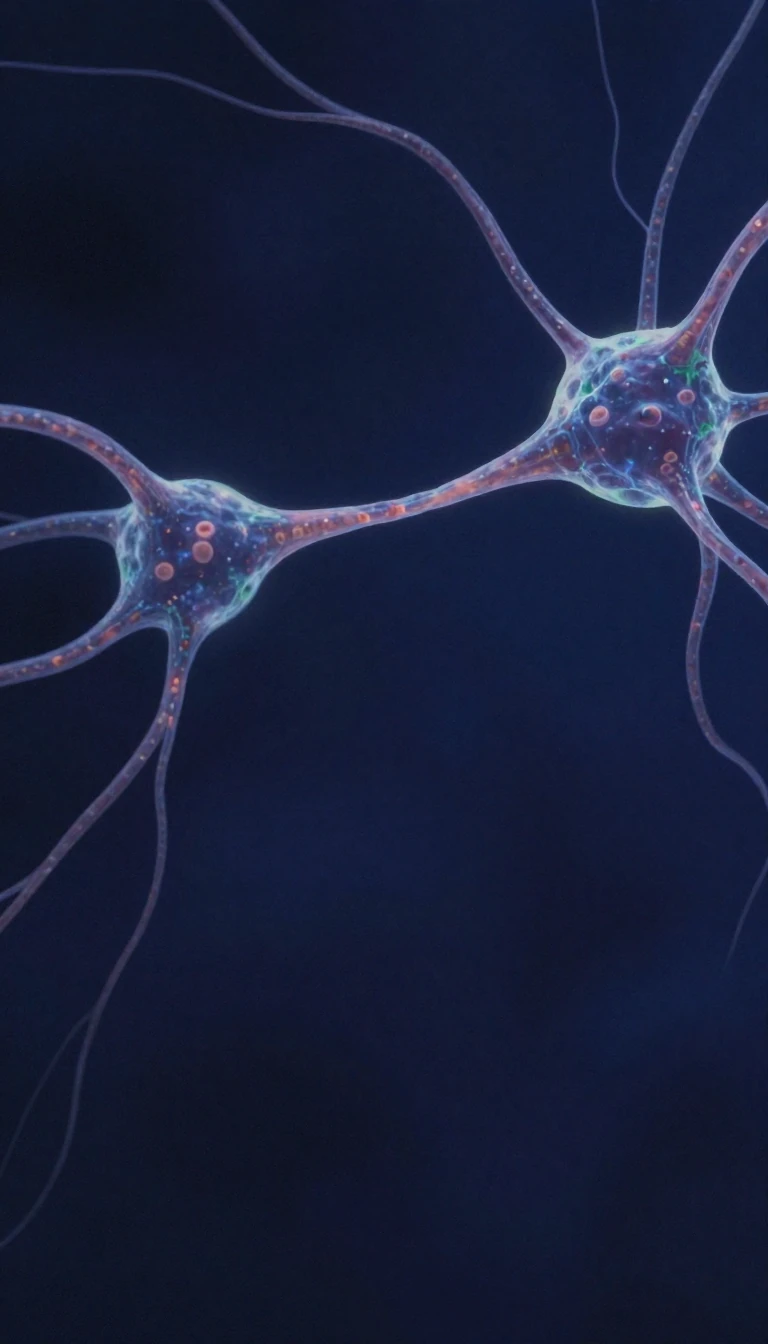 Your brain is a vast, interconnected web of billions of neurons and trillions of synapses.Biological neural networks form the foundation of human thought, memory, and survival. While artificial intelligence models are loosely inspired by these complex systems, the true…
- Your brain is actively filtering out the truth to keep you comfortableWe like to believe we see the world as it is. In reality, your brain acts as a high-speed editor, automatically deleting information that causes emotional discomfort or contradict…
 Your brain is constantly deciding what matters in a sea of noiseAmishi Jha explores the mechanics of attention, explaining how our brains filter constant information to decide what is important. This video breaks down why internal and external…
 Your brain is never truly off, even in your sleepMost of your brain's activity occurs beneath your conscious awareness. This video explores the constant, spontaneous neural firing that maintains your life and why these hidden pr…
 Your brain is not a camera; it is a master of creative interpretationAn illusion is not a failure of your senses, but a window into how your mind constructs reality. Unlike hallucinations, which arise from nothing, illusions are misinterpretations …
 Your brain is not a fixed organ but a dynamic, self-rewiring biological machine.Neuroplasticity is the brain's natural ability to adapt, learn, and physically reorganize itself throughout your life. By forming new synaptic connections, your mind evolves to me…
 Your brain is not just a static organ but a complex, vibrating wave machine.Alain Goriely explores the hidden physical and electrical rhythms governing brain function. This lecture examines how synchronised neural oscillations and various wave types shape…
- Your brain is not lazy when you rest; it is actually working quite hard.For decades, scientists assumed the brain went quiet during downtime. We now know the Default Mode Network (DMN) hums with activity whenever you are not focused on an external tas…
 Your brain is running two different operating systems at onceMost of our decisions aren't the result of logical calculation, but of a fast, instinctive, and emotional process. While we like to believe we are rational, we often substitute di…
 Your brain is too smart to let you tickle yourselfYou can feel a feather brush your skin, but you cannot replicate a deep, laughter-inducing tickle on your own ribs. This isn't a failure of touch, but a triumph of prediction. You…
 Your brain is too smart to let you tickle yourselfWe all know the sensation of being tickled: laughter, smiles, and involuntary movements. But no matter how hard you try, you can never trigger that same sensation on your own. The…
- Your brain is wrapped in a tough mother, a spider web and a tender motherThree membranes sheathe the human brain and spinal cord. Their Latin names are surprisingly affectionate: the dura mater, or tough mother, lines the skull; the gauzy arachnoid is …
 Your brain isn't actually freezing; it's a trick of referred painThat sharp, stabbing pain in your forehead after a bite of ice cream isn't your brain cooling down. It is a rapid physiological reaction to temperature extremes. Your body is esse…
- Your brain learns faster by thinking in two languages at onceWhy do you remember a vivid image of a dog more easily than a dry list of facts? It is because your mind uses two distinct channels for information. By engaging both verbal and vi…
- Your brain may be running a nightly threat simulation to keep you aliveWhy do we dream of danger? Oneirology suggests your brain isn't just creating random noise; it might be practicing for reality. By simulating social and environmental threats, the…
 Your brain might be 'shutting down' parts of your cortex to focusAlpha waves are often dismissed as the signature of an idle brain. However, recent research suggests they may actually be an active mechanism for network coordination. By inhibiti…
 Your brain might be hallucinating an accent before you hear a wordResearch suggests that our brains don't just listen to speech; they project expectations onto it. We can 'hallucinate' an accent based solely on a person's appearance, leading to …
 Your brain might be lying to you about your own desiresWe like to believe we are the captains of our own intentions, making conscious choices based on our true preferences. However, psychological research suggests a startling alternat…
- Your brain might be shrinking by 1% every single yearAging isn't just about memory loss; it's a physical restructuring of your neural architecture. While some regions remain stable, others undergo significant volume reduction and st…
- Your brain moves by releasing a brake, not by pressing an acceleratorDeep in the forebrain, the basal ganglia keep the body's motor systems under constant restraint. Their output neurons fire steadily at high rates, suppressing movement, and an act…
- Your brain processes information even when you aren't aware of itCan a hidden image truly control your choices? While pop culture suggests we are puppets to invisible cues, the science is more nuanced. Subliminal stimuli do activate specific br…
 Your brain runs the math on romantic chemistryWhile we often view attraction as a mysterious pull of the heart, it is actually a rapid biological calculation. This video explores how your brain processes sensory data to deter…
 Your brain treats social isolation like a literal famineHumans possess an intense 'skin hunger' that is as fundamental as our need for food or water. When we are deprived of physical contact, our brains react to the lack of touch with …
- Your brain uses 'good enough' shortcuts that can lead to systematic errorsWhy do we make predictable mistakes in judgment? It is often because our brains prioritize speed over perfection. By using mental shortcuts called heuristics, our minds reduce cog…
 Your brain's auditory cortex is a complex, tonotopic map that decodes sound and language.The auditory cortex is the brain's primary processing unit for sound, organizing information through a sophisticated frequency map. It does more than just hear; it segregates audi…
 Your brain's electrical signature changes when gravity shiftsGravity is more than a force that keeps your feet on the ground; it is a fundamental architect of your neural activity. Recent research using parabolic flights reveals that shifti…
- Your brainstem may be failing to signal your breath before a seizureThe respiratory center in your brainstem is the autopilot for your breathing. However, research suggests that for people with epilepsy, this autopilot might be malfunctioning even…
 Your breathing is steered mostly by carbon dioxide, not oxygenIt feels as if we breathe to get oxygen, and we do, but the brain mostly sets the pace by tracking carbon dioxide. Sensors in the medulla respond to the acidity that CO2 creates i…
 Your breathing muscle sits under the ribs but is wired from the neckThe diaphragm lies at the bottom of the chest, yet its nerve supply leaves the spinal cord high in the neck. The reason is embryological: the tissue that becomes its central tendo…
 Your calf is more than just a muscle; it is a complex biological engine.The calf is a powerhouse of the lower leg, composed of two primary muscles that drive your ability to walk, run, and jump. While often overlooked until a cramp strikes, this anato…
 Your car's dashboard and boot were named on horse-drawn carriagesA dashboard was once a screen of wood or leather at the front of an open carriage, stopping the mud and snow that horses' hooves flung up. The boot began as a box that jutted out …
 Your casual nature snapshots are fueling a massive, global scientific database.Scott Loarie explains how everyday nature photography contributes to a living atlas of the natural world. By sharing your photos of living things, you join a community that provid…
 Your cells are a bustling, interconnected factory of membranes, vesicles, and specialized compartments.The endomembrane system is the cellular equivalent of a global logistics network. It uses a sophisticated array of lipid-based compartments to synthesize, package, and ship protei…
 Your cells are actually a complex community of roommatesThe eukaryotic cells that make up your body are not single entities. They are the result of an ancient biological merger where separate organisms moved in together, traded resourc…
 Your cells are constantly building, folding, and modifying proteins to keep you alive.Protein biosynthesis is the essential biological process that maintains your body by replacing lost proteins. From the transcription of DNA into messenger RNA to the complex foldi…
- Your cells are far more efficient than standard chemistry predictsThe energy that powers your muscles and thoughts comes from breaking chemical bonds. But the math of your body is strange: the energy released in your cells is nearly double what …
 Your cells are tiny, high-voltage batteries powering the signals that make you think.Every animal cell maintains a precise electrical charge across its membrane, acting like a biological capacitor. This voltage, typically negative, is not just a static state but a…
 Your cells face tens of thousands of DNA errors every single dayEvery day, the DNA in a single cell suffers tens of thousands of hits of damage. This video explores how your cells manage these constant errors and the risks involved when the re…
 Your cells perform thousands of emergency repairs every single day to save your genomeEvery day, your DNA faces a barrage of chemical accidents and radiation damage. Without constant, high-speed repair mechanisms, your genetic code would rapidly degrade, leading to…
 Your cells run on a microscopic rotary motor powered by a proton current.Deep inside your mitochondria, a complex assembly of proteins acts as a biological power plant. By shuttling electrons through a series of specialized enzymes, your cells create a…
- Your cells spend energy pushing molecules uphill, against their natural flowLeft alone, molecules drift from crowded areas to emptier ones. Cells often need the reverse, hoarding glucose, amino acids and ions at high concentrations. Active transport makes…
- Your cells use a precise molecular copy-paste to fix broken DNA strandsWhen DNA suffers a double-strand break, the consequences can be catastrophic, leading to genomic instability or cancer. To survive, cells employ homologous recombination, a sophis…
 Your cells' power plants were once free-living bacteriaSymbiosis is not just clownfish and anemones. Biologists think it built the complex cell itself, when ancient bacteria were absorbed and became mitochondria and chloroplasts. Part…