 Intellect Plus
Cards starting with Y
856 cards. Page 10 of 15.
 Your chest muscle ends in a twisted tendon only five centimetres wideThe pectoralis major fans out across the chest from collarbone, breastbone and ribs, then funnels into a flat tendon about 5 cm wide that twists as it anchors to the upper arm. Ne…
 Your chin is a Homo sapiens exclusive among humanoidsA face is the front of the head—eyes, nose, mouth, and the landscape around them. Mammal heads diversified wildly as species filled niches for sensing and signaling. Primates brou…
- Your collarbone is first to harden and among the last to finishThe collarbone starts turning to bone in the fifth and sixth weeks after conception, before any other bone in the body. Yet it is one of the last to finish, not completing the pro…
 Your color printer is likely leaving a secret, invisible trail on every pageMost modern color laser printers embed a nearly invisible digital watermark on every document they produce. These tiny yellow dots encode the printer's serial number, along with t…
 Your colour vision and night vision grew from one ancient geneThe human eye senses light with four genes: three handle colour and one handles dim light at night. All four descend from a single ancestral gene that was copied, and the copies d…
 Your company's most valuable asset is hidden in wasted timeMost workdays are consumed by outdated workflows that produce nothing of value. Salvatore Cali explores how identifying and eliminating these redundant tasks can reveal the true c…
 Your compass does not point to true north, and the error is always changing.Magnetic declination is the angle between the direction your compass needle points and the geographic North Pole. Because Earth's magnetic field is generated by shifting flows dee…
 Your computer identifies files using everything from hidden name suffixes to internal magic numbers.A file format is simply a method for encoding information, but how your operating system knows what to do with that data is a complex, often invisible, battle. From simple filenam…
 Your computer's memory is a ladder trading speed for size at every rungMain memory answers the processor in nanoseconds, while a disk takes milliseconds, roughly a million times longer. A robot arm fetching an archive tape can take a full minute. Eve…
 Your cornea is a living, breathing, transparent lens that defies biological norms.The cornea is a biological marvel: a transparent, avascular window that provides two-thirds of your eye's focusing power. It lacks blood vessels entirely, relying on tears and aqu…
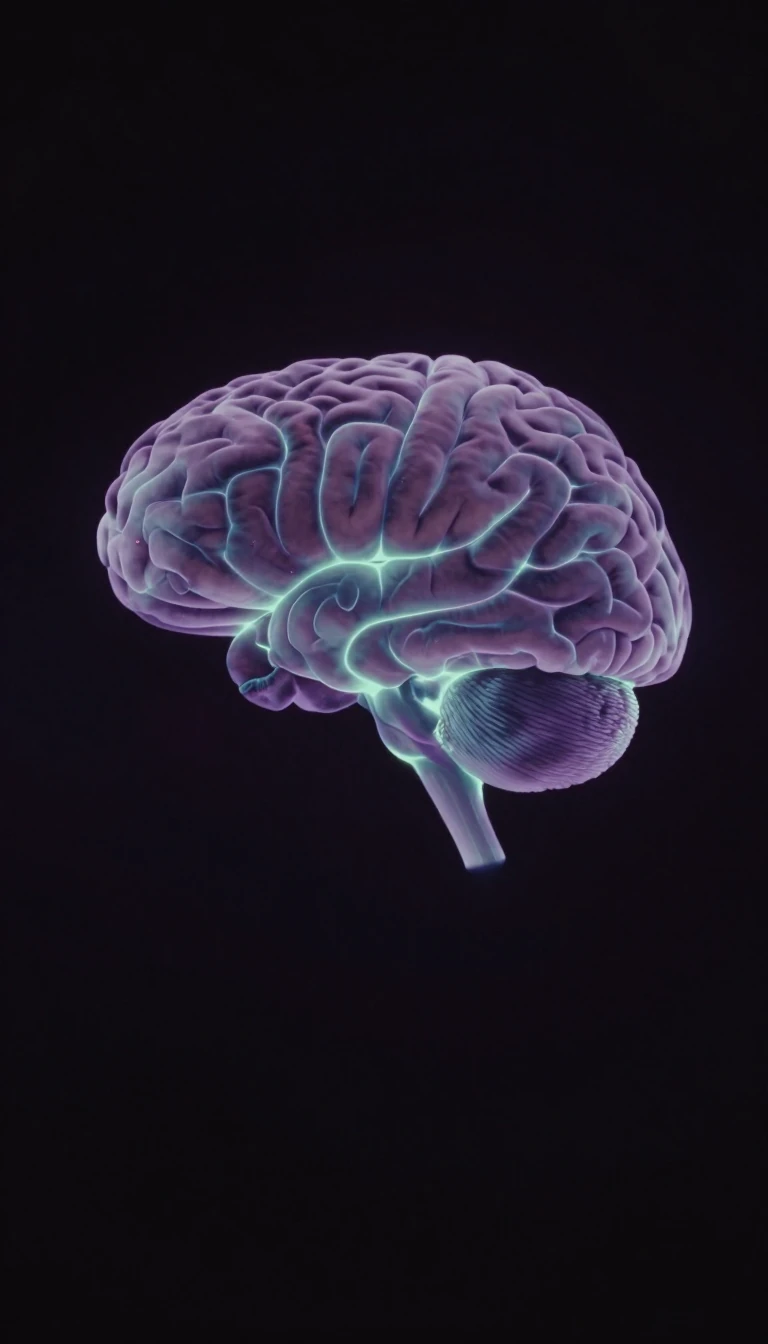 Your cortex holds billions; the cerebellum holds moreThe human cerebral cortex packs roughly fourteen to sixteen billion neurons, while the cerebellum may hold fifty-five to seventy billion. Synapses may number near one hundred tril…
 Your cotton shirt was beaten, combed, flamed and twisted before anyone wove itA cotton T-shirt begins as fluff clinging to seeds inside a pod, each fibre about 2.5 centimetres long. Turning that fuzz into smooth fabric takes a surprisingly violent sequence:…
 Your credit score is more than just a record of your past payments.Calculating your FICO score involves several distinct factors beyond simple payment history. This video from the Two Cents team breaks down the components that determine your cred…
 Your cup of tea and the camellia in the garden are close cousinsTea comes from the leaves of Camellia sinensis, a sibling of the showy garden camellias. In the 1840s those blooms were the luxury flower of Europe, and a Parisian courtesan famou…
 Your curriculum vitae is not a biography, but a strategic sales document for employers.The Latin phrase curriculum vitae means course of life, but treating your CV like a life story is a mistake. To secure an interview, you must transform this document into a concis…
 Your customers aren't paying you what you're worthMost people accept the price others offer because they lack the tools to define their own value. This talk explores how to shift the narrative from cost to excellence.
 Your daily decisions are actually a series of hidden calculationsFrom checking the weather to choosing a drive-through lane, you are constantly making predictions. This video explores how our lives are saturated with probability and how statist…
 Your daily habits are slowly folding your spine into a curveMost back pain isn't caused by one singular injury but by the cumulative effect of thousands of tiny, incorrect movements. From brushing your teeth to vacuuming the floor, our mod…
 Your daily routine creates a unique map of the world you actually inhabitYou likely think of your world as the entire city or region you live in. But in social science, your true environment is your activity space: the specific set of locations you vis…
 Your deltoid muscles are the powerhouse behind every overhead movement you make daily.The deltoid is the prominent muscle forming your shoulder's rounded contour, essential for lifting, rotating, and stabilizing your arm. While often taken for granted, this complex…
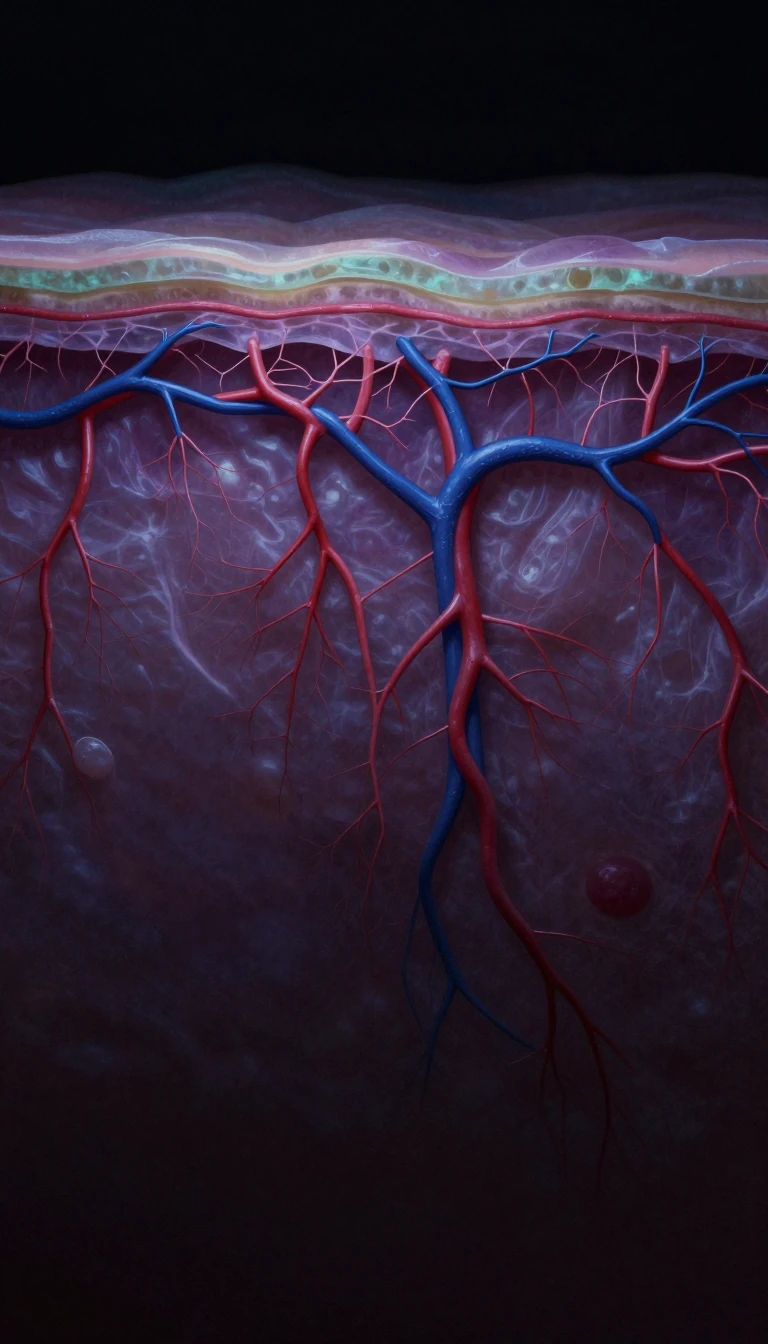 Your dermis is more than just skin; it is the structural foundation of you.Beneath the thin surface of your epidermis lies the dermis, a thick, complex layer that acts as your body's structural anchor. From the leather-like reticular base to the finger-l…
 Your device's MAC address is a permanent digital fingerprint, but it can be faked.Every device connecting to a network carries a unique identifier called a MAC address. While manufacturers burn these into hardware to ensure global uniqueness, they are not immut…
 Your digital footprint might already be a government person of interestIf you have ever attended a protest or a gun show, you may be under the radar of state surveillance. The US government can collect vast amounts of personal data—from emails to loc…
- Your digital signature is a legal concept, not just a technologyMany people use the terms 'electronic' and 'digital' signatures interchangeably, but they are fundamentally different. While one describes a broad legal framework for intent, the …
 Your dinner has a hidden water price tagMost people view water usage as a simple matter of turning on a kitchen tap. However, in our globalized economy, your daily consumption is linked to a vast, invisible network of w…
 Your dinner plate is a major driver of global deforestationThe food we eat does much more than just fuel our bodies; it actively reshapes the planet. From massive freshwater depletion to significant greenhouse gas emissions, your daily gr…
 Your DNA dictates how you process medicine, and one gene holds the key.The CYP2D6 gene acts as a biological filter for about 20% of common medications. Because this gene is highly variable, your body might process drugs too quickly, too slowly, or ju…
 Your DNA is a blueprint, but epigenetics is the punctuationWe once believed our DNA sequence held every answer about our physical traits and health. However, scientists have discovered a hidden layer of information that determines how our…
- Your DNA is a living archive, recording evolutionary history through its own changing structure.Molecular evolution tracks how DNA sequences change over time, turning the genome into a biological clock. By comparing genes across species, scientists can reconstruct the histor…
 Your DNA is a tangled mess, and these enzymes are the only reason you exist.The double-helix structure of DNA is inherently prone to knots, tangles, and overwinding that would halt life-sustaining processes like replication and transcription. Topoisomeras…
 Your DNA is not a fixed script but a dynamic movieMoshe Szyf explores the frontier of epigenetics, revealing how social factors like stress and nutrition can actually reprogram your genome. This talk explains how your life experi…
- Your DNA is not a fixed script but a dynamic, editable molecular libraryCells do not simply read their genes; they actively curate them. Through complex mechanisms like chromatin remodeling and epigenetic tagging, your body decides which genes to sile…
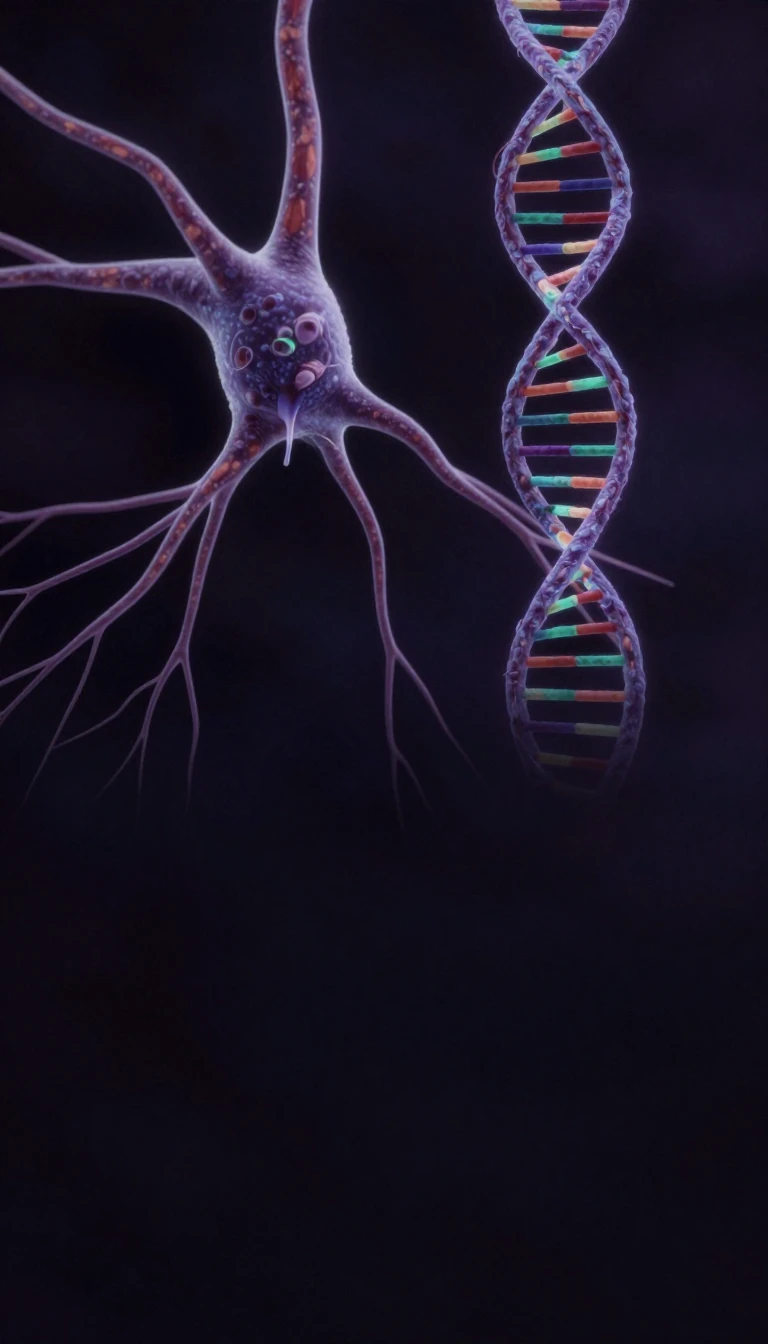 Your DNA is not just a static code but a dynamic, chemically modified instruction manual.Beyond the sequence of letters in your genome lies an invisible layer of control. By attaching chemical tags to specific sites, your cells can silence or activate genes without ch…
- Your DNA is not just in your nucleus: the hidden inheritance of your mitochondriaMost of your genetic code lives in the nucleus, but a vital portion resides elsewhere. Extranuclear inheritance describes how genes outside the nucleus, found in organelles like m…
- Your DNA is not your destiny: how chemical tags rewrite the rules of lifeYour genome is a static blueprint, but your epigenome is a dynamic control panel. By decorating DNA with chemical markers, cells can silence or activate genes without altering the…
- Your DNA is not your destiny: how the epigenome controls your biological softwareWhile your genome provides the static blueprint of your life, the epigenome acts as the dynamic conductor. These chemical markers sit above your DNA, dictating when and where gene…
 Your dog might be able to tell your languages apartWhen you move across the world, the sounds of daily life change instantly. But do your pets notice the shift in human speech? New research suggests that dogs may possess a neurolo…
- Your dog might value your attention more than a snackWhile food is the standard currency of canine training, it is not a universal motivator. For many dogs, the ultimate prize isn't a treat—it is a toy, a release from their leash, o…
 Your downward-pointing nostrils mark you as an Old World monkeyLook at a spider monkey's nose and then at your own. Its nostrils open sideways; yours point down. That small difference splits the simians into two great branches, and it places …
 Your ear hears musical steps as equal, but the frequencies multiplyClimb a scale one octave and the pitch doubles in frequency; climb another and it doubles again. Musical intervals are ratios, not fixed distances, so equal-sounding steps are rea…
 Your eardrum is a delicate biological barrier that often heals itself without medical intervention.This thin, cone-shaped membrane separates your outer ear from the middle ear, acting as a vital transducer for sound. While injuries or infections can cause it to tear, the body i…
 Your earliest bonds create a blueprint for every adult connectionWe enter the world in a state of total vulnerability, relying on caregivers to teach us the mechanics of human connection. These first interactions do more than just provide safet…
 Your earliest bonds may dictate how you love as an adultPsychologists suggest that the way your caregivers treated you as an infant creates a blueprint for your adult relationships. From seeking constant reassurance to prioritizing tot…
 Your ears are connected to your throat by a hidden, pressure-equalizing anatomical valveDeep inside your head lies a narrow, complex passage that protects your hearing by balancing air pressure. When this tube fails to open, you experience muffled sounds, vertigo, or…
 Your earwax is a genetically determined substance that acts as a natural protective shield.Far from being mere debris, earwax is a sophisticated secretion that cleans, lubricates, and protects your ear canal from bacteria and fungi. Whether your wax is wet or dry is det…
 Your emotions can physically reshape the anatomy of your heartWe often speak of heartbreak as a metaphor, but for some, it is a literal medical emergency. Intense grief or fear can cause the heart to physically change shape and lose signific…
 Your entire lifetime supply of eggs is created before you are even born.The biological clock starts ticking long before birth. By the time a female is born, her ovaries already contain the full inventory of egg cells she will ever possess. These prima…
 Your environment can turn your genes on or off without changing your DNAFor decades, we believed our genetic destiny was written in stone by the sequence of our nucleotides. But a field called epigenetics reveals a more fluid reality: your lifestyle a…
 Your esophagus is a muscular tube, and it is surprisingly easy to irritate it.The esophagus carries food from your mouth to your stomach, but it is vulnerable to inflammation known as esophagitis. Whether caused by stomach acid, allergies, or even common me…
 Your everyday appliances carry a hidden carbon footprintFrom stoves to televisions, the electronics in your home contribute to a significant cumulative climate impact. Tim Dunn explains how retail leaders are tackling this by reimagini…
 Your expectations might be more powerful than the drug itselfWhy do two people smoke the same marijuana and have completely different experiences? The answer isn't just chemistry. Research suggests that your internal narrative—your expectat…
- Your eye is a two-piece camera about twenty-four millimeters deepThe human eye turns visible light into sight while also helping set circadian timing and balance. It is roughly a sphere yet really a fused front-and-back unit: cornea, iris, and …
 Your eyeglass prescription is a geometric map of your unique visionA glasses prescription isn't just a list of numbers; it is a precise engineering blueprint for light. From the curvature of your lenses to the specific orientation of your astigma…
- Your eyelids are far more than simple skin flaps protecting your visionBeyond their role as biological windshield wipers, your eyelids are complex structures housing specialized oil glands, connective tissue, and a sophisticated sensory network. They…
 Your eyes are constantly producing tears, but not all of them serve the same purpose.Alex Gendler explains the biological mechanisms behind human crying. By following the daily cycle of an eye, this lesson distinguishes between the three primary types of tears and…
- Your eyes are not cameras, but biological sensors that turn light into neural code.Photoreceptors are specialized neurons at the back of your retina that convert light into electrical signals. While we often compare eyes to cameras, these cells perform a far mor…
 Your eyes are powerful, but they fail to capture the world's hidden rhythmsThe human eye is a remarkable machine, functioning like a 500 megapixel camera capable of operating in bright light, near darkness, or even underwater. Yet, despite this power, th…
 Your eyes could, in theory, spot a single candle thirty miles awayPhysiologists like to express the faintest signal each sense can catch in everyday terms. For vision, the classic figure is one candle 30 miles off on a dark night, once your eyes…
 Your eyes invent triangles that were never drawnRichard Gregory sorts visual illusions into physical, physiological, and cognitive classes—each with ambiguities, distortions, paradoxes, and fictions. A stick bends in water; aft…
- Your eyes might be detecting the invisible geometry of lightMost humans cannot perceive the polarization of light. Yet, under specific conditions, your vision reveals a faint, yellowish-blue pattern known as Haidinger's brushes. This entop…