Theobroma cacao: Why the Food of the Gods is a Fragile Tropical Treasure
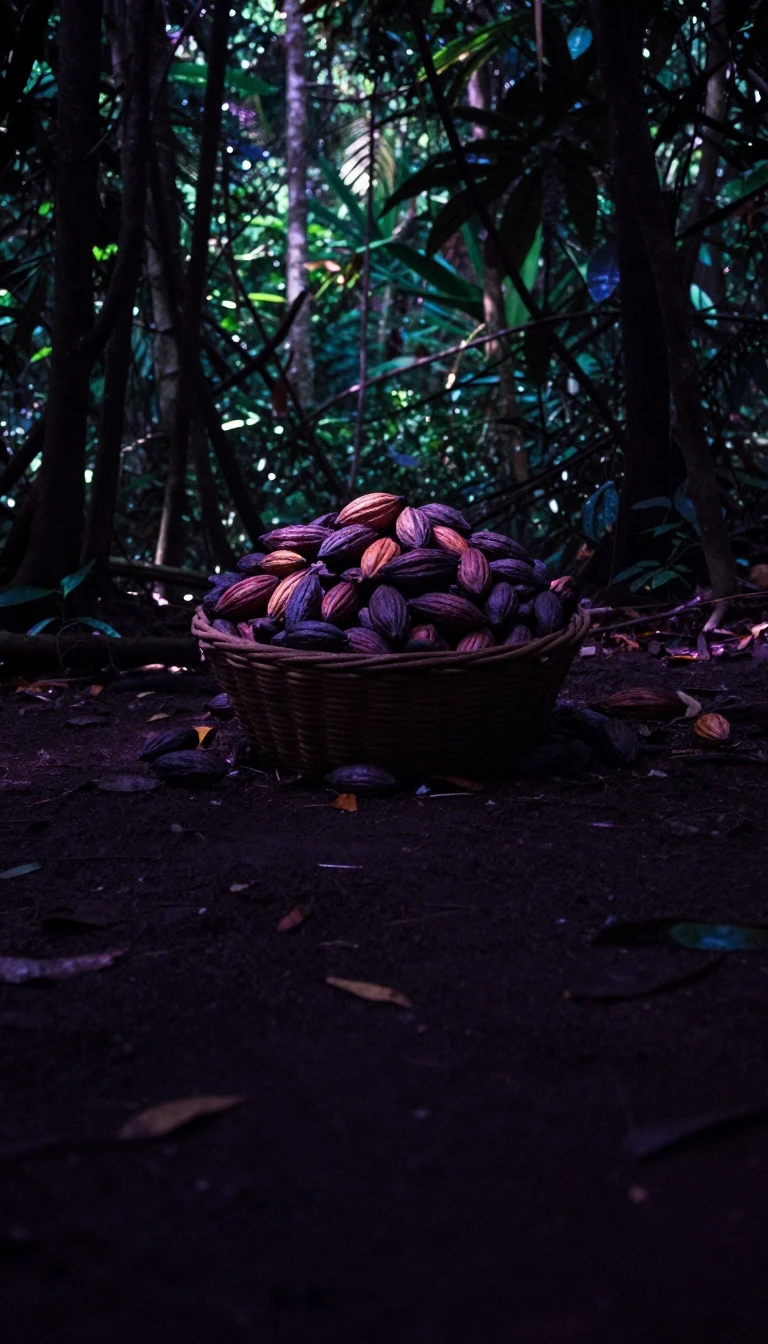
In short: The scientific name for the cacao tree translates to food of the gods, yet this delicate evergreen is notoriously difficult to cultivate. Thriving only in specific, humid forest understories, the tree faces a constant barrage of pests and diseases that can destroy entire harvests, making it a high-stakes agricultural endeavor.
Native to the Amazon and Orinoco river basins, Theobroma cacao is a sensitive understory tree that requires precise conditions to flourish. It demands temperatures between 20 and 28 degrees Celsius and at least 100 centimetres of annual rainfall. Because of its shallow root system, it is vulnerable to strong winds, often requiring shade trees like banana or rubber to protect its growth. Despite its biological resilience in the wild, commercial cultivation is fraught with risk; farmers often lose between 30 and 100 percent of their crops to fungal infections like black pod or viral threats like swollen shoot.
The tree’s reproductive cycle is equally specialized. Cacao exhibits cauliflory, meaning its flowers bloom directly from the trunk and limbs. These flowers are pollinated not by bees, but by tiny midges. A mature tree may produce thousands of flowers annually, yet only a small fraction develop into the elongated, ridge-covered pods that hold the precious seeds. Each pod contains 20 to 60 beans, which are encased in a sweet, sticky pulp. While the beans are the primary commodity for chocolate, the pulp itself has historically been used for juices or fermented into alcoholic beverages.
Cultivation is dominated by three main groups: the hardy, ubiquitous Forastero; the rare, disease-prone Criollo; and the hybrid Trinitario. Most global production relies on small, labour-intensive farms rather than large plantations, as the latter can facilitate the rapid spread of disease. Researchers are currently working to develop more resistant varieties to stabilize yields, which currently average between 340 and 450 kilograms per hectare. Understanding the genetic diversity of these trees—which likely originated in a refugium spanning modern-day Ecuador, Peru, and Brazil during the last ice age—remains critical to ensuring the future of global chocolate production.
Opens the Intellect+ feed with this card first. Swipe up for the next one.
Sources
- Summary by Intellect · source: Cacao | Description, Cultivation, Pests, & Diseases | Britannica
- Also: Theobroma cacao
To cite this card, link to https://intellectplus.co.uk/app/gardening-theobroma-cacao.
How we source, check and correct cards: Editorial standards.
General information, not professional advice. Spotted an error? Flag the card or see corrections and complaints.
Intellect Plus is a visual educational discovery platform for exploring fascinating facts and ideas. Brain Food, Not Brain Rot. What is Intellect Plus?
Related
More in Plants · More in Gardening · Latest · A–Z · All topics
