Why the Southern Right Whale was once the perfect target for industrial whalers.
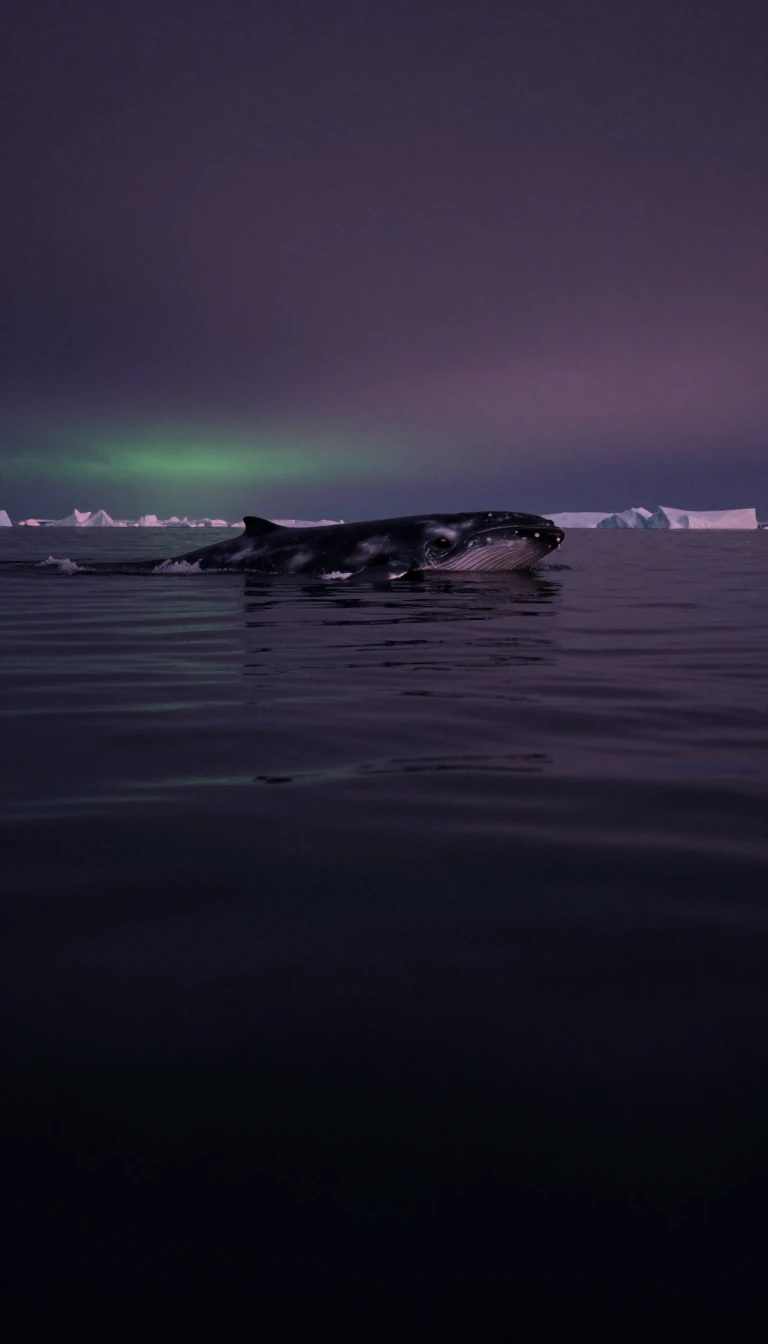
In short: The Southern Right Whale earned its name for a grim reason: it was the right whale to catch. Its high oil content, meat, and tendency to linger in coastal bays made it an easy, lucrative target. Today, this massive, finless creature is slowly recovering from near-extinction in the 20th century.
The Southern Right Whale is a massive baleen whale, reaching lengths of up to 18 meters and weighing as much as 176,000 pounds. It is easily identified by its stocky, black body, lack of a dorsal fin, and the distinct white callosities—raised, warty patches of skin—on its head and chin. These patches are actually colonies of cyamids, or whale lice, and they provide researchers with unique patterns to identify individual whales. Unlike the more acrobatic Humpback Whale, these whales feed by swimming with a steady, open-mouthed motion, sieving copepods and krill through their baleen plates.
Historically, these whales were hunted to the brink of extinction during the 1800s because their slow coastal habits and high oil yield made them ideal for commercial whaling. While international protection began in the 20th century, illegal hunting continued in some regions until the 1970s. Today, the species is protected and slowly returning to its former range across the Southern Hemisphere, though it faces ongoing modern threats such as entanglement in fishing gear, vessel strikes, and habitat degradation. Some populations, like the one near Chile and Peru, remain critically small.
The life cycle of the Southern Right Whale is defined by seasonal migration. During the austral summer, they feed in high-latitude waters, moving toward warmer temperate zones during the winter to breed and calve. Females typically give birth to a single calf every three to five years after a 12-month gestation. While their exact lifespan remains unconfirmed, scientists estimate they may live for at least 70 years. Their behavior is often marked by breaching, lobtailing, and a unique practice called 'sailing,' where they lift their flukes above the surface to catch the wind.
Opens the Intellect+ feed with this card first. Swipe up for the next one.
Sources
- Summary by Intellect · source: Southern Right Whale
- Also: Southern Right Whale
- Also: Southern right whale
To cite this card, link to https://intellectplus.co.uk/app/nature-southern-right-whale.
How we source, check and correct cards: Editorial standards.
General information, not professional advice. Spotted an error? Flag the card or see corrections and complaints.
Intellect Plus is a visual educational discovery platform for exploring fascinating facts and ideas. Brain Food, Not Brain Rot. What is Intellect Plus?
Related
More in Physical geography · More in Nature · Latest · A–Z · All topics
