Beneath Italy's Apennines, a vast cave system hides secrets of life and lost time.
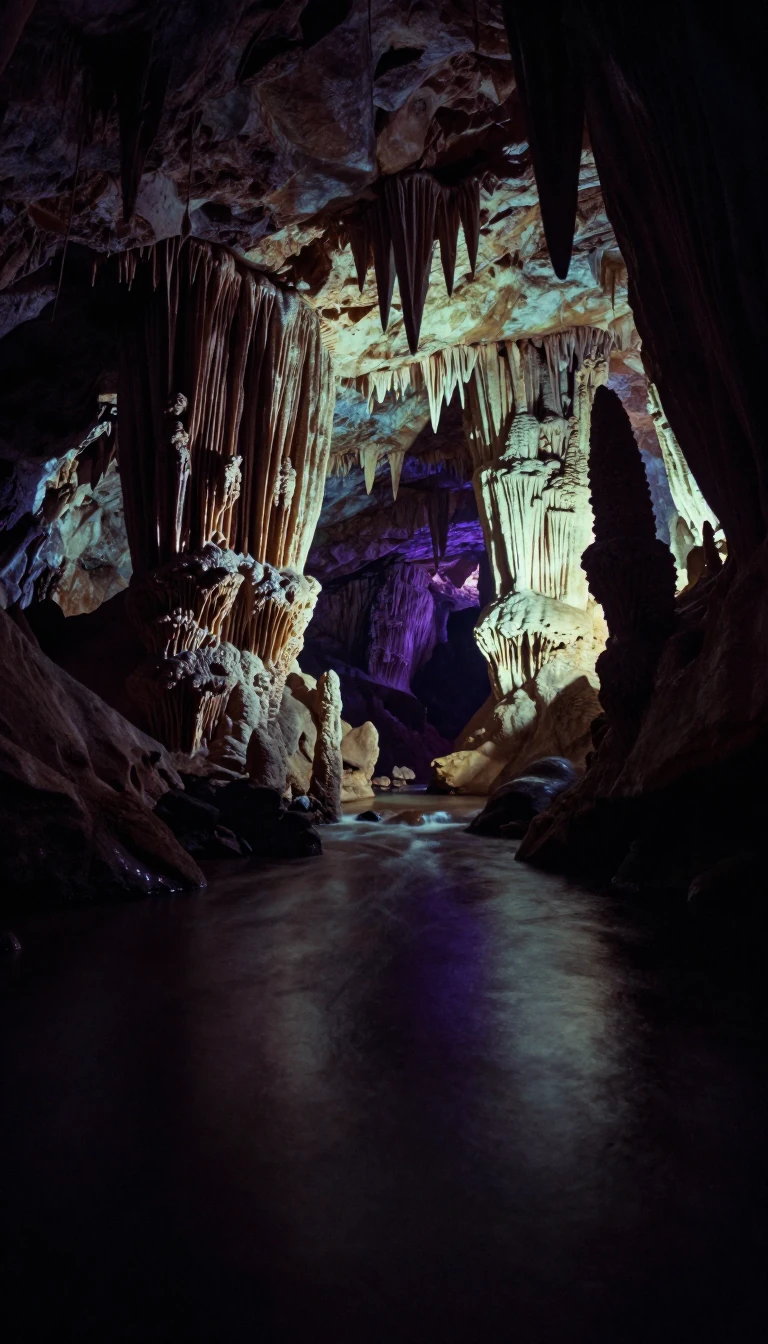
In short: The Frasassi Caves are more than a karst wonder filled with stalactites. They serve as a laboratory for extreme science, from chronobiology experiments where time perception warps to astrobiology research exploring how life might have first emerged on Earth in the absence of sunlight and oxygen.
Located in the municipality of Genga, Italy, the Frasassi Caves were revealed in stages. A local farmer discovered the first entrance in 1948, but the most significant find occurred on September 25, 1971, when Ancona speleologists uncovered the Great Cave of the Wind. This massive system contains chambers of staggering scale, such as the Ancona Abyss, which measures roughly 180 by 120 meters and reaches a height of 200 meters. The caves are also home to historical landmarks, including the 1029 Santuario di Santa Maria infra Saxa and the 1828 Neoclassical Tempietto del Valadier.
The caves have become a unique site for human and biological study. In 1986, sociologist Maurizio Montalbini spent 210 days underground to test the limits of human chronobiology. Isolated from sunlight, his internal clock failed; he believed only 79 days had passed upon his emergence. During his stay, he maintained a grueling routine, often staying awake for 50 hours before sleeping for five. Despite the solitude and occasional earthquakes, he claimed to have made a friend of his isolation while writing a novel.
Beyond human endurance, the caves offer a window into the origins of life. Microbiologist Jennifer Macalady and her team from Penn State have studied the system's microbial biofilms, dubbed "alien cave goo." Found in underground lakes like Lago Verde, these organisms thrive in extreme, lightless environments. Research published in December 2023 suggests that these microbes, which survive on minimal resources like rock and water, may mirror the earliest metabolic processes on Earth. By examining these biofilms, scientists hope to understand how life persists in hostile conditions, potentially providing clues to the evolution of life on our planet and beyond.
The site maintains global connections through partnerships with various international caves, including the Wieliczka Salt Mine in Poland, the Salt Cathedral of Zipaquirá in Colombia, and Kartchner Caverns in the United States. These collaborations highlight the cave's status as a significant geological and scientific landmark, bridging the gap between ancient subterranean formations and modern research into the fundamental nature of existence.
Opens the Intellect+ feed with this card first. Swipe up for the next one.
Sources
- Summary by Intellect · source: Frasassi Caves
- Also: Wikidata — Frasassi Caves · CC0
To cite this card, link to https://intellectplus.co.uk/app/places-frasassi-caves.
How we source, check and correct cards: Editorial standards.
General information, not professional advice. Spotted an error? Flag the card or see corrections and complaints.
Intellect Plus is a visual educational discovery platform for exploring fascinating facts and ideas. Brain Food, Not Brain Rot. What is Intellect Plus?
Related
More in Other terrestrial features · More in Countries & Cities · Latest · A–Z · All topics
